Get Over Yourselves

I have NEVER parked on a pavement.

If you can't park without blocking the road or the pavement, you're parking in the wrong place.

What sort of idiot mentality thinks it's OK to park on the pavement and block it to pavement users in cases where parking on the road would block it for road users?

Lazy, arrogant inconsiderate and selfish.
 
I have NEVER parked on a pavement.

If you can't park without blocking the road or the pavement, you're parking in the wrong place.

What sort of idiot mentality thinks it's OK to park on the pavement and block it to pavement users in cases where parking on the road would block it for road users?

Lazy, arrogant inconsiderate and selfish.
I take it you have NEVER worked in the old parts of Oxford then and other areas the same around the UK.
 
Not Oxford but certainly other awkward city centre areas.

Usual approach is to unload and park up elsewhere.
 
I've seen this attitude on Twitter a lot recently, but would never imagine it on a DIY forum. Most professionals here could not do their jobs from home, or without a vehicle.

As for specialist doctors, as in any field, often their skills are needed far from home. His wife is a nurse. And as mentioned, his kids have specials needs. In a carless world, is he expected to ditch his career helping save lives and work in Tesco? Or live separate from his family?

Anyway, the problem is not cars, the problem is that we have a terrible public transport system in the UK.
Who said it would be carless?
But yes, part of the problem is a lack of decent public transport in the UK, and it doesn't have to be that way.
I grew up in the suburbs, and unless you wanted to go to the city centre, you couldn't use a bus. Even though there was an area that I used for 4 or 5 seperate things, I could not use a bus.
 
I've seen this attitude on Twitter a lot recently, but would never imagine it on a DIY forum. Most professionals here could not do their jobs from home, or without a vehicle.
Firstly this is an off topic area, so discussions in here are not DIY related at all, so why are you complaining about that? Secondly, you are displaying a very middle class attitude by coming up with a one in maybe tweny five thousand exception and so by implication that there are many people in the same situation. They are not. During the pandemic many "professionals" actually did manage to work from home, so just what has changed since then to make it necessary to drive everywhere now? Answer: nothing. Like many "professional" people you don't want to accept that vehicular pollution really is a massive problem and that by driving one so much you are contributing to the problem. It doesn't help that private cars are also a major killer through road accidents - so everyone's quality of life would be improved if the use of private cars were to be drastically curtailed. Note that I am not saying stopped - I am saying limited

Go stand on a motorway overbridge at rush hour and count how many cars there are passing beneath you with only one person in them and you will see what a goodly part of the problem is. I've listen to the "chattering classes" going on about getting a house in the country and then it's only a 50, 60, 70, 80 mile journey to work for hubby (by car because they have chosen a place so far off the beaten track that there is no public transport), then they have to have a second car for wifey to run the kids round as a taxi service. That's really sustainable

Anyway, the problem is not cars, the problem is that we have a terrible public transport system in the UK.
The biggest problem is pollution - and a lot of that pollution is caused by cars. Public transport issues are fixable, as has been shown by many other countries inm Europe, but is takes public support and political will

What happens in the Netherlands when it rains or freezes and everyone gets into their car?
My recollection was that they didn't do that - they tended to catch the bus (or in bigger cities maybe the tram). Even 40 years ago there were car ride clubs and in the relatively small place I lived there was at least one "one hour car club" where you could hire a car or van by the hour. They have started to appear in the UK in recent years, too, I've noticed
 
Last edited by a moderator:
They didn't start in WWII, but in the 80s, and just continued to try to make cities safer for people. Around the same time, the UK pedestrianised high streets and put in bus lanes, but didn't go much further.
It seems to me that you have never lived in the Netherlands - your assertion of 1980s is just plain wrong - and in any case I didn't say WWII - I said after WWII. Dutch town planning regiulations in use today were formulated and refined between the end of WWII and the late 1950s. New developments like the Bijlmermeer, near Amsterdam, which were built in the 1960s onwards and based on the aforementioned town planning rules, were planned from the very start to encourage the use of public transport and cycles over car usage. Even my experience of new towns in the UK such as Skelmersdale (built from the mid-1960s onwards) is that they, too, were based on the use of cycles and public transport with limited access in housing areas for cars, and that the town planners had taken a close look at what the Diutch were already doing and copied a lot of it (in fact Skelmersdale had a comprehensive cyceway system in the early days)
 
Last edited by a moderator:
I think you missed my point, progress always has a price & the time before what irritates the op. now was not the great utopia he might think it was.
The past is another country. But there is a tendency to remember only the good, not the bad, I find. TBH I wouldn't want to go back 60 years to my childhood, but equally I don't think that everything today is better - and many things are worse. Can I have a pick and mix, please?
 
Last edited by a moderator:
.... Can I have a pick and mix, please?
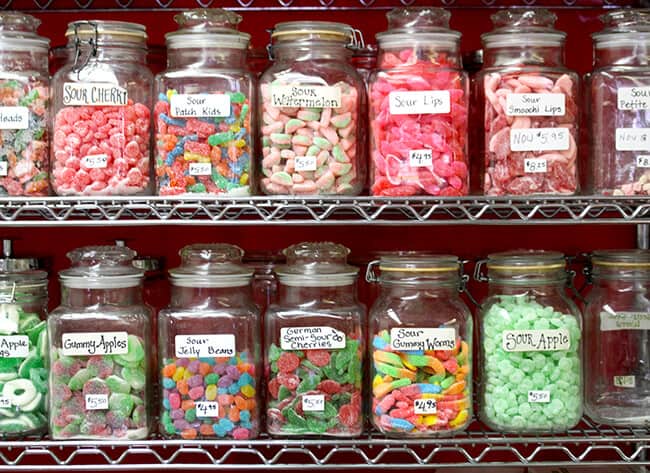
You mean from the tall glass jars youhad to reach down in to, for the gobstoppers, pink fizzers, liquorice string, humbugs, sherbert-in-flying-saucers, aniseed balls.....

Logans-Old-Fashioned-Candies-Orange-County.jpg
 
Firstly this is an off topic area, so discussions in here are not DIY related at all, so why are you complaining about that? Secondly, you are displaying a very middle class attitude by coming up with a one in maybe tweny five thousand exception and so by implication that there are many people in the same situation. They are not. During the pandemic many "professionals" actually did manage to work from home, so just what has changed since then to make it necessary to drive everywhere now? Answer: nothing. Like many "professional" people you don't want to accept that vehicular pollution really is a massive problem and that by driving one so much you are contributing to the problem. It doesn't help that private cars are also a major killer through road accidents - so everyone's quality of life would be improved if the use of private cars were to be drastically curtailed. Note that I am not saying stopped - I am saying limited

I meant building / trades professionals, as opposed to DIYers, not all "professionals". Builders, plumbers, carpenters, electricians etc can't really sell their vans and work from home. This is the general part of the forum, but it is still a DIY/building forum.

I am working from home still, and happy to carry on. I am not pro-car, I just know how impossible life can be in many parts of the country without a car - much harder now than 50+ years ago, when public transport was better, and shops and services were local. My parents, for example, would really struggle if they could no longer drive (a concern of mine) because their village has nothing other than an expensive restaurant (that was once a good pub) and a poor bus service.

But for younger people driving is equally essential. I know many people who live too far from schools, and often have children in play schools, primary, and secondary, and then need to get to a job. It is impossible without a car. Gone are the days when one parent could afford not to work and walk everywhere. And coupled with the fact we no longer live in multigenerational households, there's no grandparents on hand for these tasks either, which links in with the other thread about house building.

I know about pollution, I studied it in Coventry as part of my degree - I stood by the ring road once collecting air samples to measure the distance heavy metals travel through the air - long time ago, it's probably worse now!

 
I don't think that everything today is better - and many things are worse. Can I have a pick and mix, please?

I think that is true for every generation. It's weird, but some things were better when I grew up in the 70s & 80s, but a lot of things were worse!
 
Same principle.

You unload at the site, then park further away if there is no space nearby.

Why is this concept alien to you?
Alien no but also impracticle in real life to some trades, even some councils recognize this and will issue passes.
 
They may issue passes to park in resident's spaces, but not for parking on the pavement.
 
They may issue passes to park in resident's spaces, but not for parking on the pavement.
Double Yellows, two wheels on the road and others can be allowed but it does vary from one council to another. Oxford and Leicester were both very helpful towards trades if you asked nicely. Wouldnt bother asking in London though, better off leaving someone in the van for a couple of hours.
 
Back
Top