Cracks and buldges

Joined
5 May 2024
Messages
31
Reaction score
1
Country
United Kingdom
Hello, seeking opinions...!

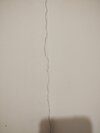
Bought this old house last year. Immediately had roof redone and lots of cracks appeared /reopened in paster throughout house. Have accepted cause was rapid change in load from tiles going off and on.
But paranoid it something more. Like moving walls!
Walls are also a mess with bad chasing.
Question is, what's to be done... I really can't face having them all replastered...but hate the hollow sound when I tap near a crack suggesting it's delaminated from wall.and will spread if I open it with a screwdriver...

Also just don't understand the patterns.... Not quite following the joins but deviating out.

Images:
1. Chasing
2. Lower hall wall ceiling
3. Upper hall corner
4. Upper hall ceiling

Tempted to wallpaper or line and repaint to hide them but not sure that's great idea.

As a minimum, is opening, filling and taping them the way to go rather than just opening and filling them? And sand back the chasing?

 

Attachments

  • IMG_20250218_204006082.jpg
    IMG_20250218_204006082.jpg
    93.1 KB · Views: 75
  • IMG_20250218_204025210.jpg
    IMG_20250218_204025210.jpg
    37.4 KB · Views: 80
  • IMG_20250218_204125990.jpg
    IMG_20250218_204125990.jpg
    48.9 KB · Views: 68
  • IMG_20250218_204143029.jpg
    IMG_20250218_204143029.jpg
    116.1 KB · Views: 70
Nothing major by the looks of it.

If the plaster sounds hollow, then it's probably blown and will need fixing.

Any suitable filler should hide those cracks.
 
Thank you.
Do you think I should use mesh or paper tape over the cracks or is that only for use with a thicker skim coat?
 
Who told you the cause was loading and not thermal? What's their refund policy?

Repair with mesh in the plaster not on the surface.
 
when the roof was done, was it a like for like replacement of the tiles or did you change the type of tiles on there?
 
If the plaster sounds hollow when you tap it, it has as has been said likely delaminated, and the only thing holding it up is the plaster itself, which in an old house is likely to be lime, thick, and quite likely with horsehair in it. In my experience it can be quite substantial and fairly self-supporting. Lining paper over it and painted wall brings some consolidation of old plaster, but if you did take it down, quite likely the edge of a spade under it, a tweak, and the whole wall might drop....How extensive is the hollowness? If it's just a very local spot you'll probably get away with it, if it's a substantial area, better IMHO to bite the bullet and drop it.
 
The house was renovated with external insulation at same time as roof replaced. So it's true two variables changed at once. Structural engineer explained that removing all clay tiles would have allowed significant expansion and then replacing concrete tiles would have resulted in different load.
Most cracks seemed to open then and have only changed slightly over the year... Indoor temp is fairly consistent now. 25 summer to 19 winter.

But I can see paint marks around some cracks suggesting previous attempts to disguise.

Internal Walls are all 1920s blockwork. Existing plaster looks newer in effected areas tbh, kitchen and hall had been renovated 15 year ago.... I suspected that it was a bad plaster job with no mesh or scrim tape in corners etc which has now in parts delaminated and is allowing several big hairline cracks to radiate.

It's only hollow in bits of about 1/2 sqft... Mostly around the cracks. I've scored out some and it didn't all fall off. Some bits did tho revealing old 1920s blockwork. V. Thin plaster only 5mm or so!
 
Last edited:
If most of the cracks have stabilized within a year, that's a good sign that the movement of the structure has slowed down. The cracks seem to be related to the change in load after the roof and exterior insulation were replaced. I can assume this because when I replaced the roof on my house the guys from https://ilroofers.com/ service warned me about this right away and gave me a consultation. The fact that the old plaster was without reinforcing mesh is quite likely - technology was different in the 1920s. If the layer is only 5mm, it is really brittle and will crack easily with the slightest movement. In places where the plaster is hollow, it is better to remove it and re-plaster with glass mesh reinforcement or use gypsum mixtures with high elasticity. Has the foundation been inspected? If the movement continues, it makes sense to check the condition of the foundation, especially after the walls have been insulated from the outside.
 

If you need to find a tradesperson to get your job done, please try our local search below, or if you are doing it yourself you can find suppliers local to you.

Select the supplier or trade you require, enter your location to begin your search.


Are you a trade or supplier? You can create your listing free at DIYnot Local

 
Back
Top