• Looking for a smarter way to manage your heating this winter? We’ve been testing the new Aqara Radiator Thermostat W600 to see how quiet, accurate and easy it is to use around the home. Click here read our review.

Melted plugs any better socket options?

Joined
8 May 2006
Messages
108
Reaction score
2
Location
Essex
Country
United Kingdom
This scenario terrifies me as it happens so often, plenty of threads on this forum.

The cause is normally the same
most likely a wire was not tightly gripped in its terminal. This creates a high-resistance joint which gets hot, as it gets hot it gets looser, so hotter, so looser. Eventually the junction between the wire and the terminal will burn away.

This most often happens with heavily loaded connections, such as the switches for electric showers. For some reason it more often happens with the black neutral wire.
My question, what socket can catch this before melting takes place, more sensitive to the resistance because it's not unheard of for melting to happen but fuse not blow. I've had it with a dishwasher and an electric heater, both moulded plugs (different sockets) fine for a few years then they go and it's only the smoke or smell that made it clear. No fuses blew.
With wiring in the attic I wouldn't have known. I would like something more sensitive before smoke, melted wires and fire.
Many thanks in advance for suggestions.
Pg
 
Last edited:
My mom had this problem with a tumble dryer, I tried a few different makes but the one that seems to have lasted is Crabtree.
 
That is what AFDDs are for. Fit one if you are worried.
 
This is only an option for more recent fuseboards / consumer units - and not all of these - however I'm not convinced AFDD's would be 100% sure of stopping fires
True but reading around it this morning they are a huge step forwards. Mandatory in some circumstances. I intend on having them fitted.
 
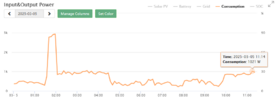
There are so few plug-in items today which use the full 3 kW. 1741174466954.png Use for today, high use charging the batteries with off-peak, but that's not with a plug and socket, the washing machine may be a heavy load, but for rather a short time, same with dishwasher, the tumble drier only uses 600 watt. Well 613 watt at the moment. Showers, Cookers and immersion heater hard-wired the largest continuous load is likely the leaf blower.

The 13 amp plug contains a fuse, so will get hot, so they should be in free air, some appliances actually have fans, my mothers' oven was plugged in, but had a fan to keep the carcass cool, including plug.

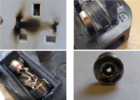
The problem is non-compliant plugs, may be oversize, we see these used,
1741175179447.png
we know they are not to BS 1363, and when found the socket should be changed, yes, and we are really going to do that, other devices
1741175328249.png
also reduce air circulation, some even seal
1741175391303.png
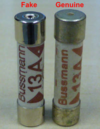
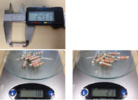
we know when high power is being used, cover should be open, but my outside socket I never worry about. Also, the fuse we see pictures 1741175556198.png on how to tell fake from genuine, and we know the fake produce more heat, We see 1741175719537.png the results blamed on counterfeit fuses, we see the weight and size test, 1741175880632.png now let's see a show of hands, who has ever weighed fuses, or tested length? I never have.

I was once sent to an out station to PAT test, I had a top of range Robin PAT tester at the time, usually I would only PAT test one item, so this was a chance to time how long it took, on average, with a mixture class 1 and 2, and 230 volts and 110 volts. It made no difference how long it took, I had been dropped off, and would be picked up. Due to boot time of Robin tester, and using the auto record, there was little I could have done to speed it up, could not believe how long it took. Around 4 to 5 minutes each, the machine took 3.5 minutes to go through the sequence.

8 x 60 / 5 = 96 a day, and I was going for it. I look at PAT testers, and see 250 items a day, how? Less than 2 minutes per item. The machine takes longer than that, so it would seem fuse size is rarely checked, I did, would start with a bag of 3 amp fuses, and end with a bag of 13 amp fuses. But to remove and weigh them, no way could I afford that time. I would look at colour
1741176895815.png
if the colour was correct, I would assume fuse was correct.

1741177024636.png

Try seeing that on a fuse already fitted, it is not immediately apparent, this
1741177157904.png
is what we see, and if colour correct top goes straight back on.
 
That is what AFDDs are for. Fit one if you are worried.
As with all these new technologies, I have to wonder/ask what evidence there is that a significant number of fires result from arcing (rather thn protracted high currents {which would trip an OPD} or residual currents {wihch would tyrip an RCD.RCBO) - and how common such events are.

It is, in my opinion, an important question in order for one to make cost-benefit judgements/decisions, particularly at present with AFDDs being so expensive.

Furthermore, if their use can be justified (in terms of cost/benefit) why do recommendations only relate to sockets circuits, and not to things like cooker and shower circuits etc.?
 
It is, in my opinion, an important question in order for one to make cost-benefit judgements/decisions, particularly at present with AFDDs being so expensive.
None of the suppliers of AFDD or any bodies gave such an analysis to my knowledge, so the cost/benefit is not known. Fires can start from other faults like a high resistance connection or bad workmanship (too small a cable for the OCPD), failing parts like motor run capacitors inside appliances, or even common ones (discussed in this forum) like lint in tumble dryers catching fire and being classed as "electrical fires" at source.
Furthermore, if their use can be justified (in terms of cost/benefit) why do recommendations only relate to sockets circuits, and not to things like cooker and shower circuits etc.?
Frequently, I have seen an AFD come into play was damage to extension leads due to bending around corners or trapping under furniture which a lot of people do.
 
Last edited:
None of the suppliers of AFDD or any bodies gave such an analysis to my knowledge, so the cost/benefit is not known.
Quite so. That is my concern, given that these new 'innovations' can so easily appear 'because they have become technologically possible', without due regard to actual 'need' or cost-effectiveness,
Fires can start from other faults like a high resistance connection or bad workmanship ....
Quite so, and I suspect (but obviously do not know) that fires initiated by arcing from fall into insignificance in comparison with those due to these 'other faults or bad workmanship.
 
without due regard to actual 'need' or cost-effectiveness,
The primary driver behind the introduction of AFDDs is defective white goods and where portable appliances have damaged flex.
As with all of these things, actual data is mostly comprised of heresay and conjecture.
Damage causing arc faults certainly happens, but the vast majority of incidents will never be reported or recorded anywhere.
 
The primary driver behind the introduction of AFDDs is defective white goods and where portable appliances have damaged flex.
I don't doubt that, but it is also one of my concerns. Is there really any evidence that a significant proportion of fires originating in 'white goods' are the result of arcing? Intuitively, iI would have thought it fairly unlikely, given that the likely sites of arcing are not usually in proximity to materials that could easily (if at all) be 'set on fire' by arcs.

Probably the most publicised case in recent times of fires originating in 'defective white goods' were those affecting tumble dyers (and we actually had one of the affected items0 - but in those cases the fires were nothing to do with anything electrical but, rather, resulted from heated fluff bursting into flames.
As with all of these things, actual data is mostly comprised of heresay and conjecture.
That is, of course, the crux of the basis for my uncertainties and concerns.
 
That is what AFDDs are for. Fit one if you are worried.
I've now got three 32a to be fitted, buy a couple each month as quite pricey, but should the main breaker fuse also be swapped to afdd i.e should I be looking to buy replacement for that as well. ?

My consumer unit (plastic) will be upgraded so I'm going to get everything I need before getting the sparks in.
Thank you again to everyone's helpful answers:-)
Pg
 
My consumer unit (plastic) will be upgraded so I'm going to get everything I need before getting the sparks in.


Hum, sure a save up the money but don’t buy anything before agreeing anything with a spark is my advice
 
Quite so, and I suspect (but obviously do not know) that fires initiated by arcing from fall into insignificance in comparison with those due to these 'other faults or bad workmanship.
In fact, just a few days ago, I encountered a situation where a cooker circuit was arcing and the AFD did not disconnect the circuit. It could have caused damage if it was left unseen luckily I was there to change the CCU.
 

If you need to find a tradesperson to get your job done, please try our local search below, or if you are doing it yourself you can find suppliers local to you.

Select the supplier or trade you require, enter your location to begin your search.


Are you a trade or supplier? You can create your listing free at DIYnot Local

 
Back
Top