• Looking for a smarter way to manage your heating this winter? We’ve been testing the new Aqara Radiator Thermostat W600 to see how quiet, accurate and easy it is to use around the home. Click here read our review.

Sealing around Glass Block Window

Joined
8 Sep 2020
Messages
102
Reaction score
0
Country
United Kingdom
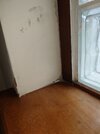
I have a glass block wondow on my stairs landing which is showing some signs of damp on inside.
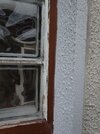
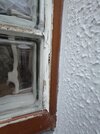
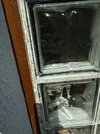
On inspection on outside the putty / sealant around the outside perimeter is cracking a lot.

What would be recomendation for repair - linseed oil putty or could i use a sealant.
I have read that putty is hard to work with and newer sealants would do the job just as well or better ?
Seems like i need to seal the timber frame to the glass blocks ?

Even though the current sealant is cracking it does not come away easily when i try to pry it with my hands.
Any tips on how to remove or just hack away at it ?
 

Attachments

  • Inside 1.JPG
    Inside 1.JPG
    142.7 KB · Views: 50
  • Outside .JPG
    Outside .JPG
    408.3 KB · Views: 57
  • Outside 1.JPG
    Outside 1.JPG
    430.5 KB · Views: 47
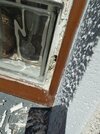
  • Outside 2.JPG
    Outside 2.JPG
    301.2 KB · Views: 51
  • Outside 3.JPG
    Outside 3.JPG
    297.9 KB · Views: 49
Flexible grout maybe?
There are mastics for it but you will be buttering over joint which won't be very good.
Can you scratch out joints a bit?
 
Flexible grout maybe?
There are mastics for it but you will be buttering over joint which won't be very good.
Can you scratch out joints a bit?
What do mean by joints ? Do you mean along the outside perimeter ? I plan to remove the old stuff as mush as I can.
 
Scrape out the joints the reseal with a glass block silicone and a decent heavy duty caulking gun. The silicone can be tooled using Cramer Fugi profiling kit (aka silicone fingers). Glass merchants and some builders merchants sell the silicone you need. Redi2Bond Glass Block Silicone is one I've used, but I'm not a glass man, so there may be other (better?) brands
 
Last edited:
Thanks, just to understand when you say joints - do you mean all the joints around every block or just around the outside?

Would there have been some sort of sealant /putty between each block originally and it's worn away ?
 
Thanks, just to understand when you say joints - do you mean all the joints around every block or just around the outside?
There are joints between the individual glass blocks and between them and the masonry or timber surround. I thought from what you wrote that the joints you were interested were the ones between the timber and the glass? Timber moves a lot more than glass, so a flexible sealant between the two is probably a good idea. I've seen these joints done in mortar (where the glass bricks were built into masonry walls), but I've also come across a couple which were sealed with some kind of semi-flexible mastic as well. Can't say I ever came across a glass block window in a timber frame, however

Would there have been some sort of sealant /putty between each block originally and it's worn away ?
Yes, there would have been something between the blocks (otherwise they window would fall apart when you as much as sneezed at it - the blocks don't interlock). It may well have been putty - that was commonly used for all sorts of glazing, especially indoors - but without a piece of the filling material I can't say what it is. If you can pick it out and it is gritty, then they possibly used either burnt sand mastic or mortar, if the stuff you dig out is whitish or creamish in colour and can be crushed into a sort of powder but isn't gritty, then it's possibly putty.

BTW I am neither a glazier nor a "mastic" man nor a brickie for that matter, but I have seen the installs/repairs done a number of times by the foregoing trades, and I'm reasonably adept, if somewhat slow, caulker. So it's a job I have done occasionally.

I have read that putty is hard to work with and newer sealants would do the job just as well or better ?
Putty isn't difficult to work with at all - it comes pre-mixed in tubs (just check that it's fresh), in cold weather it needs to be warmed up a bit (the tub is popped into a bowl of hot water for 10 minutes), then you dig a chunk out, roll it into a ball in your palms and press it into the gaps, finishing with a clipt point putty knife which can be used to both pack the joint and run along the joint to smooth it. Takes a few days to set, all depending on temperature.

Puttying up is one of those old skills, like sash window recording or french polishing which many trades and homeowners could do at one time, but which are now thought to be arcane knowledge

Any tips on how to remove or just hack away at it ?
Basically the same type of tools you'd use to remove tile grout joints or putty from sash windows. You can get little pick tools for grout removal, bigger joints packed with putty can be cleaned out with an old thin chisel or a glaziers leather-handled hacking knife very carefully. Bigger joints can even be cleaned out with a multitool and appropriate blades (bimetallic saw blades for putty, carbide tile blades for burnt sand mastic/mortar - but you need to be very careful using a multitool as it is easy to damage the glass. Uses a lot if blades, so a task for old blades, not new ones

 
Last edited:
Just getting around to tackling this now
It seems the outer perimeter is sealed with some sort of soft filler it's quite powdery when it breaks down.

I noticed in some spots the mortar between the blocks is also deteriorating and I can see right through to centre in some places.


Any ideas what I should do ( for both )

Still planning to Putty perimeter but would I need to remove everything of previous or can I Putty over what's there. Once I remove the flaking top surface it's quite compact underneath.
 

Attachments

  • 20250628_110352167.JPG
    20250628_110352167.JPG
    381.1 KB · Views: 34
  • 20250628_105628263.JPG
    20250628_105628263.JPG
    369 KB · Views: 34
  • 20250628_104734908.JPG
    20250628_104734908.JPG
    266.1 KB · Views: 35
  • 20250628_104730997.JPG
    20250628_104730997.JPG
    403.8 KB · Views: 32
I once used glass blocks inside. The suppliers had guides describing how to install them and also sell suitable products. See for example:


Note in particular the mortar/grout. You could re-point between the blocks using that. I remember the stuff I used being described as “wide gap grout”. It looks like you have the same material around the edge as between the blocks, so maybe it would also work there.

The silicone they are offering looks bog-standard.
 
Do you like the glass blocks? Would you consider replacing them with a window?
 
I once used glass blocks inside. The suppliers had guides describing how to install them and also sell suitable products. See for example:


Note in particular the mortar/grout. You could re-point between the blocks using that. I remember the stuff I used being described as “wide gap grout”. It looks like you have the same material around the edge as between the blocks, so maybe it would also work there.

The silicone they are offering looks bog-standard.
Thanks yeah I'm thinking white silicone around the perimeter to give some flexibility and filling white mortar / grout between the joints where there are gaps.
 
Do you like the glass blocks? Would you consider replacing them with a window?
I do like them, they are in the side of the house on the stairs landing so to replace them I would need a large occluded fixed window which wouldn't look as nice imo.
 
If you don't want to faff around with traditional hard to handle linseed oil putty, then Evo-Stik make an acrylic based alternative if you want to give a single tube a try first.
Thanks, yeah was looking at other sealers which I could get in white - sikasil 825 seems like it might work for glass and wood ?

 
As you are considering sealers other than original putty, then Everbuild's white Everflex 195+ siliconized sealant has never disappointed me for sealing outside, and I find it easy to use and clean up when I'm finished. . . £2.98 a tube at Toolstation(y)
If you have a Toolstation within striking distance, give a tube a try.
https://www.toolstation.com/siliconised-acrylic-sealant/p28222
 
As you are considering sealers other than original putty, then Everbuild's white Everflex 195+ siliconized sealant has never disappointed me for sealing outside, and I find it easy to use and clean up when I'm finished. . . £2.98 a tube at Toolstation(y)
If you have a Toolstation within striking distance, give a tube a try.
https://www.toolstation.com/siliconised-acrylic-sealant/p28222
Are there any pros and cons to Putty vs sealant ?
 

If you need to find a tradesperson to get your job done, please try our local search below, or if you are doing it yourself you can find suppliers local to you.

Select the supplier or trade you require, enter your location to begin your search.


Are you a trade or supplier? You can create your listing free at DIYnot Local

 
Back
Top