Hello,
I am in the process of cleaning up my victorian cellar, which is progressing well. Currently fitting/replacing some of the insulation between the joist and I have encountered a damp spot.
I would like to know what your guess is for the source of this and if there is a cost effective method to remediate this to avoid further damage. Let me paint a picture for you guys:
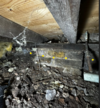
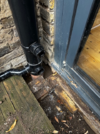
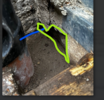
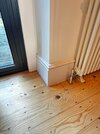
This is under the floor at the rear side of my house. There is a balcony door leading out to the side return. There is also my SVP in the corner connecting to the sewer. There is no smell, so I doubt it's a leak of the SVP or the sewer below. The SVP has recently been refitted. The suspended timber floor sits on joists, which sit on a wall plate, which sits on these "sleeper walls". I don't actually know if this is still considered a sleeper wall if attached to the outside wall of the house. On the above-floor-image you can see some evidence of damp coming up on the wall to the right of the balcony door, but I think it's an older mark. I scribed a line around the patch 6 months ago and it hasn't moved since.
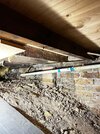
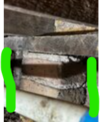
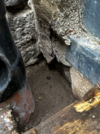
The damp area is where the copper pipe goes up to feed the radiator above. Also here the copper pipe feels dry, so I don't think that is leaking. With the amount of damp I would be loosing a bar a day on my closed system if it were that. The soil in the area feels damp to the touch (nothing too surprising for this type of property), so are the bricks of sleeper wall and you can see how it penetrated the wall plate. The two sleeper walls before appear dry, however the wall they are attached to is still internal. Other info, it has not rained in days at the time of the picture.
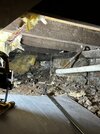
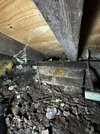
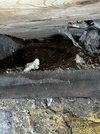
Here are my thoughts: the outside ground closest to this is dry (as it hasn't rained in a few days), so I don't think there is water ingress from the outside going through the wall plate and through the sleeper wall into the ground. My guess is, the soil is just damp (as commonly is) and penetrates up the bricks, and since there is no DPC between the sleeper wall and the wooden wall plate it penetrates the timber. The joist that sits on the damp wall plate appears dry, but I think I see some historic water stains, so it may have been impacted previously when dampness was high.
What can I do here safely to have some sort of DPC, to stop damp going up into the wall plate?
- Get a Damp Proofing kit, drilling a few holes and injecting a chemical DPC?
- Could I source a thin metal sheet (like a stainless steel sheet) and dry and hammer it in the mortar to form a barrier?
- Any other ideas/suggestions?
At some point I am looking to get a side return extension done, so the area would be dug out, but who knows when that will be.
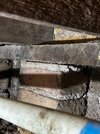
Interestingly, the sleeper wall before is not even fully supporting the wall plate. I am thinking, in this gap I could simply push something in to create a barrier? Or rake out and apply new mortar? Although that might then just create the bridge to let water into the wall plate above...
Thoughts?
I am in the process of cleaning up my victorian cellar, which is progressing well. Currently fitting/replacing some of the insulation between the joist and I have encountered a damp spot.
I would like to know what your guess is for the source of this and if there is a cost effective method to remediate this to avoid further damage. Let me paint a picture for you guys:
This is under the floor at the rear side of my house. There is a balcony door leading out to the side return. There is also my SVP in the corner connecting to the sewer. There is no smell, so I doubt it's a leak of the SVP or the sewer below. The SVP has recently been refitted. The suspended timber floor sits on joists, which sit on a wall plate, which sits on these "sleeper walls". I don't actually know if this is still considered a sleeper wall if attached to the outside wall of the house. On the above-floor-image you can see some evidence of damp coming up on the wall to the right of the balcony door, but I think it's an older mark. I scribed a line around the patch 6 months ago and it hasn't moved since.
The damp area is where the copper pipe goes up to feed the radiator above. Also here the copper pipe feels dry, so I don't think that is leaking. With the amount of damp I would be loosing a bar a day on my closed system if it were that. The soil in the area feels damp to the touch (nothing too surprising for this type of property), so are the bricks of sleeper wall and you can see how it penetrated the wall plate. The two sleeper walls before appear dry, however the wall they are attached to is still internal. Other info, it has not rained in days at the time of the picture.
Here are my thoughts: the outside ground closest to this is dry (as it hasn't rained in a few days), so I don't think there is water ingress from the outside going through the wall plate and through the sleeper wall into the ground. My guess is, the soil is just damp (as commonly is) and penetrates up the bricks, and since there is no DPC between the sleeper wall and the wooden wall plate it penetrates the timber. The joist that sits on the damp wall plate appears dry, but I think I see some historic water stains, so it may have been impacted previously when dampness was high.
What can I do here safely to have some sort of DPC, to stop damp going up into the wall plate?
- Get a Damp Proofing kit, drilling a few holes and injecting a chemical DPC?
- Could I source a thin metal sheet (like a stainless steel sheet) and dry and hammer it in the mortar to form a barrier?
- Any other ideas/suggestions?
At some point I am looking to get a side return extension done, so the area would be dug out, but who knows when that will be.
Interestingly, the sleeper wall before is not even fully supporting the wall plate. I am thinking, in this gap I could simply push something in to create a barrier? Or rake out and apply new mortar? Although that might then just create the bridge to let water into the wall plate above...
Thoughts?