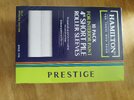
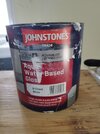
How to stop this when painting doors?

Joined
11 Jun 2016
Messages
357
Reaction score
17
Country
United Kingdom
Why is this happening?

Using the rollers in photo & what looks like burst bubbles have been left afterwards. What am i doing wrong?

Another thing is, the amount of specks of dust i have to denib between coats is unreal sometimes.

What i have been doing between coats is

Denib.
Wipe with damp cloth.
Use tack cloth.
Strain paint.
Rinse roller & then use masking tape to remove any fluff.
Use a comb on brush to remove particles.

Anything else?????

 

Attachments

  • IMG_20260516_120327.jpg
    IMG_20260516_120327.jpg
    132.3 KB · Views: 12
  • IMG_20260516_120559.jpg
    IMG_20260516_120559.jpg
    331.1 KB · Views: 12
Never put paint that you have used back in tin.
Never dip brush in the paint tin.
You don't want to contaminate your paint with particulars picked up on brush.
Uee a paint kettle or roller tray.
If you have bits in the paint strain it through some tights.

Sand.
Clean over surface with damp microfiber cloths to remove particles.
Paint surface.
Walk away and don't create any dust the could float in air.

What paint and undercoat you using
 
They do look like air bubbles which have burst.

I would recommend thinning the paint slightly and applying less pressure. You can use water or additives such as Floetrol.

Are you using waterbased paint? Like @Wayners I am a decorator. Unlike @Wayners I hate working with (most) waterbased finishes. One of my gripes is that they are a mare to sand flat between coats. I try to use 180g-240grit mesh paper. I suspect that the residual paint that you have sanded back is sticking to the surface that... or that the surface pdaint is ripping very slightly and making it look like "dust".

What are you denibbing with between coats? Are you denibbing the day after?

I haven't used tack clothes since the days when I was spraying furniture with 2K paints. They helped but I would still use a very stiff dusting brush and then use a brush attachment on my dust extractor/vacuum and, occasionally, blast the surface with an air gun.
 
I wondered if that's fish eye in the paint @opps
I've had that maybe twice over the years but I've always cleaned surfaces
 
Never put paint that you have used back in tin.
Never dip brush in the paint tin.
You don't want to contaminate your paint with particulars picked up on brush.
Uee a paint kettle or roller tray.
If you have bits in the paint strain it through some tights.

Sand.
Clean over surface with damp microfiber cloths to remove particles.
Paint surface.
Walk away and don't create any dust the could float in air.

What paint and undercoat you using
Not put used paint back in tin.
Only dipped brush once in tin & that wasn't using it on doors.
Been using paint kettle.
Run out of tights, using a mesh sieve.
As I was hoping it was last coat, used 240g paper to denib & run lightly over surface.

That's the paint+ their undercoat.
 

Attachments

  • IMG_20260514_094430.jpg
    IMG_20260514_094430.jpg
    344.1 KB · Views: 3
I wondered if that's fish eye in the paint @opps
I've had that maybe twice over the years but I've always cleaned surfaces

I get what you are saying. You could be correct- I dunno.

In my experience fisheyes are far flatter. I could be wrong though.

I have had them when using 2k paints- that was possibly down to me not removing enough of the dust when sanding between coats. When spraying, silicone contamination is a common culprit. But I was spraying raw MDF and it didn't happen with the 1K primer.

I have encountered it when using the likes of waterbased Farrow and Ball emulsion paints over the cutting in lines after I have used oil based eggshell for architraves. Annoyingly, with the F&B, I found it would fisheye days after the OB eggshell had been applied.

In my limited experience, the edges of fisheyes are much less pronounced.

With regards to the F&B fisheyes over oil based paints, the solvents were repelling the F&B emulsion. I had to wait an hour or so, until the emulsion had dried very slightly and then dragged the brush back over it.

It might help if the OP tells us which paints they are using.

Edit- sorry OP, was posting at the same time.
 
Yes, i have done. What i did was go over with the roller again & that seemed to work.

Evidence of bubbles would suggest air rather than contaminants (ie not fisheyes).

As per my earlier post, try less pressure and mist the roller with water so that it is less inclined to expel air. Again, thinning the paint might help, but you have since discovered that a double roll works. Perhaps stick with that and see how you get on. The only down downside with the double roll is that it may leave you with an inconsistent sheen (ie some areas that are less shiny than others).
 

If you need to find a tradesperson to get your job done, please try our local search below, or if you are doing it yourself you can find suppliers local to you.

Select the supplier or trade you require, enter your location to begin your search.


Are you a trade or supplier? You can create your listing free at DIYnot Local

 
Back
Top