The domestic distribution board can be type tested, which means under 125 amps total, single phase, and all within the board has been tested to be used together, so you can't have a mixture of makes, or put items like a bell transformer from another manufacturer in the board and this is called a consumer unit. There is no real difference to any other distribution board except it has been type tested.
In practice never seen one over 100 amps. The layout is mainly down to the division of the installation into circuits, and the requirements under BS7671, my copy is old (2008) and it talks about
(iii) take account of danger that may arise from the failure of a single circuit such as a lighting circuit
(iv) reduce the possibility of unwanted tripping of RCDs due to excessive protective conductor currents produced by equipment in normal operation
among other things, which we read to mean the lights and the sockets in any room will be supplied from different circuits and a RCD forms a circuit, so the lights and sockets should not be from same RCD in any room.
Also, the RCD needs to either have the total of MCBs under its rating or the main fuse needs to be under its rating.
But there was a problem, many homes have the lighting split upper and lower floor, but the sockets split side to side, so it was impossible to have upstairs lights with downstairs sockets, as the wiring did not permit it. So with only two RCDs the only option was lights on one, and sockets on the other.
Before the RCD and after the RCBO splitting sockets side to side makes more sense, as with a failed socket no one is temped to run extension leads up and down stairs, but in the years of the twin RCD only, installers did start to split sockets up and down so up sockets could go with down lights etc.
As time went on we got the high integrity unit, not a clue why it got that name, but it had three instead of two neutral bars, and could have a couple of RCBOs installed to get around the problem of splitting sockets a different way to the lights.
However, since your sockets are split up/down, there seems to be no reason not to have one set of sockets on each RCD. With the high integrity units often the lights were on a RCBO post 2008, or MCB pre 2008 the reason for the date, was a change in the earthing arrangements in bathrooms.
If it were my home, I would be looking as swapping the left hand RCD to an Isolator and fitting all RCBOs on the left-hand side, around it seems £85 in parts.
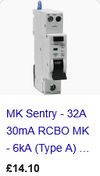
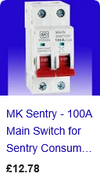
but
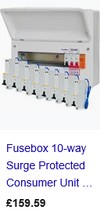
a whole new consumer unit, is not that much more expensive, so that may be a better option by time you have paid an electrician to fit it?
The new consumer unit would have a surge protection device in it, as to if required, not so sure, I was thinking my SPD was why my bulbs were lasting longer than my sons, then a RCBO failed, and on renewing it, found the tail was not connected on the SPD, so clearly that was not the reason, well it may have been, as I have two, an extra one fitted with the solar panels.
I am sure someone will as normal say how I am wrong, but that's the whole point of a forum, someone can have a different option or correct errors.
OK a new consumer unit will not cure the fault, but it will mean a similar fault in the future will not be as much of a problem.
It would seem you will need an electrician, but you will have a better idea as to what is worth doing. It is in essence a risk assessment, can you risk loosing a freezer full of food? I decided no, it was too high of a risk and went all RCBOs, but there is nothing forcing you down that route, all you need to do is understand the risk if you don't.