New oven - with conflicting connection information.

Joined
14 Feb 2003
Messages
66
Reaction score
1
Country
United Kingdom
Hello all

I just removed an old oven which was on a 13A plug.

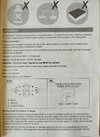
The new oven I have bought needs a fixed connection, but the manual is stating a 16A FCU, which are N/A in the UK (the internet indicates it might be an EU thing).
However, according to the labels and the manual the rating of the appliance is 3000W, (the same as my kettle) - according to my maths this should be OK on a 13A FCU.

Please can I have peoples thoughts' on this?
 
It'll be fine.

16A is the (virtually) ubiquitous circuit found sur le continent, and the UK instructions were written by an idiot.
 
It should probably be connected to a dedicated cooker circuit with a suitably-rated MCB in your consumer unit.

Do you have a cooker circuit?

Is there also an electric hob?
 
RING FINAL CIRCUIT ARRANGEMENTS, REGULATION The load current in any part of the circuit should be unlikely to exceed for long periods the current-carrying capacity of the cable (Regulation 433.1.5 refers). This can generally be achieved by: (iii) connecting cookers, ovens and hobs with a rated power exceeding 2 kW on their own dedicated radial circuit
This only applies to ring finals, radial circuits don't have the same problem. As long as the 13 amp FCU or a cooker connection unit with no larger than a 32 amp overload is used there should not be a problem.

Ovens, hobs, and cookers, do not tend to give the maximum supply, if the appliance has internal overload protection it is not required, but often they don't, so we look at tradition, and that is 32 amp feeds for the cooker.
 
It should probably be connected to a dedicated cooker circuit with a suitably-rated MCB in your consumer unit.

Do you have a cooker circuit?

Is there also an electric hob?
Hello and thanks.

The cooker feed it is a 6mm T&E on a 40A MCB - but it is currently in use with a ceramic hob (power rating unknown)
The old oven was a plug in unit on a single socket spured from the 32A ring final.

(The connections were like this when I got possession of the (out)building)
 
You can almost certainly connect the oven to the cooker circuit as well as the hob. That is, after all, what it is intended for.
 
I guess I need to see if I can find the power rating of the hob and I can work from there - I'll try and see it tonight.
Thanks to everyone for their help.
 
Aren't 13A appliances supplied with a plug ?

I'd assume direct connection if it states 16A
 
Aren't 13A appliances supplied with a plug ?

I'd assume direct connection if it states 16A

Usually yes AFAIK.
This unit has no plug on it, it is a cabled in unit.

The manual specifically states a "16A Double poled switched fused spur outlet." - even the picture in the manual looks like a standard FSU.
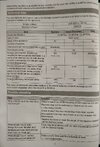
But the spec page states "maximum power 3000W" (12.5A @ 240v) - (I wonder if they get the 16A from a 220V supply?? =13.6A)

The living space has recently all been replastered and re-decorated, plus the CU has no spare ways in it, and there is no space for a new CU, so adding a new feed specifically for this oven is not an option.

I'm not proposing putting a plug on it, but am trying to figure out the FSU required or best other safe solution since a 16A FSU is N/A un the UK.

A poster further up has advised 16A tends to be a EU thing, not UK and 13A will suffice.

Another poster has recommended I put the oven on the hob feed (6mm 40A), I need to check the power rating of the already attached ceramic hob before I do this. But, if I do go with this solution (if the capacity/load is OK) it's still not a good idea to connect the oven directly to this feed as it is 40A, so will still need to be fused down to something safe for this oven - which brings me back to the 16A / 13A fused spur issue.

(I just dig around the internet for the specs. and found these)
Specifications:
Amp rating 13A
Brand Cooke & Lewis
Power consumption in use 3kWh
Power output 3000W
 

Attachments

  • IMG_20260906_171600.jpg
    IMG_20260906_171600.jpg
    376.9 KB · Views: 13
  • IMG_20260906_174536.jpg
    IMG_20260906_174536.jpg
    458.9 KB · Views: 12
Last edited:
it's still not a good idea to connect the oven directly to this feed as it is 40A, so will still need to be fused down to something safe for this oven

No it doesn’t. It’s just an oven, connect it to the cooker circuit.

What make is it?


Edited to add: I’ve looked at the instructions you posted. What a load of nonsense. Ignore them.
 
Last edited:
If the total load is under 20kw, both will work fine on the cooker circuit.
 
No it doesn’t. It’s just an oven, connect it to the cooker circuit.

What make is it?


Edited to add: I’ve looked at the instructions you posted. What a load of nonsense. Ignore them.

Cooke & Lewis

The brand is Cooke & Lewis

If a 16A device develops a fault on a 40A feed, are there no knock on effects??
I guess if the unit just fails - no problem, but if the unit starts drawing (say) 21Amps due to a fault, would this not cause potential overheating inside the appliance and a fire risk? Or will the unit just "fail" and go open circuit? - hence solving the potential fire risk?
 
If the total load is under 20kw, both will work fine on the cooker circuit.
Hello, thanks, I don't mean to upset you but an wondering if I am doing something wrong with my maths.

From, my calculations 20Kw is around 80amps, and this is a 40A feed on a 6mm radial. Or is there an assumption that both appliances will never be working at full power?
 

If you need to find a tradesperson to get your job done, please try our local search below, or if you are doing it yourself you can find suppliers local to you.

Select the supplier or trade you require, enter your location to begin your search.


Are you a trade or supplier? You can create your listing free at DIYnot Local

 
Back
Top