
Search results
-
D
Making a concrete floor for a shed
I'm assuming the polythene sheet is to maintain a dry floor, and the insulation is to avoid a cold floor.- DIYalot
- Post #7
- Forum: Floors, Stairs and Lofts
-
D
Making a concrete floor for a shed
Thanks. Indeed, in the scheme of things a light weight item for the floor to handle. I think I get what all the items are, exept the insulation. What is the 50mm of insulation?- DIYalot
- Post #5
- Forum: Floors, Stairs and Lofts
-
D
Making a concrete floor for a shed
I'm thinking of buying an OMEC 650 M dovetail machine. It weighs 130Kg. http://www.cantarinigroup.it/en/machines-for-wood/650-m-.html If I went for the 450 M weight would be 100Kg: http://www.cantarinigroup.it/en/machines-for-wood/450-m-.html- DIYalot
- Post #3
- Forum: Floors, Stairs and Lofts
-
D
Making a concrete floor for a shed
Hi. I want to put some machinery inside a 12' x 10' wooden or metal shed. It's best I think to mount the machinery on a concrete floor rather than a wooden floor. Because I want to sound-proof the shed to minimise noise, and that's not really going to be possible if the machinery is standing...- DIYalot
- Thread
- concrete floor shed
- Replies: 8
- Forum: Floors, Stairs and Lofts
-
D
Re-routing the ring main: New circuit?
Ok. If I want to cut my costs down easiest thing to do, would be to chase out the channel for the wire, fix the metal back boxes, buy the sockets and the wire, and simply let an electrician do the wiring and the testing. Well, I might be able to do the wiring myself, but in that case I think it...- DIYalot
- Post #3
- Forum: Electrics UK
-
D
Re-routing the ring main: New circuit?
Hi. I need to break into the down-stairs ring main, and insert a new section, adding about 5 meters length. The new section will have two sockets. I will use 2.5mm cable. Is this classified a new circuit? Or is it something less? Thank you.- DIYalot
- Thread
- Replies: 8
- Forum: Electrics UK
-
D
How do I prepare the walls for wallpapering?
Well, it's quite a large lobby, I mean, it's about as big as a small kitchen, it's sort of a hallway-ish that we used to pass through before getting into the part of the house where we lived. Before I realized a heat gun would work on the walls, I'd already removed the plaster from one wall. I...- DIYalot
- Post #3
- Forum: Decorating and Painting
-
D
How do I prepare the walls for wallpapering?
Hi. My home was built in 1958. In the 1970's the walls of the lobby were painted. I've removed all paints from the walls. There were 3 coats, the last coat would have been put on about mid 1970's. The final coat was glossy and bubbled up when paint remover was applied. The very first coat did...- DIYalot
- Thread
- Replies: 2
- Forum: Decorating and Painting
-
D
Internal door bent: Can it be saved?
The internal door is from 1958. I removed the first layer of modern paint with a heat gun. East peasy. Then I got to working on the older paints to try to get down to the bare wood. That took more time, heat and effort. I've only done one side of the door. But, to my complete surprise, I have...- DIYalot
- Thread
- Replies: 0
- Forum: Decorating and Painting
-
D
Removing paint: Time for sanding?
I suppose the surface - as now is, which is partly bare wood, partly the old paint - will take a primer? Assuming I'd use a primer. I'll be wanting a cream or white colour as top coat.- DIYalot
- Post #7
- Forum: Decorating and Painting
-
D
Removing paint: Time for sanding?
Since I will be repainting this door, does the picture show that I'm okay to leave things as they are (not down completely to bare wood) and just repaint?- DIYalot
- Post #5
- Forum: Decorating and Painting
-
D
Removing paint: Time for sanding?
I think the situation is, here, that the wood is fairly textured, (not very smooth) and the blue paint is lodged in crevices. And that it will take sanding to remove all the blue. But, I'm not an expert.- DIYalot
- Post #2
- Forum: Decorating and Painting
-
D
Removing paint: Time for sanding?
Hi. The door is from 1957. It was first painted with a dark blue paint, then green, then yellow. I used a heat gun and the yellow blistered and peeled off easily. Then I used Wickes Paint Remover and that softened the green so I removed that. Then I have used the paint remover on the blue...- DIYalot
- Thread
- Replies: 7
- Forum: Decorating and Painting
-
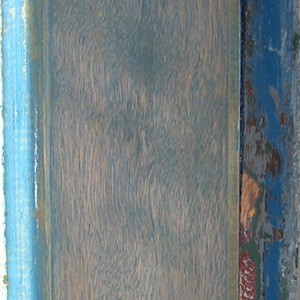
Door Front
- DIYalot
- Media item
- Comments: 0
- Album: DIYalot Things
-
D
Removing oil-based paint from browning
I've just used a heat gun and it works, but it's not quicker. Paint comes off and then I can use white spirit to finish off. I think only mechanical abrasive tool would speed things up.- DIYalot
- Post #2
- Forum: Decorating and Painting
-
D
Removing oil-based paint from browning
I don't think I can do better than what I'm doing, but I'll ask anyway. Oil-based paint was put over browning in the late 1960's. I'm now taking it off, so the browning can be skim plastered. I've got myself some Wickes own paint and varnish remover and that softens the paint, but paint does...- DIYalot
- Thread
- Replies: 3
- Forum: Decorating and Painting
-
D
Creating a firm anchor in "no-fines" wall for hanging boiler
I'm glad I asked. So, I need a chemical mortar or resin to fill the cavity with. And that is the proper way to do this. Thanks. By the way, I'm not installing the boiler, just seeking to prepare the wall correctly for an installer.- DIYalot
- Post #4
- Forum: Plumbing and Central Heating
-
D
Creating a firm anchor in "no-fines" wall for hanging boiler
Hi. My boiler was hung on a metal fixing plate (44 Cm x 6 Cm) that was screwed onto a "no-fines" concrete wall. It's now off the wall, but it needs putting back up again. But, I'm not happy trying to screw it back onto the "no fines" wall. I don't think it's very safe to do so. What I want to...- DIYalot
- Thread
- Replies: 15
- Forum: Plumbing and Central Heating
-
D
No provision of a new CU and no new circuit - Minor Work?
What would be the correct certification to make out if the work done did simply consist of disconnecting then reconnecting wires in a CU? I think it would be the Electrical Installation Condition Report (EIC). I don't believe that the Minor Electrical Installation Certificate is appropriate.- DIYalot
- Post #21
- Forum: Electrics UK
-
D
No provision of a new CU and no new circuit - Minor Work?
Seems reasonable to take the view that you cannot really argue against discouraging the disconnecting and then reconnecting by the DIYer - of a CU. Although some may be confident.- DIYalot
- Post #16
- Forum: Electrics UK