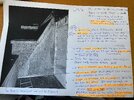
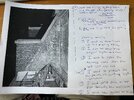
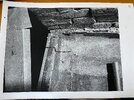
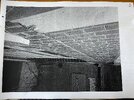
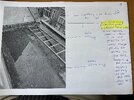
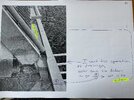
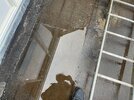
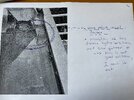
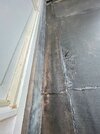
Problem there is that I cannot push it back towards the wall, before the wall is repaired, and for this I do not have access> This situation "developed" in a following manner:
1. I accepted offer from a roofing company to sort out the problem of extensive water retaining on the balkon.
2. Assumption was that the water was staying there because the floor was wrongly put on top of the hydroisolation, and wooden planks that supported the floor were indeed in the way of the water to drain.
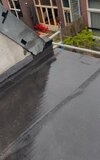
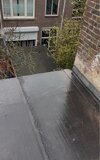
3. When floor and its supporting planks were removed, it became clear that it was not only that - the foor design worsened the situation, creating real "lakes" on the balcony, but the main problem is wrong slope of the deck, plus wrong overlapping of bitumenous hydroisolating material on top of the wooden deck.
4. Roofers say: we cannot do anything about this, you have to live with that, we can only put another layer of hydroisolation on top but it will stay with water retaining as is.
5. I did not accept that but it was too late: they already made the slit for lead flashing that was supposed to be above the new layer of hydroisolation (which was never put).
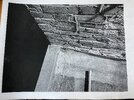
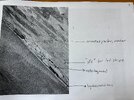
6. The original hydroisolation (visible on my photos) contains 2 layers, it was pressed to the wall with a metal stripe, metal stripe is removed (and cannot be returned there)
7. The wall: brick wall had 3 cm of soft plaster on bricks, and it was covered with thin (3-4 mm) layer of cement mortar. Then the upstand was burned on it and pressed with a metal stripe. But that wall was already in very bad condition - this wall is extremely exposed to the weather.
7a) Originally this was an inside wall and there was an angled slated roof that was removed to create a balcony, thus exposing the wall outside.
5a) When they made the slit for the led, the mortar and plaster crumbled down, as major part of the slit was in that soft material, not in bricks. They did not expect this to happen, and they said no problem, we will deepen the slit into the bricks and it will be fine. I told them to stop working as I was not sure if they really knew how to deal with that situation (broken wall), plus I cannot accept water to stay there on the balcony. Apparently over here in the Netherlands this is quite common and they don't bother much about wrong roof slopes and water staying on roofs and terraces...
8. Roofers now offered two solutions, I did not accept either as in both cases that said that they cannot guarantee 100% no water (now water stays forever after the rain). Their first solution is to remove the hydroisolation and use mortar for egalisation directly on wooden deck, try to fix the slope and cover with new hydroisolation. Their other option is to destruct everything and make new wooden deck and cover with hydroisolation.
9. I am afraid of more problems when and if they open all that, as they do not really leave impression of a skilled company.
10. I got 10.000 EUR offer from another, reliable constructor to resolve this with full warranty, but that would be too expensive, plus I do not think it is needed: there is no leakage, wood below is for sure good.
10a) There is even more complicated issue there - I will post additional photos with my comments there as well so it may be clearer... (we had to replace the big window - in order to renew the hydroisolation properly - old window had been placed directly on the deck, no lead flushing it started to rot. New window (door and windows) is placed correctly on raised wood that was first hydroisolated, then led was put between the window and its support. Now, if they want to destruct the wooden deck - there will be the problem and the whole story of (very expensive) window replacement basically looses value...) and we can expect additional poorly designed and executed solution...
11. I was thinking to clean well that bottom part, then fill in the space with bitumen. Then possibly make a wooden cover that will afterwards be covered with new uplift part?