

Hi all,
Our wall has been overboarded with plasterboard on wooden battens, which has left an existing 2G socket recessed roughly 20–25mm back from the finished plaster surface (photo attached).
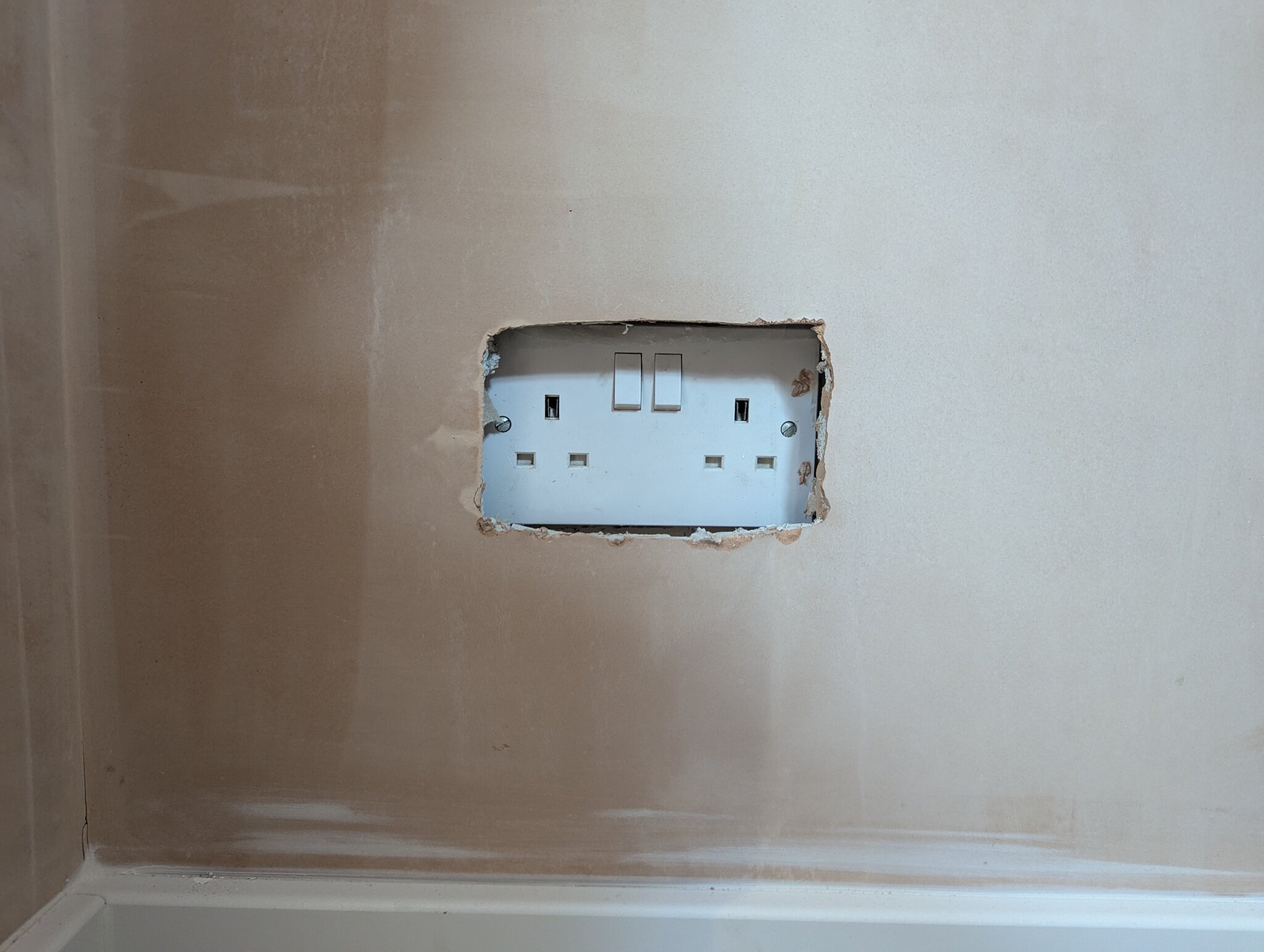
I'm looking for the cleanest, regulation-compliant way to bring the existing white plastic faceplate forward so it sits flush on top of the plaster, ideally without having to disconnect and re-terminate the circuit wiring if I can avoid it.
Given that there are timber battens behind the plasterboard, what is the preferred method here?
• A 2G 25mm galvanised steel extension box: Removing/drilling out the extension box's own screw lugs so long M3.5 screws pass straight through and clamp the faceplate, extension box, and rear back box tightly together (and whether a separate earth flylead is still required if it's clamped metal-to-metal like this)
• A 2G dry-lining box: Fitted into the plasterboard with the rear knockouts removed so no earthing is needed
• Extra-long M3.5 screws alone (with or without an intumescent pad/spacer)
Any advice on the neatest and safest approach would be much appreciated. Thanks!
Our wall has been overboarded with plasterboard on wooden battens, which has left an existing 2G socket recessed roughly 20–25mm back from the finished plaster surface (photo attached).
I'm looking for the cleanest, regulation-compliant way to bring the existing white plastic faceplate forward so it sits flush on top of the plaster, ideally without having to disconnect and re-terminate the circuit wiring if I can avoid it.
Given that there are timber battens behind the plasterboard, what is the preferred method here?
• A 2G 25mm galvanised steel extension box: Removing/drilling out the extension box's own screw lugs so long M3.5 screws pass straight through and clamp the faceplate, extension box, and rear back box tightly together (and whether a separate earth flylead is still required if it's clamped metal-to-metal like this)
• A 2G dry-lining box: Fitted into the plasterboard with the rear knockouts removed so no earthing is needed
• Extra-long M3.5 screws alone (with or without an intumescent pad/spacer)
Any advice on the neatest and safest approach would be much appreciated. Thanks!
