Hello Martin.
I went into DiyNot to look for a Bosch cooker problem and saw the 'Alerts' sign up with your message there. I assumed that Diynot would send an email to me when there was a response but it does not seem so.
The Hotspur is still runniing well, but my friend died in July '24 and I'm clearing the house at the moment. She reached 100 years! There's about 400 litres left in the fuel tank and I'm eaking it out to cover this winter while I work in the house. The house is to be sold and of course everything will be ripped out by the new owner and the Hotspur will go on the skip!
Hi Ponsonby,
I got an email advising of your reply fine so perhaps you need to check the DiyNot Settings or your Spam?
Sorry to hear of your friends passing but she had a very good innings didn't she !
Sad to think of the boiler in a skip but you're probably right. You could try the Science Museum or Milestones in Basingstoke but I'm not sure they'd be interested. Sectioning it for display would be cool but a lot of work !
Presumably, being in London, you have mains Gas there so amazing it wasn't replaced by a Gas boiler in the 70s. Apparently someone realised that Oil prices would come down again.
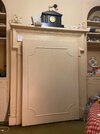
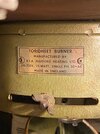
Thanks a lot for the photos ! Looks like yours is a Hotspur 60 from the nameplate.
If you've got the time it would be great to have a photo of the heat exchanger arrangement towards the top of the boiler with the retarder / top plate removed. Probably similar to the Wilson Wallflames .... quite simple up to 75,000 BTU/hr ?? with larger models up to 150,000 BTU/hr having fire tubes (I know this because a friend's parents lived in a small mansion when i was a kid and there was a Wilson Wallflame 150 in the kitchen with a huge asbestos cement chimney lol)
Interesting point on Human Error happended with the Wilson 150. When they were going to move in they got a neighbour to have a look at the boiler since they had a smaller Wallflame themselves. The neighbour had a look at the 150 and noted a lot of brown soot deposits in the burner area (refractory area) which he cleaned with a dustpan & brush and fired it up. He increased the air to give a blue flame with some yellow tongues.
When they moved in they had a Service Technician attend to service it properly. He saw the state of the boiler, with thick deposits of brown soot which he cleaned and then he further increased the air to give a nearly entirely blue flame. This is incorrect for a Wallflame (requiring too much excess air that cools the products of combustion down).
More modern burners have a clean flame with higher CO2 readings than the Wallflame could attain (high CO2 indicates less excess air). I believe that this is because a Pressure Jet burner (Gun type American) atomises the oil to a fine mist while the Wallflame produced small droplets of Kerosine. Mind you it must be remembered that the Wallflame burner is a late 1940s design by Timken USA (presumably the bearing people).
Howden Engineering of Scotland improved on the Wallflame with their Dynaflame burner that produced an entirely blue flame with a relatively high CO2 reading btw. This burner was used by Worcester in their Firefly HDII oil fired boilers when their stocks of the Wallflame were exhausted. It can be seen on YouTube if interested.
I applied this Human Error experience to when I bought a second hand car and the front tyres were badly worn due to bad tracking. I emphasised to the Garage that the car drives & coasts so well that the bad tracking must be historical so to bear this in mind when checking the tracking.
They didn't adjust the tracking and it's fine.
With best regards,
Martin