• Looking for a smarter way to manage your heating this winter? We’ve been testing the new Aqara Radiator Thermostat W600 to see how quiet, accurate and easy it is to use around the home. Click here read our review.

Cold bridge at new patio doors – sill resting on brickwork? Installer says “nothing more can be done”

Joined
4 Feb 2023
Messages
247
Reaction score
8
Country
United Kingdom
Hi all,

I’d appreciate some advice from people who know more about window/door installation than I do.

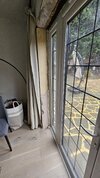
We had new REHAU Rio patio doors with sidelights fitted earlier this year by a small FENSA-registered company. We are getting very noticeable cold and draughts around the bottom of the frame/sill junction, especially now that the weather has turned colder.

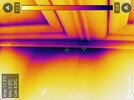
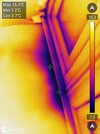
After taking some thermal images, there is a very clear cold line exactly where the sill meets the frame. It’s a consistent pattern across the whole width. I’ve attached the thermal photos below.

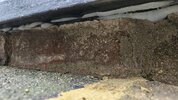
I also looked underneath the exterior cill and it seems like the sill is resting directly on the brickwork with no insulation or thermal break. The installer told me:

“There’s only a 3–5 mm gap, we can’t insulate that, proper insulation isn’t required for small gaps.”
and also:

“It’s your floor that’s cold, not the door.”
The floor is finished up to the frame, and the thermal camera shows the cold coming specifically through the frame/sill junction, not from below.

My questions for the forum:
  1. Is a sill resting directly on cold brickwork without any packers or insulation acceptable practice?
  2. Should a proper installation allow space (20–30 mm) for insulation or a thermal break under the sill?
  3. Would resealing or adding more foam internally achieve anything, or is this fundamentally a threshold installation problem?
  4. Is this something that FENSA would normally get involved with?
  5. Has anyone here had to escalate a similar issue under the Consumer Rights Act?
I’m trying to resolve this with the installer first, but they say the installation is correct and that nothing more can be done.

Any professional opinions or similar experiences would be really helpful before I decide how to proceed.

Thanks in advance.
 

Attachments

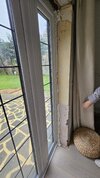
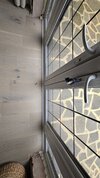
  • cill from below showing no insulation and patchy silicone.jpeg
    cill from below showing no insulation and patchy silicone.jpeg
    384.2 KB · Views: 22
  • thermal imaging camera sill.jpeg
    thermal imaging camera sill.jpeg
    81 KB · Views: 21
  • therma imaging sill 2.jpeg
    therma imaging sill 2.jpeg
    85.9 KB · Views: 21
  • thermal imaging bottom side 21.11.2025.jpeg
    thermal imaging bottom side 21.11.2025.jpeg
    89.6 KB · Views: 20
  • left side.jpeg
    left side.jpeg
    388.6 KB · Views: 21
  • right side.jpeg
    right side.jpeg
    304.5 KB · Views: 20
  • entire bottom.jpeg
    entire bottom.jpeg
    321.4 KB · Views: 22
My opinion - It's the bricks underneath the door being able to transmit the heat into the (concrete?) floor beneath the door that is causing the issue. I don't think there's that much wrong with the installation, they've put the door into the gap available. The door will not be making any difference to the fact that you have a floor which can get cold from heat transmission from outside. I'm thinking if you added something externally below the door (like another row of bricks or an insulating material, this would block cold transmission to your floor and improve the issue.
 
Thanks. The thermal images show the coldest area is the sill/frame junction, not the floor. The concrete slab sits under insulated flooring and the temperature drop matches the uninsulated sill line exactly. There also appears to be no thermal break under the sill from installation day photos.
 
I would say the low temperature is getting transmitted from your floor into the bottom of the door, and not vice versa.

If it was low temperature transmission from the door to the floor, then a low temperature would be seen all the way up the glass. However, the glass quickly goes from purple to orange. So why would the glass be purple right at the bottom? Because of the floor.

Your pictures also don't show the floor below the right pane, but it does appear to be getting much warmer than the area below the left pane. This implies that it's the floor causing the issue, rather than the door, otherwise both left and right would be cold.
 
Thanks for the reply — appreciate the thoughts.

Just to add a bit more context from what I’m seeing:
  1. The floor in that area is actually warm on the thermal camera (yellow/orange), so it doesn’t look like the slab is pulling cold in. If the floor were the issue I’d expect the edge of it to show up purple/blue too.
  2. The cold spot is literally a thin horizontal line exactly where the sill meets the frame. It doesn’t spread into the floor at all — it just follows the sill profile.
  3. Under the external cill there’s no insulation or packers, it’s basically sitting straight on the brickwork. You can see the brick touching the underside in the photo from installation day.
  4. With uPVC doors it’s pretty normal for the glass to warm up quickly because of room air hitting it, so the fact the glass is warmer above doesn’t rule out a cold bridge at the bottom.
So from the thermal pattern it really looks like a cold bridge at the sill rather than anything coming up from the floor. If it was the slab, the cold patch would look totally different.

Happy to hear other views though — just adding detail in case it helps explain why I’m thinking it’s the sill rather than the floor.
 
If it were me, i would rake out under the doors both sides and pump in foam. Cut off excess and finish off outside with a decent trim.
 
Thanks — that was actually my first thought too.
Only issue is there isn’t really any space to pump foam under the sill. I measured it and the gap is only about 3–5 mm, and the installers already said they couldn’t get insulation in there because there’s basically no void.

Also the sill is sitting pretty much directly on the brickwork, so even if I squeeze foam into the very front edge, there’s still full contact further back where the cold is transferring through.

I might still try to tidy up the front edge with foam or trim if it helps a tiny bit, but I’m not sure it would do much for the actual cold bridge.
 
Thanks for the reply — appreciate the thoughts.

Just to add a bit more context from what I’m seeing:
  1. The floor in that area is actually warm on the thermal camera (yellow/orange), so it doesn’t look like the slab is pulling cold in. If the floor were the issue I’d expect the edge of it to show up purple/blue too.
  2. The cold spot is literally a thin horizontal line exactly where the sill meets the frame. It doesn’t spread into the floor at all — it just follows the sill profile.
  3. Under the external cill there’s no insulation or packers, it’s basically sitting straight on the brickwork. You can see the brick touching the underside in the photo from installation day.
  4. With uPVC doors it’s pretty normal for the glass to warm up quickly because of room air hitting it, so the fact the glass is warmer above doesn’t rule out a cold bridge at the bottom.
So from the thermal pattern it really looks like a cold bridge at the sill rather than anything coming up from the floor. If it was the slab, the cold patch would look totally different.

Happy to hear other views though — just adding detail in case it helps explain why I’m thinking it’s the sill rather than the floor.

My thoughts:

- Re 1. - If the problem was being caused by the door installation, then the thermal signature of the left and right sides of the door would look identical.

- Re 2. - The sill is getting cold from the floor. The fact that it's a thin blue line is because the front edge of the sill is getting heated up by the air in your room.

The fact that you have coldness only on the left, is likely because the ground is damp only on the left, i.e. the dampness in the ground underneath is not right across the door. I would check the thermal signature again when it's raining heavily, as the ground under the right might also start getting damp, and therefore make it cold, and this would confirm the problem is from the floor rather than the door.

I don't know whether it's a proper door installation, but it seems there's no room for insulation under the door anyway.
 
Thanks again — appreciate you taking the time to think it through.

A couple of things just don’t line up with what I’m seeing on the thermal camera though:
  1. The floor in that whole area is consistently warm (orange/yellow).
    If the ground/slab underneath were transmitting cold upward, I’d expect the floor itself near the door to show a similar cold patch — but it doesn’t. Even along the left side, the floor is still warm.
  2. The cold line follows the exact profile of the sill/frame junction, not the shape of the slab or screed.
    It's literally a straight line at the meeting point. If it were the slab, the cold would spread into the floor or form a diffuse patch rather than a clean line.
  3. The installers’ own photos show the sill sitting directly on the external bricks with no insulation or packers, which looks like a pretty straightforward thermal bridge.
  4. The idea that damp ground under only one side is causing just a 2–3 cm tall cold line exactly matching the sill profile seems unlikely — especially when the room-side floor right next to it is still warm.
  5. I’ve checked it in different weather and the pattern is always the same:
    warm floor → cold line at sill → warm frame above it.
Totally open to the floor theory, but the thermal pattern doesn’t really match how slab cold bridging normally behaves. Usually you'd see a cold patch radiating outward, not a thin line on the frame.

Happy to hear more thoughts though — this is why I posted here in the first place!
 
I’m also not sure the left/right thing works in practice though — real installations aren’t usually symmetrical.
There can be small differences in:
  • how the sill sits on the brick
  • how well each side was sealed
  • how much foam expanded on each end
  • how hard the sill is touching the masonry
  • tiny height differences in the bricks
A thermal camera will always pick up the weakest or coldest spot first, so it doesn’t need to look the same on both sides for it to be a door/sill issue.
 
Worse case is you could, carefully cut out the bricks under the door, cut them down, cement back in and then fill the larger gap with foam?
 
I will add I'm just giving my thoughts here, I'm not a qualified window installer ... but ...

Some additional photos giving a better view of the installation from outside, in particular where the cill meets the bricks, would be good.

From the one photo we have of the exterior, all the white glue or whatever it is, doesn't appear to be forming an air seal. So, rather than it being damp in the ground, the issue could be that underneath there is no real air seal to stop cold air getting underneath the cill. Essentially then, it appears that underneath the door, there is no draft exclusion. This will be making your floor cold (only in parts, as the glue or whatever has not been uniformly applied).

So, it could be that your issue is being caused by a drafty installation, and better air sealing would improve things. Air gaps causing ingress of cold air is a theory I could go with.

Exactly what do you think is causing the cold? A lack of draft exclusion, or a lack of insulation?

I think maybe it's that you need better draft exclusion. That would probably make a difference.
 
So, looking at it I am proposing the theory that the area between the black wooden cill and the bricks below is not air tight, and this is allowing cold air in underneath the door, making your floor cold and the plastic door cill cold. This also explains the cold draughts you are experiencing.
 
Thanks — this is actually where my thinking has ended up too.

It doesn’t look like a slab issue anymore, more like a combination of:

• no insulation under the sill
• no proper air seal under there either
• and the sill touching cold brick in a few spots

So cold air (and cold from the brick itself) seems to be getting straight into the underside of the sill. The thermal camera picks up the cold exactly along that line, not in the floor.

The installers already confirmed the gap under the sill is only about 3–5 mm and that they couldn’t get insulation in there. From the photos it looks like it’s basically silicone sitting on brick in patches, which probably isn’t giving a proper seal.

So yes, I’m leaning toward poor sealing / lack of thermal break under the sill rather than anything coming from the floor.

Happy to get more photos from outside — I’ll take better ones tomorrow in daylight.
 
If you have one of those door draft excluders, on a dry day as a test you could stick it outside in the gap under the wooden cill, and see if that cuts the drafts and improves temperatures. I would expect it to.

I think you will probably be able to solve this problem by adding insulating material in front of the bricks, below the wooden cill, on the outside. Exactly how this should be done I'm not sure, but it would have to be waterproof. It's a shame the installer didn't take more interest in solving this.
 

If you need to find a tradesperson to get your job done, please try our local search below, or if you are doing it yourself you can find suppliers local to you.

Select the supplier or trade you require, enter your location to begin your search.


Are you a trade or supplier? You can create your listing free at DIYnot Local

 
Back
Top