• Looking for a smarter way to manage your heating this winter? We’ve been testing the new Aqara Radiator Thermostat W600 to see how quiet, accurate and easy it is to use around the home. Click here read our review.

Cold bridge at new patio doors – sill resting on brickwork? Installer says “nothing more can be done”

Ok to me it looks like the coldest area stretches further into the room than the cill, the trim IMO is covering something usually a gap hence why it's trimmed and not just sealed, the trim isn't the cill, what's under the laminate floor in the area of the cold spot, a concrete patch repair maybe, an open cavity, who knows?

Screenshot_20251201_153957_Samsung Internet.jpg


Behind the internal and external cloaking trims is a heavy duty aluminium frame coupler that strengthens the joint between the french doors and side panels, it's 100% always going to be cold and is acting like a heat sink in reverse, it's only cold at the bottom because that's more exposed as the wind blows against the doors and it blows upwards, nothing much can be done here

Screenshot_20251201_154030_Samsung Internet.jpg


Fensa don't get involved with 'workmanship' issues, they are solely a self certification scheme and to make sure doors and windows are fitted as per building regs

I'm actually impressed on how well the doors are sealing on the frame, I'd be concerned about the cold spot under the floor though and wouldn't be holding the installers accountable for something they didn't fit or have no control over
 
I'm actually impressed on how well the doors are sealing on the frame, I'd be concerned about the cold spot under the floor though and wouldn't be holding the installers accountable for something they didn't fit or have no control over

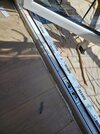
We have one pic from the outside. Looking at that, do you think more could have been done to prevent cold air getting in under the cill?

It seems the door has been put in place OK, but perhaps not been given enough protection from cold wind coming in below it.
 
Thanks for the reply, honestly appreciate you taking the time.

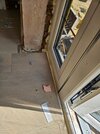
Just to add a bit more info because I think the photos might explain things better. The cold I’m seeing on the thermal camera isn’t coming up from the floor — the floor edge is actually warm because the installers foamed that whole area on their last visit. The cold line is literally exactly where the sill meets the frame. When I put my hand there, that’s where the draught is too.

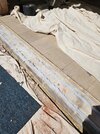
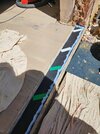
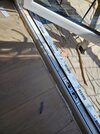
I’ve attached a bunch of photos from the installation day. Under the sill there’s basically just beads of silicone and tiny packers, no insulation or thermal break at all, and from underneath outside you can see the silicone is pretty patchy. So I’m trying to figure out if cold air is just moving around under the sill and chilling everything.

I get what you’re saying about the aluminium coupler being a heat sink, but dropping to 1–2°C seems a bit extreme unless it’s being hit by cold air or directly touching cold masonry. Could be wrong of course, but that’s what the pattern looks like.

The “cold floor from outside ground” idea was my first thought too, but the thermal images don’t really match that — the floor itself isn’t cold, just the sill line.

Anyway, I’ve added better exterior shots so you can see how the sill is actually sitting on the bricks. Maybe that helps explain what’s going on. Curious what you think once you see these.

Thanks again — genuinely appreciate the input.
 

Attachments

  • foam upstand 4.jpeg
    foam upstand 4.jpeg
    225.4 KB · Views: 16
  • installation day first layer of silicone.jpeg
    installation day first layer of silicone.jpeg
    343.9 KB · Views: 16
  • installation day second layer of silicone and 1-4mm packers.jpeg
    installation day second layer of silicone and 1-4mm packers.jpeg
    280.6 KB · Views: 15
  • foam upstand 2.jpeg
    foam upstand 2.jpeg
    225.4 KB · Views: 16
  • foam upstand 3.jpeg
    foam upstand 3.jpeg
    220.1 KB · Views: 17
Hmmm hard to say, looking under the cill I can't work out if it's a bed of foam OR a bead of silicone, some of the **** I go out to see where they haven't sealed underneath at all because you can't get a gun in but at least put a thick bead of silicone along the bricks and squidge the cill onto it, it looks like something along those lines has been done.

I'm convinced something is amiss under the floor possibly an open cavity assuming it's not a 9" wall, air bricks and wind blowing around the cavity(like it's meant to). Has the cavity been filled in with cement to allow the floor to run through to the door, who knows, generally people fit a window board along the bottom, it's solid and can be screwed down into the internal brick skin and bridging over a cavity closer or kingspan stuffed into the cavity
 
That's better, ok so that confirms what I said, there's a gap in the floor but they foamed it, that's good.

They've squished the cill onto silicone, and sealed above and below the dpc, that's good, they were thinking ahead

To be honest I'm not sure what more they could have done, I wouldn't say they've gone above and beyond but rather done what is required
 
Thanks, that’s useful.

Just to clear something up — the floor gap is foamed now, and on the thermal camera the floor edge is actually warm. The only cold area is the sill/frame junction, and that’s exactly where you can feel the draught with your hand.

The photos I've added are from the install day. Under the sill there isn’t a foam bed — it’s literally just beads of silicone with 1–4 mm packers resting directly on the brickwork. The external side also isn’t sealed in a continuous line — there are breaks where you can see light through the silicone.

So I’m just trying to figure out if cold air is getting under the cill and hitting the aluminium coupler, because that part drops to about 1–2°C even when the rest of the floor is normal room temp. I get that the coupler will always be a bit cooler, but this seems extreme.

If you think this could just be an air sealing issue, what would normally be used under a sill when the gap is only 3–4 mm? Just trying to work out what a correct install should look like in this situation.
 
Last edited:

If you need to find a tradesperson to get your job done, please try our local search below, or if you are doing it yourself you can find suppliers local to you.

Select the supplier or trade you require, enter your location to begin your search.


Are you a trade or supplier? You can create your listing free at DIYnot Local

 
Back
Top