Condensation in loft: How to dry / fix

so the latest is that the insulation company have wedged in lots of polystyrene wedges where the felt overlaps:

wedges.jpg


I put my hand up to a few but can't say I felt any more air. They said to leave it a few weeks and see what happens. They said the next stage is removing a layer of insulation.

There's a couple of videos below. The first shows an old vent for the old hot air heating system that I have my eye on. There is water underneath and I'm not sure if this is driving rain, a tiny leak or condensation.


And the second shows the general condition: the rafters aren't sodden but they don't feel dry either. I think I'm going to stick the de-humidifier up there and see if it helps to get it back to normal. This video should give people an idea of the extent of the problem.

If anyone can glean anything from these for more advice that would always be appreciated.


No - the ceilings aren't vapour backed. Is there something I can coat them with? The house was built in 1970.

Are you sure it is not foil backed plasterboard, I think it was about in the 70s?

Plasterboard itself is very breathable (allows water vapour through). If you have a vapour control layer, then you can throw buckets of water all over your furniture, and dry as many clothes as you want, and it will not effect the roof space (because the amount that get's through will be insignificant compared to the ventilation).

You can use vapour control paint's on the inside. Some people have tacked a bit of polythene between the joists (NOT over) on the back of the plasterboard, this will probably work and has done, but I am not keen on it as I worry it will force the vapour through the joists.

EDIT here is one vapour barrier paint
http://www.icynene.com/assets/documents/pdfs/Resources/Building-Science/DuluxUltra-Hide.pdf

Does your water tank have a proper lid, sometimes this can be a source of moisture.

Is there proper ventilation in this area?

View media item 40687
If you have proper ventilation, but no VCL, likely a VCL will fix it.

If you have proper ventilation and a VCL, then it is likely water penetration of possibly moisture from the water tank or holes in extractor fan ducting etc.
 
Thanks!

I dont think they are foil backed because I think they cut so many other corners when building these houses. Is there a way of knowing?

The insulation is pulled back about a meter from the eves. Lots of ventilation there.

There is an old water tank but it seems well covered.

Fingers crossed these new wedges work. Although I cant see it the current condensation clearing any time soon...
 
You should be able to tell very easily if it is foil backed, as if you lift up the insulation you will see the top side of the plasterboard, and it will just look like foil stuck to the back.
 
Definitely not foil backed then. Might repaint the bathroom ceiling with that vapour.stuff when I get the chance...
 
I have recently had breathable felt put on my original slate roof and the condensation has now arrived. I have taken to the felt with a stanley knife and the attic is now vented again and the problem has reduced significantly. I think that was the answer. The probelm was caused by the felt that isnt as breathable as its made out to be and had I not noticed it it may have caused me loads of problems
 
hello martin691


does anyone drape wet washing around your home or hang it over radiators?
 
No its forbidden. We never had any problems with the old slate roof, its only since we had the felt put on the roof. Oh and also we had a rickerty old plastic velux that used to let loads of draft in the bathroom and we now have a new velux. I think that I have solved the problem. I have cut a load of the felt away over the bathroom and I am going to double insulate it in the loft. My final plan is to always leave the velux open whilst showering.
 
Hi all

Here's an update - the insulation company fitted the wedges and then we went away for a week (leaving the heating off). Upon our return most of the condensation had gone. We've also been leaving windows open much more, lids on cooking, dehumidifier next to washing and basically just trying to be moisture aware.

My plan was to get to the summer, get it dried out and see if it happened again.

Problem is that I think the condensation is slowly coming back. I've kept my hygrometer up there and it was reading 88% relative humidity - Which seems amazing. The rest of the house averages around 60 - 70. I can also say that the temp inside the house was about 18 deg, outide was about 6 and the loft was 10 so the insulation seems to be doing its job in that case.

I've obviously got a problem - I'm starting to suspect the Flue from the condenser boiler - is there any way of knowing this for sure?

Next I need a plan of action. I don't really want to have to get a tumble dryer as there isn't a great place for it.

I'm thinking that getting an extractor fan for the bathroom would be the next thing to try when I can afford it - would that make the most sense to people? Or should I concentrate on more ventilation within the loft? I had a rough quote of about £200 for vent tiles. I am end of terrace so perhaps an air brick?

Much appreciated
 
Hi

thanks for the reply. I have read both of them. They've really helped my understanding of the problems. Unfortunately I don't have the money to do all the things that would stop the problem. Especially all at once. My question was really where to start? Perhaps I'll only end up needing to do one of these things. Each of them would cost about £200. To me there seems like 3 options:

1) get a tumble dryer (this is problematic for me but if I have to I will do)
2) get an extractor fan for the shower as opening windows isn't enough
3) get extra ventilation in the loft.

Also I was wondering if anyone knew about the boiler flue. If this was faulty would it be obvious?
 
I see you have a disused ridge vent, with a stub of pipe on it. Is anything coming up the remains of the old pipe from the house?
 
Hi John

No - I have two ridge vents. One is the waste pipe from the toilet - I think that's also where the boiler condenses into and the other is cut off. I can see daylight through that one - I've had my suspicions about that as there was a little wet underneath it one day. I think it was either condensation or possibly we'd had some driving rain so it might have come through. I can't see any definite leaks though but you can see a little bit of air comes through it.

I'm starting to think that the first thing would be to get an extractor fan for the shower. Its a gut feeling, possibly because I can actually see the "wet air" when showering. I think I'd need to get an electrician in to connect it though (my Dad knows his way around this kind of thing but don't want to break any regulations)? Is there a prime spot for it? Right above the shower perhaps? Also, are there any brands/makes to look at or are they all pretty much the same?

many thanks
 
don't fit an electric fan directly above a bath or shower, as the regulations are then more stringent.

More powerful fans can be fitted in the loft, with ducting. If the fan is not fitted in the bathroom it is not notifiable work. Flop loft insulation over any duct in unheated loft space or water will condense in the duct.

Otherwise fit the fan high up in the room, furthest from the door. It will suck new air through the gap under the bathroom door.

Have the fan connected so it comes on with the light switch, as some people have an aversion to ventilation and will not consciously turn fans on, preferably with a 20-minute timer overrun. Centrifugal fans are generally quieter and more powerful than axial fans. Look at the extract rate in cubic metres per hour, and the db level.

You can get a separate timer but I can't find a link.

http://www.screwfix.com/p/manrose-axial-20w-bathroom-fan/15927

http://www.screwfix.com/p/manrose-chrome-white-25w-in-line-centrifugal-shower-fan-kit/41379

http://www.screwfix.com/p/manrose-in-line-centrifugal-32w-bathroom-fan/98482

http://www.screwfix.com/p/vent-axia-solo-t-15w-centrifugal-bathroom-extractor-fan-with-timer/87031
 
Thanks for the reply. I have a few more questions that I'd appreciate any advice on:

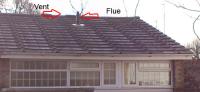
Looking at my roof, the condensation from the boiler flue can blow over the tile vent (the one that used to have the old heating on it but has been cut off. You can just about make out the flue and the tile in this photo:


180000_179511_42418_13235401_thumb.jpg


Do you think that could be an issue? Would putting more ridge tiles be a bad idea?


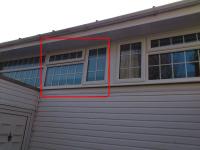
In this photo you can see where the bathroom is (the middle windows)


180000_179511_42417_95646709_thumb.jpg


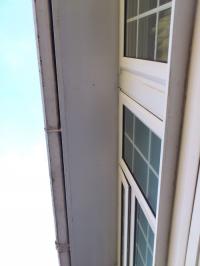
As the whole of the bathroom wall is take up with a window, the plan is to vent the extractor fan out of the soffit. As the tiles on the top the soffits are the vents, could this just suck the moist air back in? I've taken this photo to show you how close the soffit is to the window.


180000_179511_42419_22713539_thumb.jpg


If I can't vent from the soffit, does this mean I'd need to run the vent all the way and out of the side wall on the house? Or would I need another special tile to vent out the roof? I'm assuming that the usual exctractor kit would just let rain in if mounted on a roof?

Again - many thanks for all the advice I've had on here.

Just as an update, I think we've had very dry air recently which has cleared the condensation for now although my hygrometer was saying 80% relative humidity and outside was about 60%.
 

If you need to find a tradesperson to get your job done, please try our local search below, or if you are doing it yourself you can find suppliers local to you.

Select the supplier or trade you require, enter your location to begin your search.


Are you a trade or supplier? You can create your listing free at DIYnot Local

 
Back
Top