Hi there. I bought my first house solo about 1.5yrs ago, and have no real DIY experience - looking for some guidance on this issue as I’m not even sure what kind of professional to call out. Though, of course I’ve been researching.
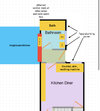
House is a Victorian terrace, with a ground floor extension that is much newer - but I am not sure of age. The ground floor extension has a small passage way, with a door to the yard, and a bathroom.
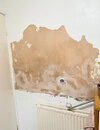
The internal wall of the passageway and bathroom is suffering with efflorescence. This wall backs onto my neighbours property, though they are not like for like extensions so I imagine they were not built at the same time.
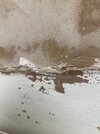
There is a hip height horizontal mark across entire length of the affected section, and where paint has come away I can see there is a slight change in plaster. From googling, I suspect that this is from an old damp proofing course, and what I am seeing is the line where the new patch of plaster was applied.
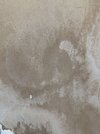
Above the line, paint started to bubble with efflorescence and so I chipped away much of it in the bathroom (until it stopped coming away easily), which revealed bare plaster which was damp to touch. Since being paintless however, the plaster has visibly dried somewhat, but more efflorescence has come to the surface.
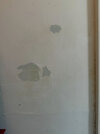
I haven’t done the same in the passageway but there is similar bubbling starting to happen.
My guess is this has been an issue prior, and they’ve shoved in damp proofing which I have learned from my research is often nonsense lol. So now there is continued issues, just further up the wall??
Anyway I don’t even know where to start with it to be honest. I’ve been trying to find a trader who could come inspect the whole thing but every company is so geared towards just selling damp proof courses, and I really want someone to come help investigate the cause.
There are a few things it could be:
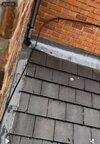
1. There is a down pipe discharging onto the roof above, with the lip of the roof flashings bent, which could be allowing in water. I would suspect I would see damp marks on the ceiling if this is the case, but water doesn’t always travel straightforwardly
2. The wall affected has a radiator, pipes are under the concrete floor. A leak here could be rising through a breech and then effecting only above the damp course line
3. Leak on other side - wall backs onto neighbours kitchen. I have already asked them to investigate this though, they’re a council property and a housing association person did come and check everything over, so probably okay
4. Crap plastering job?? I say this because I’ve realised there are multiple places in this house where the plaster has blown. I wonder how much of this issue could be created or exacerbated just by that alone, particularly in a bathroom area.
Any advice on what to look out for, what order to diagnose this in, what pro to call in, or perhaps it’s obvious to you. Really would like to minimise this being a bit of a wild goose chase.
Thank you! x
House is a Victorian terrace, with a ground floor extension that is much newer - but I am not sure of age. The ground floor extension has a small passage way, with a door to the yard, and a bathroom.
The internal wall of the passageway and bathroom is suffering with efflorescence. This wall backs onto my neighbours property, though they are not like for like extensions so I imagine they were not built at the same time.
There is a hip height horizontal mark across entire length of the affected section, and where paint has come away I can see there is a slight change in plaster. From googling, I suspect that this is from an old damp proofing course, and what I am seeing is the line where the new patch of plaster was applied.
Above the line, paint started to bubble with efflorescence and so I chipped away much of it in the bathroom (until it stopped coming away easily), which revealed bare plaster which was damp to touch. Since being paintless however, the plaster has visibly dried somewhat, but more efflorescence has come to the surface.
I haven’t done the same in the passageway but there is similar bubbling starting to happen.
My guess is this has been an issue prior, and they’ve shoved in damp proofing which I have learned from my research is often nonsense lol. So now there is continued issues, just further up the wall??
Anyway I don’t even know where to start with it to be honest. I’ve been trying to find a trader who could come inspect the whole thing but every company is so geared towards just selling damp proof courses, and I really want someone to come help investigate the cause.
There are a few things it could be:
1. There is a down pipe discharging onto the roof above, with the lip of the roof flashings bent, which could be allowing in water. I would suspect I would see damp marks on the ceiling if this is the case, but water doesn’t always travel straightforwardly
2. The wall affected has a radiator, pipes are under the concrete floor. A leak here could be rising through a breech and then effecting only above the damp course line
3. Leak on other side - wall backs onto neighbours kitchen. I have already asked them to investigate this though, they’re a council property and a housing association person did come and check everything over, so probably okay
4. Crap plastering job?? I say this because I’ve realised there are multiple places in this house where the plaster has blown. I wonder how much of this issue could be created or exacerbated just by that alone, particularly in a bathroom area.
Any advice on what to look out for, what order to diagnose this in, what pro to call in, or perhaps it’s obvious to you. Really would like to minimise this being a bit of a wild goose chase.
Thank you! x