

- Joined
- 17 Dec 2023
- Messages
- 5
- Reaction score
- 0
- Country

Hi!
Recently purchased a C1856 settlers cottage that was assessed as having rising damp during the pre-inspection. Got an "expert" out to check and they confirmed rising damp, which they can fix for bulk coin. Been reading this forum and I am 100% certain I can do something about this without having old mate come and inject my walls. Looking to get some confidence boosting recommendations, and confirmation of actions, before I start regretting my life choices.
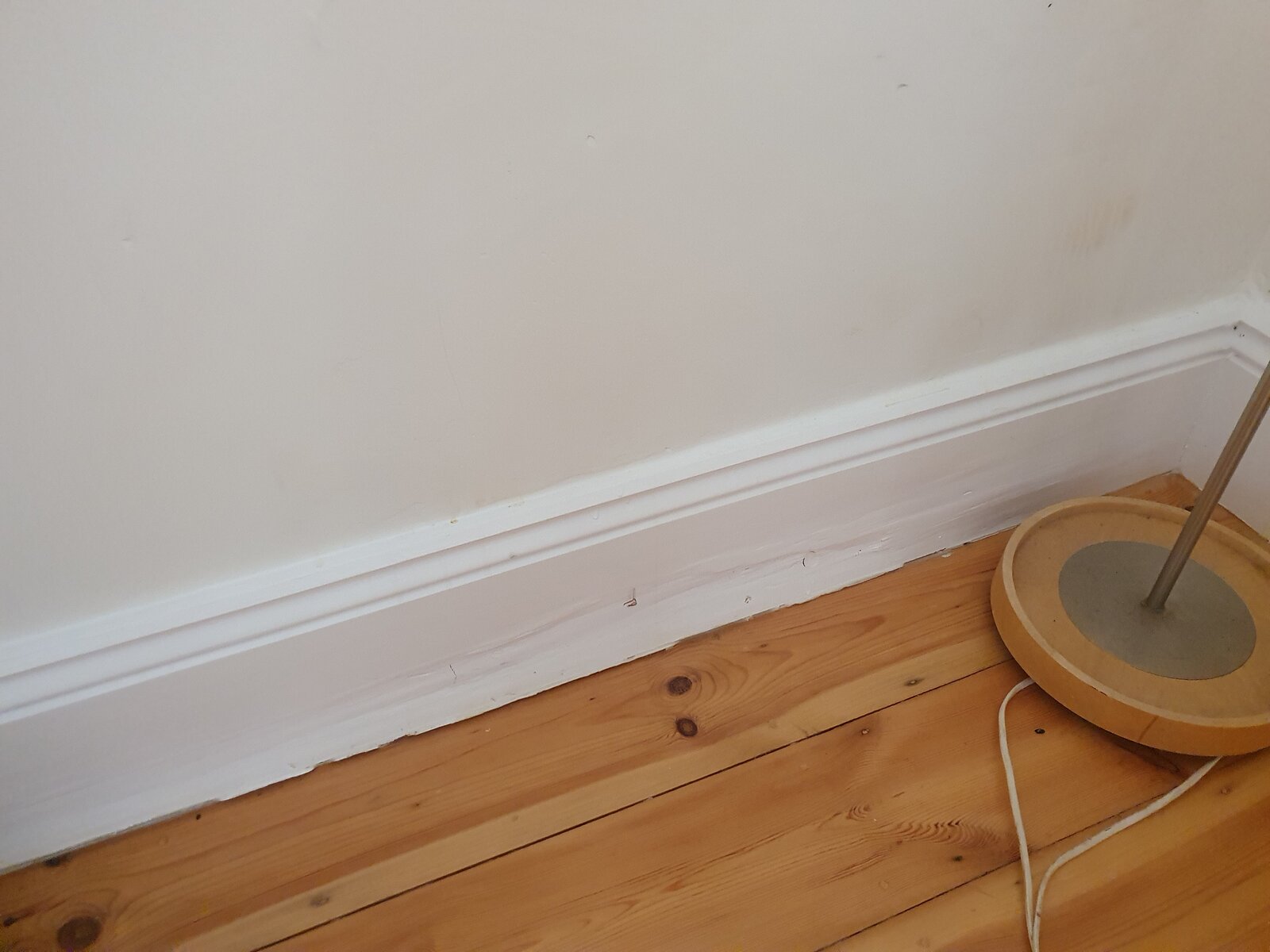
There are a few spots that show physical signs of damp internally, and I am focusing on the largest spot for this post. The internal damage is minimal, but I suspect renovations occurred prior to our purchase so unsure what has been covered up. Below I have included a picture of the skirting and wall that shows rotting of the board and a very slight patch coming through the paintwork.
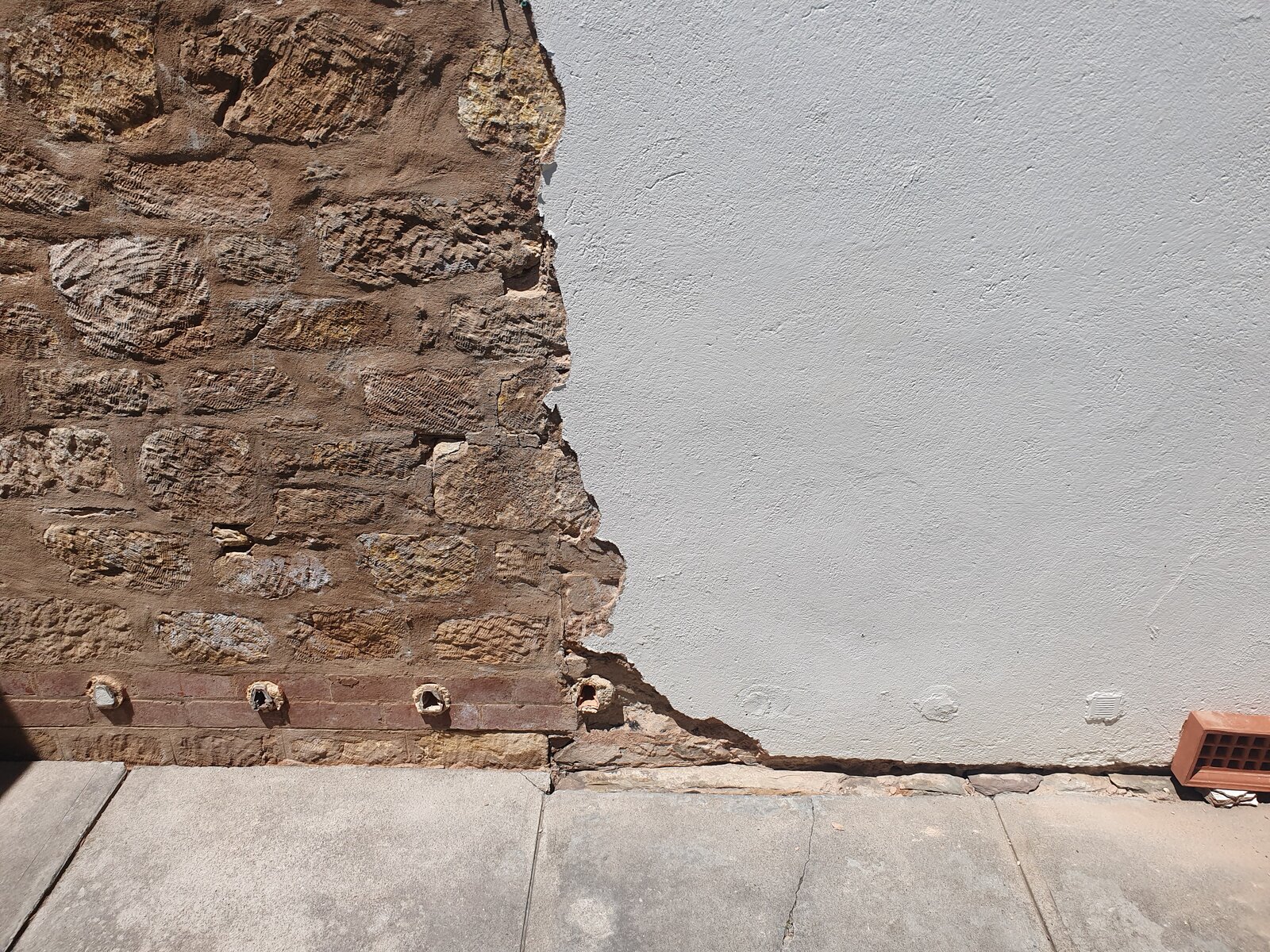
The outside wall that corresponds to the internal skirting picture is 1cm think render which is hollow in a lot of places. I removed a portion of the render, and it was mildly wet. Kept removing render until the hollowness was gone. You'll notice there are some nice Knapen tubes that have been inserted post render, in what I imagine has been a lifelong attempt to fix the damp issue.
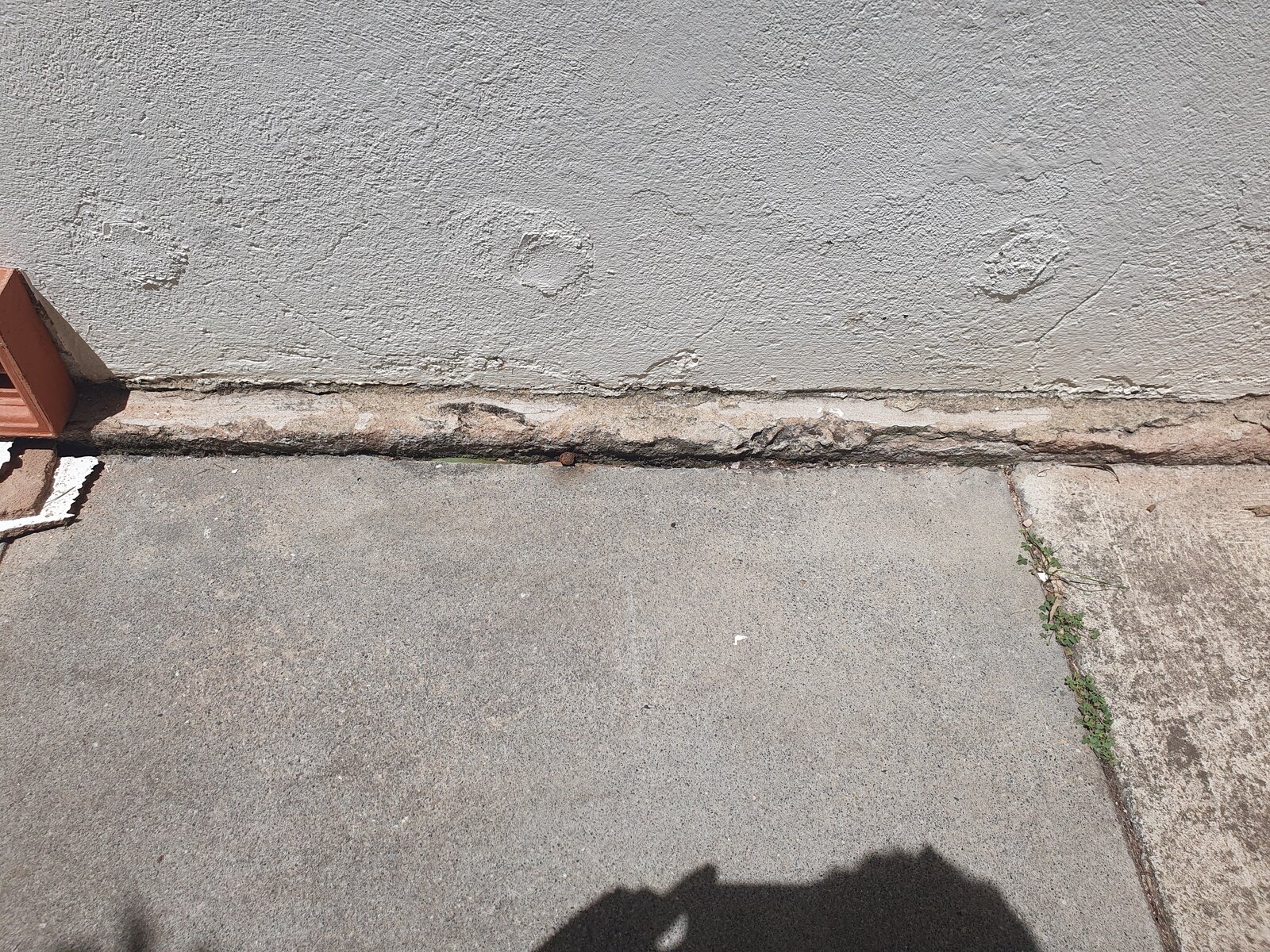
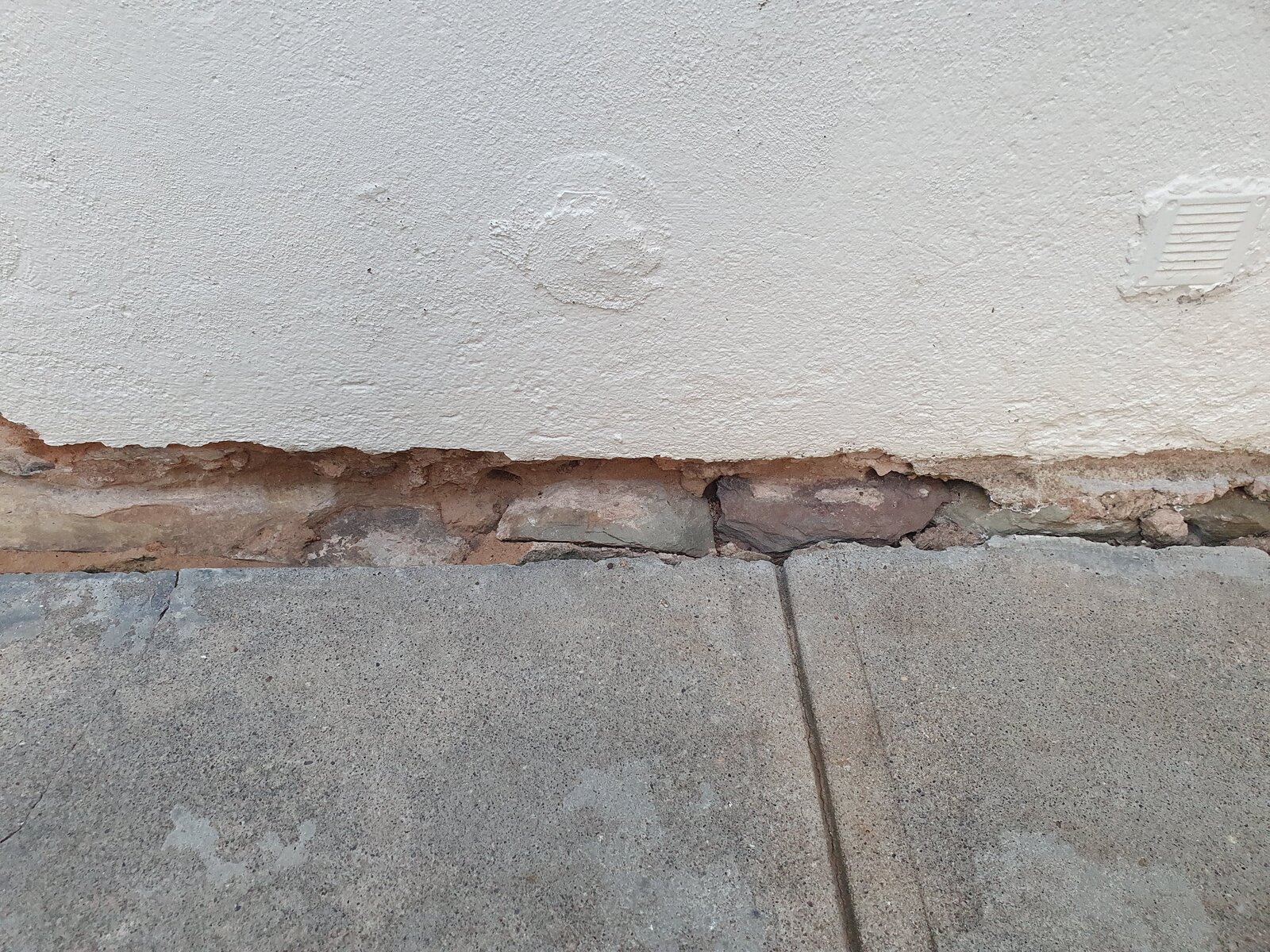
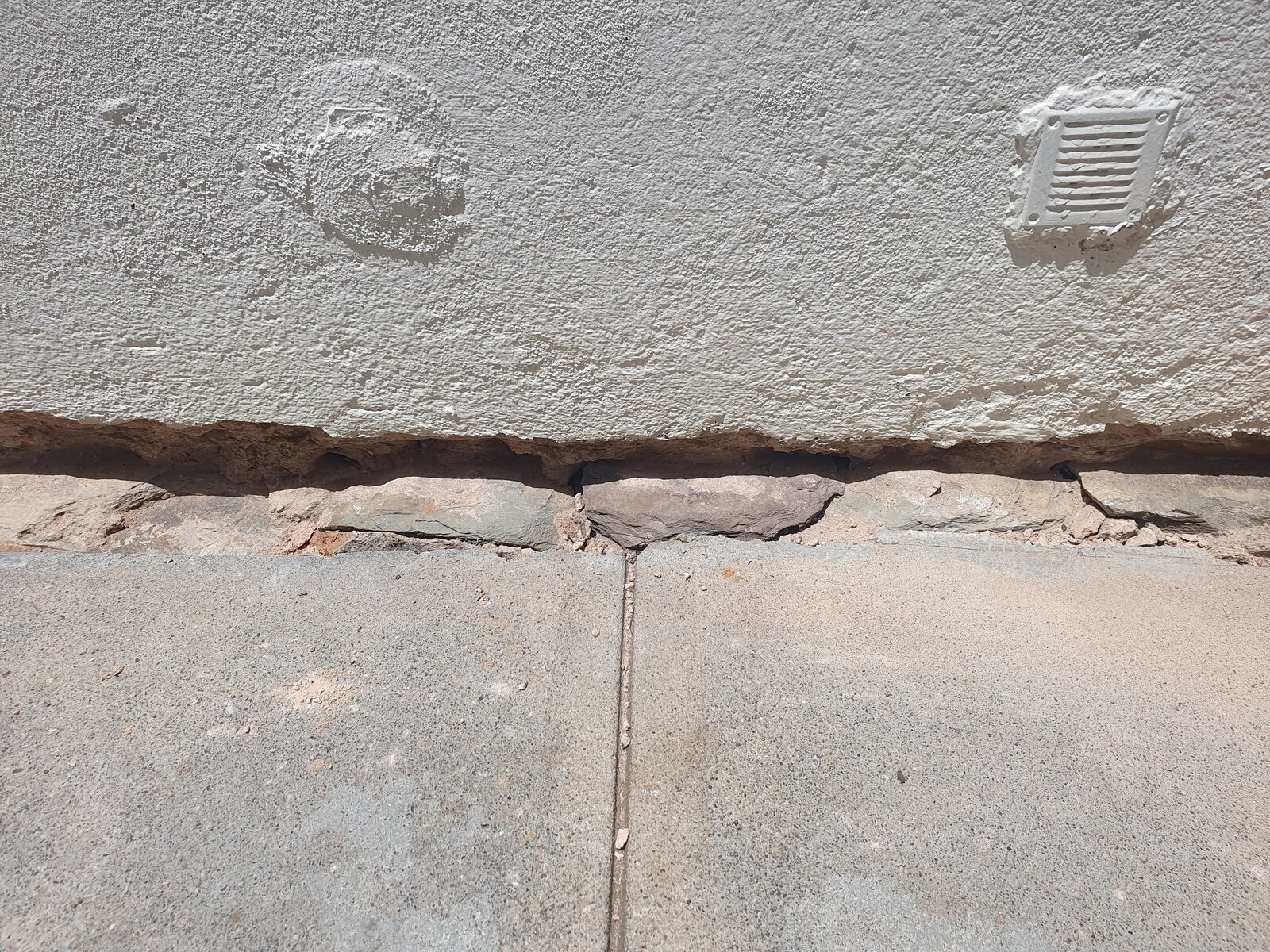
The render extends the complete wall and goes into the ground to ensure a good amount of water can be wicked up (assuming). The bottom of the wall has a rendered lip which I removed and found what I think is a slate DPC. Picture below. Can anyone confirm? You can also see that the slate DPC (??) is at ground level, with the concrete path perfectly in line.
Now, I am looking for some confidence boosting remarks that let me know I am doing the right thing by removing the hollow render and the render that covers the DPC bridged to the ground. As I remove the DPC render covering lip it is moist so I figure this is a good thing to be doing. I also intend to remove the concrete and drop the ground level, maybe putting in a french drain as they look pretty nice.
Any words of wisdom or feedback that I am an idiot for anything I have done so far, please do let me know.
PS. The house has a musty smell that I have determined is coming from the gap between the skirting and floor. There is one particular spot that is nearly 1cm that has a good draught coming up. If I place a candle in front of that gap the house smells lovely. The subfloor ventilation seems poor, especially since two extensions were added to each side of the house. The back wall, in these pictures, has had two air vents added, which were done poorly and have the smallest hole behind them. I will fix these.
Dan.
Recently purchased a C1856 settlers cottage that was assessed as having rising damp during the pre-inspection. Got an "expert" out to check and they confirmed rising damp, which they can fix for bulk coin. Been reading this forum and I am 100% certain I can do something about this without having old mate come and inject my walls. Looking to get some confidence boosting recommendations, and confirmation of actions, before I start regretting my life choices.
There are a few spots that show physical signs of damp internally, and I am focusing on the largest spot for this post. The internal damage is minimal, but I suspect renovations occurred prior to our purchase so unsure what has been covered up. Below I have included a picture of the skirting and wall that shows rotting of the board and a very slight patch coming through the paintwork.
The outside wall that corresponds to the internal skirting picture is 1cm think render which is hollow in a lot of places. I removed a portion of the render, and it was mildly wet. Kept removing render until the hollowness was gone. You'll notice there are some nice Knapen tubes that have been inserted post render, in what I imagine has been a lifelong attempt to fix the damp issue.
The render extends the complete wall and goes into the ground to ensure a good amount of water can be wicked up (assuming). The bottom of the wall has a rendered lip which I removed and found what I think is a slate DPC. Picture below. Can anyone confirm? You can also see that the slate DPC (??) is at ground level, with the concrete path perfectly in line.
Now, I am looking for some confidence boosting remarks that let me know I am doing the right thing by removing the hollow render and the render that covers the DPC bridged to the ground. As I remove the DPC render covering lip it is moist so I figure this is a good thing to be doing. I also intend to remove the concrete and drop the ground level, maybe putting in a french drain as they look pretty nice.
Any words of wisdom or feedback that I am an idiot for anything I have done so far, please do let me know.
PS. The house has a musty smell that I have determined is coming from the gap between the skirting and floor. There is one particular spot that is nearly 1cm that has a good draught coming up. If I place a candle in front of that gap the house smells lovely. The subfloor ventilation seems poor, especially since two extensions were added to each side of the house. The back wall, in these pictures, has had two air vents added, which were done poorly and have the smallest hole behind them. I will fix these.
Dan.


