DIY alcove help wonky walls!

Joined
6 May 2025
Messages
2
Reaction score
0
Country
United Kingdom
Hi all, very novice pls be kind!
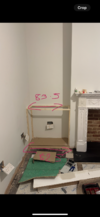
Building alcove cupboards and starting with a frame. Have built the base and am attaching 4 pillars either side , frame on top, cupboard top and further supports for a shelf and doors.
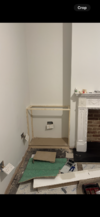
However measuring the width at the top of the alcove from one wall to the other is 83.5cm. At the bottom it’s 82.5cm. I’m at a loss as to what I do now, is the cupboard not going to look smaller at the bottom than the top? I just can’t get my head around what I have to do next. Is scribing needed? Any help appreciated!! Thank you! Pic attached
 

Attachments

  • IMG_4271.png
    IMG_4271.png
    1.2 MB · Views: 58
If you are only meaning 10mm difference from ceiling to floor it will hardly be noticable but you need to check with a spirit level if one wall is out of vertical or if it''s just got a hollow at the top. If one is out of vertcal then use the other as your refernce point and pack out the other verical so everything is square. Then when rhe frame is complete fill any gaps with decorators caulking.
 
Sorry this is what I mean which some very badly drawn measurements
 

Attachments

  • IMG_4277.png
    IMG_4277.png
    1.2 MB · Views: 60
Well I think the same suggestion still applies, you need to find out if one or both of the walls are out of plumb or it is just a hollow in one side then react accordingly.
 
Put 40mm mdf infill panel both sides , reduce these to obtain vertical sides, should mean just a few mm off each .
This will reduce door width slightly .
 
If you never DIY you never learn anything. This is one of the classic lessons - houses are seldom perfectly square!.

As @foxhole says scribed infills either side are the solution. When making anything to fit an alcove - particularly cupboards, make up the unit square to fit inside the minimum measurements, and then use filler pieces scribed to the irregular walls to fill the gaps.

Sometimes when fitting into difficult measurements, you have to think about how something will look and make tweaks accordingly - if it looks right it is right. It's like when tiling - if you set it out so you end up with a column of slivers in a corner going from 10 - 30mm it will look carp, but cutting the tiles say from 200 - 170 in the height of a room will look fine - no-one will notice
 
Not intended as a criticism...

The cabinetmakers I have worked with over the years start off by making a "partial box"- namely a top-bottom, back and two sides. They then scribe the two flanks and a top and add a skirting.

That set up allows them to use either butt hinges or kitchen cabinet style concealed hinges.
 

If you need to find a tradesperson to get your job done, please try our local search below, or if you are doing it yourself you can find suppliers local to you.

Select the supplier or trade you require, enter your location to begin your search.


Are you a trade or supplier? You can create your listing free at DIYnot Local

 
Back
Top