Dry rot treatment on party wall

Joined
2 Nov 2007
Messages
97
Reaction score
0
Location
Cardiff
Country
United Kingdom
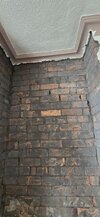
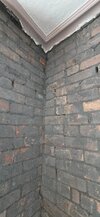
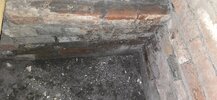
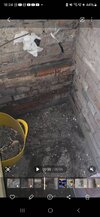
Wondering how you guys would go about drilling this. It's a party wall and has had dry rot issues. You can see the threads.
From what I can tell its x2 walls against each other. It's a 1920s house. Bricks are 110mm thick by 220mm wide.
I am think the tentacles (hyphae) would be up at the back between the walls to. The source of damp has hopefully been resolved.

It says on treatment to stagger holes at a.
downward angle at 230mm centers, so thinking top of each vertical joint. But how often would I do this? Like at every horizontal row? Worried potentially loosing bricks.

Next door they have drilled a few holes cant really see them, and mainly just sprayed the surface by looks.
 

Attachments

  • 20260728_180247.jpg
    20260728_180247.jpg
    376.5 KB · Views: 18
  • 20260728_180219.jpg
    20260728_180219.jpg
    534.1 KB · Views: 17
  • 20260728_180118.jpg
    20260728_180118.jpg
    515.2 KB · Views: 17
I know nothing about dry rot but could you use a tube with a nozzle like they use on car chassis sections for rust treatments, withdrawing the tube as you go?
 
It looks like a normal 1 brick wall with all those headers on show. I would consult the tech boys at the supplier of whatever goop you're using.
 
I know nothing about dry rot but could you use a tube with a nozzle like they use on car chassis sections for rust treatments, withdrawing the tube as you go?
Yeh got a sprayer with a wand so that's sorted. Wondering on the amount of holes over the hole wall req.
 
It looks like a normal 1 brick wall with all those headers on show. I would consult the tech boys at the supplier of whatever goop you're using.
No it's 2 walls together to make the party wall. I pulled a brick to check and lots of the dry rot strands behind to. Thinking probably better to drill through the wall slightly into next door, and do both sides. Just not sure how many todo horizontally like said. Then blast the holes and then so the whole thing last
 
If the conditions that allowed the fungus in the first place are dealt with and removed, then the fungus cannot reappear.

The application of wall irrigation/injection is purely a requirement of over-cautious contractor insurance terms, not a requirement of the actual treatment. The main concern that does need dealing with is affected timber and adjacent timber.

A surface sterilisation is optional and may be prudent at best, but not a requirement. Drilling the wall is definitely not needed.
 
If the conditions that allowed the fungus in the first place are dealt with and removed, then the fungus cannot reappear.

The application of wall irrigation/injection is purely a requirement of over-cautious contractor insurance terms, not a requirement of the actual treatment. The main concern that does need dealing with is affected timber and adjacent timber.

A surface sterilisation is optional and may be prudent at best, but not a requirement. Drilling the wall is definitely not needed.
Yes timbers done and dpc wrapped. I also soaked mine in wood treatment. Main concern was the rot heading upstairs.
As long as that front wall doesn't get wet again should be good then. Neighbour needs to sort his airbricks out (downpipe leak sorted) as when they tarmac his drive few years ago they are 95% covered up.
I guess the problem is overworrying about it coming back, when it could return if damp conditions returned even if it was perfectly all removed (impossible I'd think without taking the wall out lol).
I've set my floor up so can take it up easily in that corner for future check. Next door had a much larger area and they t&g chipboarded it.
Thanks for the info :)
 
Even if you do all you propose to do, if the right conditions re-occur at some future date, the fungus (or a related one) can just as easily return. Mould spores are in the air all the time, just waiting for the right conditions to germinate.

You must have had some extreme and persistent damp to create the environment for the fungus. There must also have been a lack of knowledge or lack of maintenance to let the conditions prevail. You've likely dealt/dealing with the cause and are now aware of the need to prevent those conditions repeating, so the chance of the fungus returning is very low.

In those old houses, the main route for wood fungus is via a roof leak or poorly ventilated ground floor void. It does not tend to just randomly grow in other places unnoticed.
 
Yeh I think the downpipe problem soaked the neighbours underfloor area and the ends of the joists. Underfloor area is another world lol
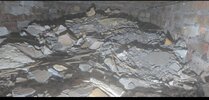
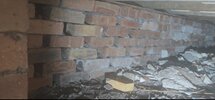
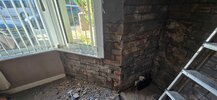
Honeycomb center of room. And viewing up room. I had a load of rubble this end to. Holding damp also.
Anyway see how it all goes now
 

Attachments

  • Screenshot_20260803_205044_Gallery.jpg
    Screenshot_20260803_205044_Gallery.jpg
    237.8 KB · Views: 4
  • Screenshot_20260803_205041_Gallery.jpg
    Screenshot_20260803_205041_Gallery.jpg
    204.5 KB · Views: 4
Last edited:

If you need to find a tradesperson to get your job done, please try our local search below, or if you are doing it yourself you can find suppliers local to you.

Select the supplier or trade you require, enter your location to begin your search.


Are you a trade or supplier? You can create your listing free at DIYnot Local

 
Back
Top