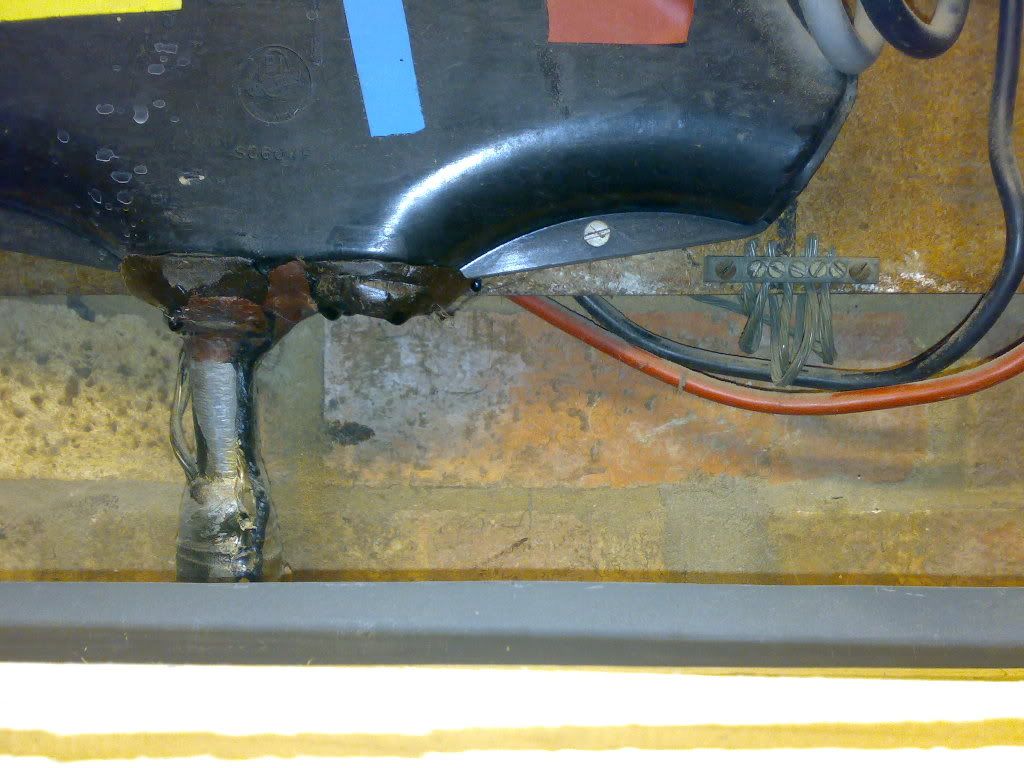
Earth connection - for display purposes only..?

Joined
7 Feb 2008
Messages
31
Reaction score
0
Location
Hertfordshire
Country
United Kingdom
A bit of advice would be very handy here guys. For example:

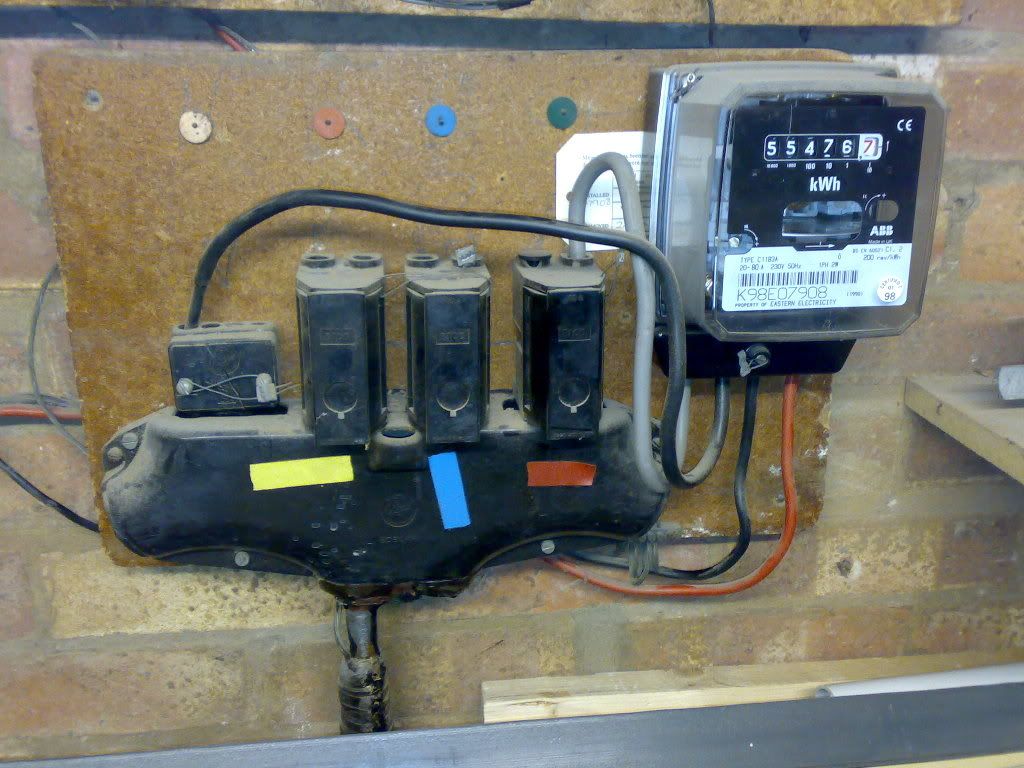
Meter says 80A - want to install electric shower and there's already a big electric cooker in the house and immersion heater

Wiring is all old and crap, so they could really do with a new CU and then wiring upgrades but before I waste my spark's time I'd also like to have a bit of an idea about what's going on here.

The earth? It's bare wire and pretty flimsy...

And is that a 3ph head? is that a problem?

err... all I can't think of for the moment

Cheers
21022008179.jpg


21022008180.jpg
 
Aye, thats a 3 phase service head allright, tar-filled cast iron type by the looks of it. One of the DNO guys who posts here will be able to give you a bit more info on that.
Allthough its a three phase incomer, the installation connected to it is just running off the single 'red' phase, but its always nice to have a 3-phase supply - try pursuading your DNO to install one for you these days!

Re your earthing arrangement, its a bit hard to make out what/who provides the earth, is there an earth rod anywhere or does it connect somewhere close to where the neutral comes in on the left of the imcommer?

Anyway, whatever the earthing arrangement it does need a pro spark to sort it out, for one the earth is not sleeved with green/yellow so it can be easily identified and is of insufficient size for your supply regardless of the earthing arrangement.
 
It's a TN-S supply.

The earth is soldered onto the sheath just below the head, and goes to the MET.

It looks to be 6.0mm², witch is a little small, but unlikely the DNO will upgrade this FOC.

There is no need for a TP supply in a standard domestic premisis, and the added dangers and installation costs outweigh the advantages.

There is some work required to upgrade the earthing, on the consumers installation, but I would not be too concerned about the DNO supply earth wire.
 
Ok - thanks for that guys...

At present sparks can't do anything 'cos there's no isolator - tails go straight into the old CU and understandably he doesn't want to get involved in pulling the company fuse. Meter company will put one in, and change meter tails if they're not up to it (and meter too if necessary) whilst they're about it so hopefully no probs there.

RF - you're right about the TNS earthing, but I'm still a bit concerned about the puny dental floss they call an earth wire... DNO tells me that earthing is my (well customer's) responsibility.. How come? the earth goes onto their cable sheath and then presumably back to their substation. If they have PME available in the area can't they just convert to PME by putting the (new 16mm2) earth onto the neutral at the incommer? And will they actually do it if we ask very nicely..? And is there any real advantage..? And why is it such a nightmare trying to get any meaningful info out of them....!?
 
eaths are always a bit of a tricky area.

Electricity suppliers are not required to supply an earth but if they do supply one they are required to maintain it in satisfactory condition.

Of course they may say the earth is adequate and according to thier rules (DNOs don't generally work to BS767) it may well be. Have you measured the CSA of it?

The other issue with older installations is there is no clear earth demarcation point where the earth stops being the suppliers responsibility and starts being your responsibility.

Personally if they won't change the earth then I would terminate it in a new earth block as close as possible to the cable sheath to minimise the ammount of the s*itty old cable and leave it at that. Not much more you can do
 
I always wonder did people really use more power than today in the olden days - thats why so many older houses have a three phase incomer, when there's clearly no need. :lol: :lol: :lol:

Perhaps someone can explain the reasoning behind this.
 
Thanks plugwash - I'd pretty much come to the conclusion that that's what we'll do. Handy to know that they are supposed to maintain any earth connection in a satisfactory condition though - might give us a bit of leverage... Earth looks about 6mm2 and it's also dull silver - did they skimp on copper and use aluminium earths..?

As for power usage - I can't say. In this case there's a couple of old (60s) switch boxes (long disconnected) and they are pretty impressive looking bits of kit, labelled heating and hot water. They've now got gas fired CH & HW so use a lot less power there but this place also has a stonking electric range cooker and will shortly have a 10.8kw electric shower which they wouldn't have had in the 60s, so swings and roundabouts perhaps...
 
Earth looks about 6mm2 and it's also dull silver - did they skimp on copper and use aluminium earths..?. .

probably tinned copper. Curiously, old tinned copper is difficult to solder as the surface is cold-alloyed through molecular migration IIRC.

BTW Australia still uses 3-ph for domestics, I'm told it's because they have widely spaced homes and heavy loads from big electric ranges and aircon.
 
combine a big off peak install with electric cooking and a second phase starts to look like a bloody good idea and once you are bringing in two phases may as well bring in all three I guess.

also I think single phase supplies are generally fused higher than they used to be reducing the need for three phase.
 

If you need to find a tradesperson to get your job done, please try our local search below, or if you are doing it yourself you can find suppliers local to you.

Select the supplier or trade you require, enter your location to begin your search.


Are you a trade or supplier? You can create your listing free at DIYnot Local

 
Back
Top