Economy 7 clock wrong

Joined
1 Aug 2019
Messages
22
Reaction score
0
Country
United Kingdom
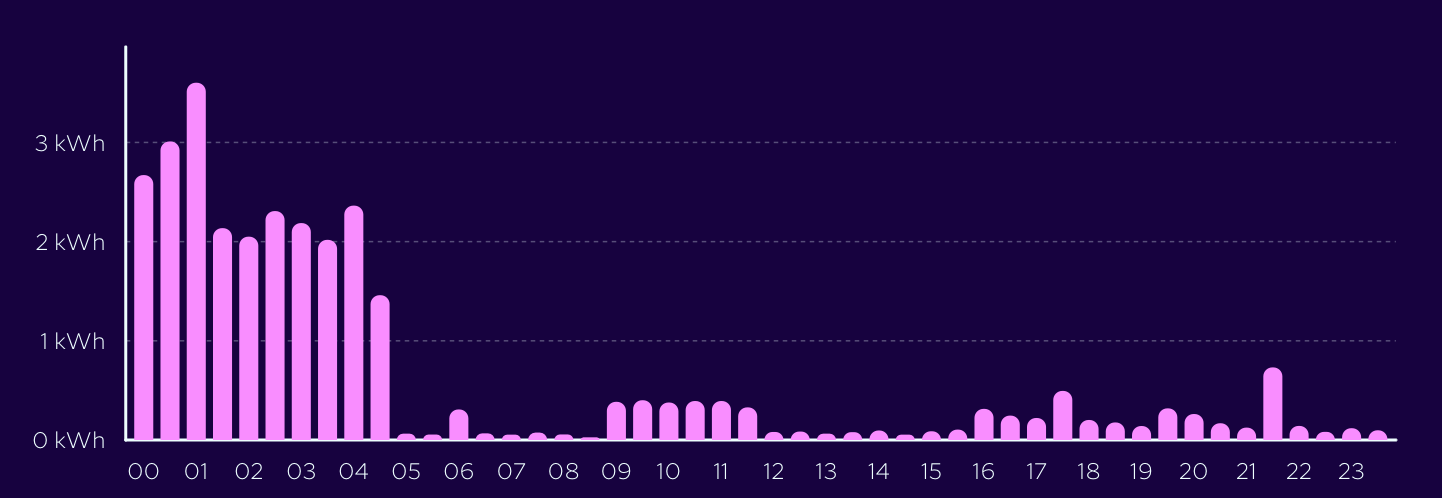
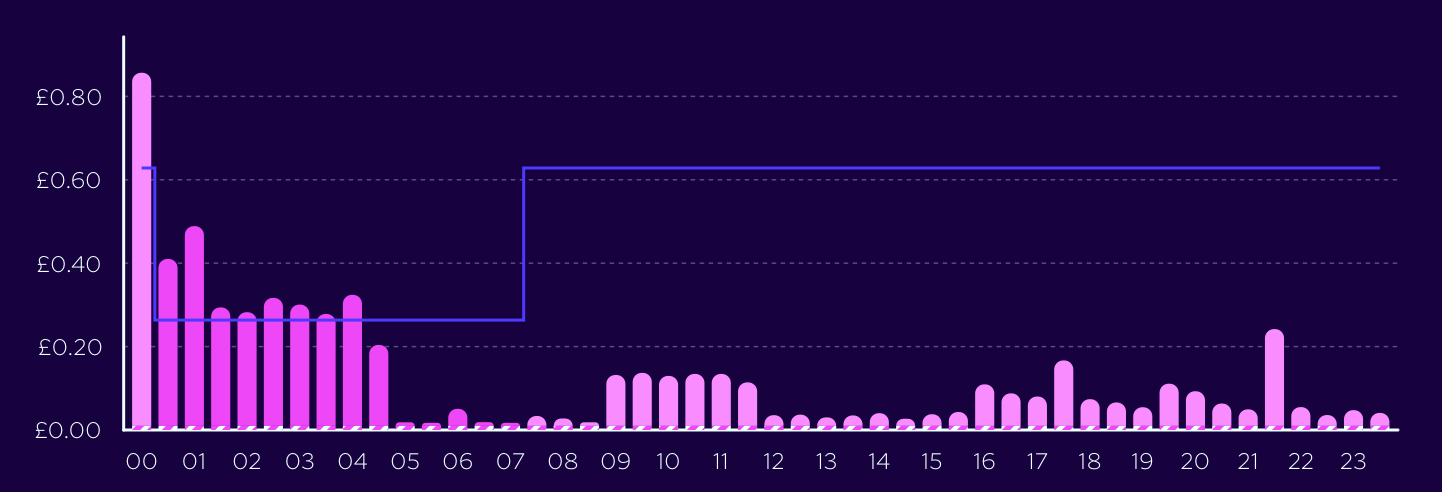
My Economy 7 night rate is from 00:30 to 07:30, but the meter is switching circuits at around 00:06 instead. When the switch happens 25 minutes earlier, all my Economy 7 connected appliances such as immersion heater and storage heaters turn on during the day rate for about 25 minutes. That means I'm using 7kWh/hour of energy for these 25 minutes at day rate. I believe this is costing me about £10-£15 per month extra due to this issue in winter. I believe this was the case before I was changed to a smart meter and it was not corrected at the time.

Here's the dfference between kWh and £
voyvrq8njm1g.png

l4i25wrw1fjs.png


I have contacted my supplier Octopus twice now, once a year ago and once this week. They've both times given me roughly the same response of "not their responsibility" (see below).
I believe you reported the same issue back in 2024, and we did not hear back from you ever since, but from what you have said, it sounds like your storage heaters are starting to draw power a bit earlier than the designated Economy 7 hours. Unfortunately, we are unable to adjust the timing of the Economy 7 hours as they are set by the electricity distribution network.

However, I recommend checking with your electrician or the manufacturer of your storage heaters to see if there’s a way to adjust their settings. They may be able to help you manage when they turn on to better align with your tariff.
I contacted my electricity distribution network (UK Power Networks) and they were adamant it wasn't their responsibility but that of the electricity supplier.

Whose responsibility is this ultimately and should I be pushing the energy company to come sort this out?
 
May not be worth duplication of effort?
Yes, I guess that one hit first, thanks.
can you post a pic of your meter and also what you believe is switching the heaters on.

I suspect 70% of the UK have a misalignment !
They switch on automatically before the rate changes - the circuit gets turned on, I assume by the meter - I can see a countdown to the rate change on the meter. I see the kWh usage jump when everything switches on before the rate changes.
As the other poster said, I've submitted this on another forum and people there seem to know about the problem.

1768598290369.png
 
They switch on automatically before the rate changes - the circuit gets turned on, I assume by the meter - I can see a countdown to the rate change on the meter. I see the kWh usage jump when everything switches on before the rate changes.

That, suggests your off-peak items, are connected to the peak supply from the meter, but switched by a time-clock which is your property. It is this last item, which is out of adjustment, and needs to be corrected, by you.

Try posting up a photo of the area around your consumer unit, where your fuses/MCB's are located.
 
This
1768608047514.png
is the interesting bit, the smart meter does the timing, there are two lines from the meter, one permeant line and one only line during the off-peak.

So it would seem something wrong with the way the two supplies are connected on your side. It would seem the time clock is yours, not the DNO's, but as said more pictures should clarify.
 
That, suggests your off-peak items, are connected to the peak supply from the meter, but switched by a time-clock which is your property. It is this last item, which is out of adjustment, and needs to be corrected, by you.
That's one of the possibilities I would have suggested (although it would imply that the off-peak loads were being supplied, via some time switch, from the wrong output of his 5-port meter).

However, although it's news to me, the folk on the MSE forum (who seem to know what they're talking about) seem to be saying that when used for an E7 tariff 5-port 'smart' meters (such as the OP's) have switching of the off-peak loads with on/off times that can be programmed separately (potentially differently) from the tariff change times. They go on to say that it is not uncommon for the programmed timings of those two 'clocks' to be significantly different and that that is something that can easily be rectified remotely by the supplier (Octopus in the case of the OP).

I don't know whether any of that is true, but it sounds credible and, as I said, the people saying it sound as if they know what they are talking about! I would think that it's probably more credible an explanation than that the OP's off-peak loads have been connected (via a timeswitch of his) to the wrong output of the meter.
 
Last edited:
This
1768608047514.png
is the interesting bit, the smart meter does the timing, there are two lines from the meter, one permeant line and one only line during the off-peak.

What puzzles me, is just where that (I assume marked LLL) off-peak supply actually goes at the hidden end?
 
Sorry I was assuming that somewhere there is an old time clock
1768642800080.png
on the 24/7 supply which has been left in circuit to supply the storage radiators. That's very different to the smart meter having incorrect settings.

I know there is a small problem between UTC and DST with most tariffs swapping between the two times, but not the Economy 7 tariff as it seems when introduced they could not change the meters remotely, but today they can, so as a result I suppose the switching time and tariff change time have to be independent to allow for British Summer Time.

To be frank I have tried to read my own meter, and there are so many windows of information, I have not worked out which is peak and which is off-peak, some tariffs you have three, off-peak, standard and peak, but my meter does not switch, it is up to me to set things to run at the correct time.
 
Last edited:

If you need to find a tradesperson to get your job done, please try our local search below, or if you are doing it yourself you can find suppliers local to you.

Select the supplier or trade you require, enter your location to begin your search.


Are you a trade or supplier? You can create your listing free at DIYnot Local

 
Back
Top