EV charging, AC vs DC (over a distance)

Joined
7 Jan 2010
Messages
14,473
Reaction score
4,579
Location
Dystopia, a small island too close to Europe
Country
United Kingdom
If (and it's a BIG if) I get an EV, is charging it via DC direct from solar quicker than AC from solar with an inverter? The charging port will be about 30 metres from the house, so would running DC that distance have any benefit over using an inverter and AC, or will the DC lose power over that distance? Is it six of one, half a dozen of the other, or is there a definite winner?
 
I get an EV, is charging it via DC direct from solar quicker than AC from solar with an inverter?
Irrelevant, as you won't be charging an EV 'direct with DC'.
They all require 230V AC.

The only DC charge options for EVs are high powered dedicated charging devices as found at motorway services and the like, and even they require AC as the input, typically a 3 phase supply capable of at least 100kVA, and the units themselves cost upwards of £25k each for cheapo models.
 
You can't charge an EV "direct" from solar panels.

In general, there are a few ways of charging EVs.

Single phase AC, generally supports up to 7kW with UK spec EVs. The simplest soloution and usually enough to charge most EVs overnight. The "charger" which converts the fixed incoming voltage to the charge voltage/current needed by the battery pack is inside the vehicle, with the chargepoint just being a switching/safety device.

Three phase AC, can support up to 21kW on some vehicles, but relatively few go this high. Again the charge management. The "charger" which converts the fixed incoming voltage to the charge voltage/current is inside the vehicle. Generally you will need a 3 phase grid connection if you want to go this route.

DC rapid. The charge point is now an actual charger, converting the incoming power to what is needed to charge the battery. Much higher speeds are possible but the equipment is expensive and provisioning a suitable electricity supply can also be a challenge.

There is at least one manufacturer, sigenergy, that offers 12KW and 25KW DC rapid charging modules for their home solar/battery system. The 25KW module is about £2K but that is of-course on top of buying the rest of their solar/battery system. If you use such a module it will also mean that your battery stack has to be located next to where you plan to charge your EV.
 
The problem is in the main, people buy a car which needs more than 35 kWh to charge it. Simple maths 5 hours x 7 kW = 35 kWh.

The way to extend it is home batteries, or a car which can take excess solar, I don't know of any, but the iboost+ does it with an immersion heater, so there is no technical reason it can't be done with a car.

But static batteries have other benefits, so they seem to be what most select. However, inverters produce heat, mine is in the flat, which used to be the coolest place in the house in summer, not any more, it has really messed up my beer brewing, it's now too hot.

Yes the heat is wasted energy, but you can't get around using inverters, the car uses too high a voltage DC for it to charge direct, so no real option.
 
This was from one site I looked at. I had previously thought people were using solar direct to car.

How Solar-Powered EV Charging Works​

The concept is straightforward: your solar panels generate DC electricity during daylight hours. An inverter converts this to AC electricity that your home uses immediately or stores in a battery. When you plug in your EV charger, it draws this solar-generated electricity directly to charge your vehicle.

The beauty is simplicity. You need three components working together:

  • Solar panels: Generate the electricity
  • Inverter: Convert DC power to usable AC electricity
  • EV charger: Convert AC electricity to the DC current your vehicle's battery requires

I wouldn't call that simple, when you convert DC to AC, then back to DC. Someone should invent something to smooth out the DC so you have panels and car charger. Oh well, stick with the diesel.
 
DC to DC or DC to AC it still needs an inverter.

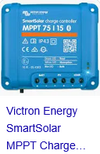
The inverter allows the panels to reach the best voltage to produce power 1784967457358.pngthis will vary through the day, so it needs that inverter. Early solar panels, would not produce anything until it reached battery voltage, and after that point their output was reduced, the MPPT inverter even with 12 volt versions 1784967684707.pnggot around that problem, and vastly increased the solar panel output.

But even without adding an EV, the solar panels need a battery, and inverter to keep the grid use during peak times to export only.

1784968138542.png

This is why the plug and play system seems a bit daft, the first dip is when battery recharged with off-peak, the second where we made coffee. Once off-peak has ended the battery ensures we don't use grid power. The solar and battery work together, it needs both, but my inverter is only 5 kW so it would be too small to work with an EV. My 6 kW panels can during this heat wave, produce around 33 to 38 kWh per day, so with an EV likely you would want a lot more.

The critical time is the evening, solar this time of year will stop producing enough for my needs around 7 pm and I don't get off-peak until 00:30 am, so 5.5 hours running on battery. 5:30 to 9:30 only 4 hours, and very little being used. We start getting solar at 5 am and finish at 9 pm this time of year, but the amount 5 am to 9:30 am or 7 pm to 9 pm is very little.

 

If you need to find a tradesperson to get your job done, please try our local search below, or if you are doing it yourself you can find suppliers local to you.

Select the supplier or trade you require, enter your location to begin your search.


Are you a trade or supplier? You can create your listing free at DIYnot Local

 
Back
Top