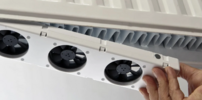
Fan assistance for radiators.

Joined
27 Jan 2008
Messages
27,444
Reaction score
3,318
Location
Llanfair Caereinion, Nr Welshpool
Country
United Kingdom
I have a Myson in last house, and tried using a fan next to standard radiator, the latter was not a success, too powerful, I would like to boost radiator output, I would think a processor fan would be enough.

So wonder if anyone has already done it, and if so how they got on?
 
Go to the dump and rip out the pc fans you find.

Don't worry about voltage ratings, most will work undervoltage and can handle usb 5v.

Stick 'em on a plank and use a power bank.

If this works, your proof of concept is good and you can make something more pleasing.
 
Radiators should be sized to provide the correct heat output necessary for that size of room. Trying to heat it quicker, then make sure your flow temperature is set high . But once at temperature , the boiler will shut down more often and cycle. At lower flow temperature the boiler will stay on longer and heat the radiators more gradually avoiding the boiler cycling on and off. The comfort level of the heating depends on the occupants. Make sure your house is well insulated to avoid heat loses. A radiator can only give out its intended output. You can try putting all these gizmos and gadgets on them, but most likely achieve nothing. It's called fannying about. There are purpose made kickboard fan heaters connected to the ch circuit, but they are specially designed for their purpose mainly on kitchen kickboards where there is no space in the kitchen for a radiator. And if you are thinking of getting one of these new heat pumps, your radiators need to be larger to achieve the output at the lower flow temperature outputs they produce.
 
Last edited:
I have a Myson in last house, and tried using a fan next to standard radiator, the latter was not a success, too powerful, I would like to boost radiator output, I would think a processor fan would be enough.

So wonder if anyone has already done it, and if so how they got on?

I have a couple of 5" mains powered, server fans, fixed to circulate heat from my garage/workshop wood burner stove. It warmed the local area, but didn't help further afield. The fans certainly helped move the heat. I wired them as switched as - 1 fan, the two in series, both on full. The two in series were fairly quiet.
 
I will not use more gas, as using oil, but clearly if getting more heat, one needs to pay more for the fuel, however the faster they can heat the room, the less time they need to run for.
 
Computer fans are cheap and quiet. You can get a dust filter to fit
 
I will not use more gas, as using oil, but clearly if getting more heat, one needs to pay more for the fuel, however the faster they can heat the room, the less time they need to run for.

A simple, repurposed fan heater, set for cold air, blowing the air up from under a radiator, would test the principle easily.
 
I used an upright fan at mothers old house, with the thermostat used normally for beer brewing to turn it on once pipes got hot, but it was too much, and cooled radiator right down, these 1705749921097.png are designed as an add on, but at £45 a bit expensive for a lump of plastic to direct the air from a computer cooling fan and a sensor so only runs when radiator is hot, they are 12 volt, with a wallmart power supply it seems. This one at £70 1705750279960.png is rechargeable, and this one 1705750471552.png fits under the radiator. Again £70 seems expensive for a thermostatically controlled fan. I having used a Myson am aware of the advantage of moving the air a bit not quite as this shows 1705750732015.pngbut it does help moving the air a little, but there are also some down sides, I noticed with hot air central heating there were no hotter or cooler spots, including next to as then single glazed windows, so heat loss was increased, today have double glazed windows, so not quite so bad, but a little wary of spending out a lot of money for some thing which may not work.
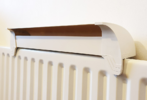
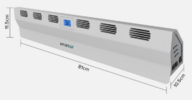

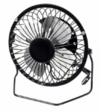
So a £7 desk fan 1705751203741.pngUSB powered seems a better idea. But I am surely not the only one to consider this, so is it worth setting up thermostatic control for such a small fan? And has anyone tried it? If so how did it work?

 
radiator right down, these 1705749921097.png are designed as an add on, but at £45 a bit expensive for a lump of plastic to direct the air from a computer cooling fan and a sensor so only runs when radiator is hot, they are 12 volt, with a wallmart power supply it seems.

I could easily reproduce that, just from bits I have laid about in my workshop, simply switched by a pipe stat.
 
I will not use more gas, as using oil, but clearly if getting more heat, one needs to pay more for the fuel, however the faster they can heat the room, the less time they need to run for.
You need to heat the room consistently. The building fabric cools down when heating off. That's the key... insulation and stopping heat loss. Good luck with your experiments. Boiler will cycle less at lower temperatures.
 
Found my TRV gives the performance for the day 1705771987836.pngI can see the hysteresis for 1st January, that is clearly a problem, only found it on my app today, so it seems some thing is turning off when it should not, so now need to find out what.
 
We had our 40-year old c/h system replaced with a combi boiler + all new radiators.
The old system had a huge cast-iron boiler in the kitchen which, while inefficient, heated the kitchen itself.
The new system had one radiator at one end of the kitchen with the result that the other end of the kitchen never really heated up and was always freezing.

I bought a set of 12V car dashboard fans + a thermostat off Amazon and rigged them up to an old laptop power supply I had laying around. The fans are at ceiling level above the radiator and blow towards the far end of the room.

The difference is astounding, the far end of the kitchen, once freezing, is now the first place in the house to warm up.

f9265phnx8vs.jpg
 
After initial quicker warm up there is no advantage to having a fan.

Airflow, will always cool a radiator, or any other hot/warm surface down quicker, and transfer the heat to the surrounding more effectively. If that source of heat is replenished, as a radiator, supplied by a boiler would, then it will continue to transfer more heat - why would it not?
 

If you need to find a tradesperson to get your job done, please try our local search below, or if you are doing it yourself you can find suppliers local to you.

Select the supplier or trade you require, enter your location to begin your search.


Are you a trade or supplier? You can create your listing free at DIYnot Local

 
Back
Top