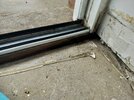
Front Door sill / treadboard damp

Joined
17 Dec 2025
Messages
1
Reaction score
0
Country
United Kingdom
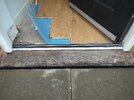
Hi all, my door sill/ treadboard? is soaked through on one side and has caused damp ingress to my interior laminate flooring and skirtings and also the door frame. Its a bit neglected and should have been painted in the summer. I've posted pictures of the current situation below. Have taken up the beading and laminate to allow it to dry out.

My plan was to
1)allow the wood and surrounding to dry out
2)remove sealant and sand down the sill and frames
3) treat it all with a wood preservative
4) paint sill with yacht varnish and frames with gloss.
5) reseal

Is it this simple or can anyone see any issues...I did wonder if the sil needed to be replaced and if so how would I go about this to ensure it doesn't happen again.

Thanks
 

Attachments
  • IMG20251217101530.jpg
    IMG20251217101530.jpg
    419.4 KB · Views: 8
  • IMG20251217101519.jpg
    IMG20251217101519.jpg
    448.7 KB · Views: 7
Last edited:
OP,
Water is penetrating probably because the external ground level is too high - the installation of the concrete flags has raised the GL.
There's also the matter of the threshold - has it been installed properly and is it working correctly? You will probably have to remove & reinstall it after cleaning?

Its necessary to lower the GL below the sill - or install an Aco drain - or remove the timber sill & form a cncrete sill.
Any other easy, cheaper remedies wont work - the problem will happen again.
Is this a porch entrance? Is the floor in pic #2 a solid floor?
 
1)allow the wood and surrounding to dry out
2)remove sealant and sand down the sill and frames
3) treat it all with a wood preservative
4) paint sill with yacht varnish and frames with gloss.
5) reseal

6) Lower the outside level.

Someone has built up the outdoor level, almost to the indoor floor level, and so nothing you do inside, will stop the moisture. Worthwhile also ensuring that the step has a slight slope, from sill to outside.
 
There is an aco brickslot drain in place. First thing is to ensure this is clear and flowing freely. If this is blocked and causing ponding, this is the main issue. Then move on to looking at ensuing a slope down from sill to thje drain. Also, ACO drains have to be laid 3-5mm below any adjacent pavnig, otherwise they cannot function properly
 

If you need to find a tradesperson to get your job done, please try our local search below, or if you are doing it yourself you can find suppliers local to you.

Select the supplier or trade you require, enter your location to begin your search.


Are you a trade or supplier? You can create your listing free at DIYnot Local

 
Back
Top