

- Joined
- 27 Jan 2008
- Messages
- 29,627
- Reaction score
- 3,661
- Location
- Llanfair Caereinion, Nr Welshpool
- Country

I know with wife's bedroom we had a problem, if one quartz bulb used, the LED flicker stopped in other four bulbs, these were G9 not GU10 bulbs, and it seems the electronic light switch did have some bearing on what was going on.
In the end, my wife got some illegal bulbs, as no lumen or wattage marked on the bulbs, which were much larger, so the covers over the bulbs could no longer be used, but the flicker stopped. As you can see, new bulb far larger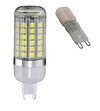 with GU10 the inside of the bulb varies a lot, with just a printed circuit plate,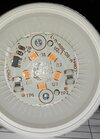
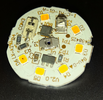
 or a far more complex design,
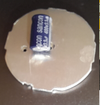
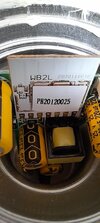 and when we buy the bulbs, we don't have a clue what is inside them. The capacitor is designed to smooth the supply, so the bulbs don't flicker, but there is no standard as to what size it should be, the G9 bulbs one failed, so I looked inside, and the capacitor was huge, actually found the fault, simple dry joint, wetted with a soldering iron and now back in service.
Most of my GU10 bulbs are now the smart type, and they seem to be better, also means when I pop in the kitchen to make coffee, the whole room does not need to be lit like a Christmas tree. But really just a whim, who wants a colour changing kitchen? However, less flicker noticed. But swapping makes of bulbs is an expensive exercise, and never sure it is going to work, if you can get an old quartz halogen bulb, try one and see if it makes a difference, that way you will know bulb fault or other fault.
In the end, my wife got some illegal bulbs, as no lumen or wattage marked on the bulbs, which were much larger, so the covers over the bulbs could no longer be used, but the flicker stopped. As you can see, new bulb far larger
with GU10 the inside of the bulb varies a lot, with just a printed circuit plate, or a far more complex design, and when we buy the bulbs, we don't have a clue what is inside them. The capacitor is designed to smooth the supply, so the bulbs don't flicker, but there is no standard as to what size it should be, the G9 bulbs one failed, so I looked inside, and the capacitor was huge, actually found the fault, simple dry joint, wetted with a soldering iron and now back in service. Most of my GU10 bulbs are now the smart type, and they seem to be better, also means when I pop in the kitchen to make coffee, the whole room does not need to be lit like a Christmas tree. But really just a whim, who wants a colour changing kitchen? However, less flicker noticed. But swapping makes of bulbs is an expensive exercise, and never sure it is going to work, if you can get an old quartz halogen bulb, try one and see if it makes a difference, that way you will know bulb fault or other fault.


