- Joined
- 15 May 2025
- Messages
- 3
- Reaction score
- 0
- Country

Hi all,
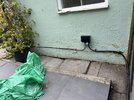
I’m trying to work out how I can fill this gap between my house and our patio, so that it is level with the patio. The gap is 50cm from the house, 5’ deep in the center, and 3.5’ either side.
Yesterday, I cleared out some slate chippings that filled the area, that were sat on top of dirt. I’m hesitant to just fill this back up with dirt as I am conscious that it would be up against the house wall and could cause damp issues in the future.
It looks as though the area may have been designed in a way so that rainwater drains down the middle, under the patio. I only purchased this house within the last year so have never seen the area cleared out, until now. As it was filled with slate chippings and dirt, I assumed it was just soil/earth underneath. It looks a little concerning also that it seems to have potential to go under the house - is that something that needs covering ASAP?
We were thinking perhaps a damp proof membrane lined along the house wall, and then some gravel? On top of that, then purchasing some ‘click’ decking tiles to cover and level? Would that provide sufficient drainage if it rained?
Apologies in advance if this is a really straightforward fix, new to all this and don’t want to cause damp issues for myself down the line.
(Side note - new to the forum, sorry if have asked in wrong place).
Thanks in advance!
I’m trying to work out how I can fill this gap between my house and our patio, so that it is level with the patio. The gap is 50cm from the house, 5’ deep in the center, and 3.5’ either side.
Yesterday, I cleared out some slate chippings that filled the area, that were sat on top of dirt. I’m hesitant to just fill this back up with dirt as I am conscious that it would be up against the house wall and could cause damp issues in the future.
It looks as though the area may have been designed in a way so that rainwater drains down the middle, under the patio. I only purchased this house within the last year so have never seen the area cleared out, until now. As it was filled with slate chippings and dirt, I assumed it was just soil/earth underneath. It looks a little concerning also that it seems to have potential to go under the house - is that something that needs covering ASAP?
We were thinking perhaps a damp proof membrane lined along the house wall, and then some gravel? On top of that, then purchasing some ‘click’ decking tiles to cover and level? Would that provide sufficient drainage if it rained?
Apologies in advance if this is a really straightforward fix, new to all this and don’t want to cause damp issues for myself down the line.
(Side note - new to the forum, sorry if have asked in wrong place).
Thanks in advance!