How to install PIR Upstand for UFH and Screed

Joined
26 Sep 2025
Messages
69
Reaction score
4
Country
United Kingdom
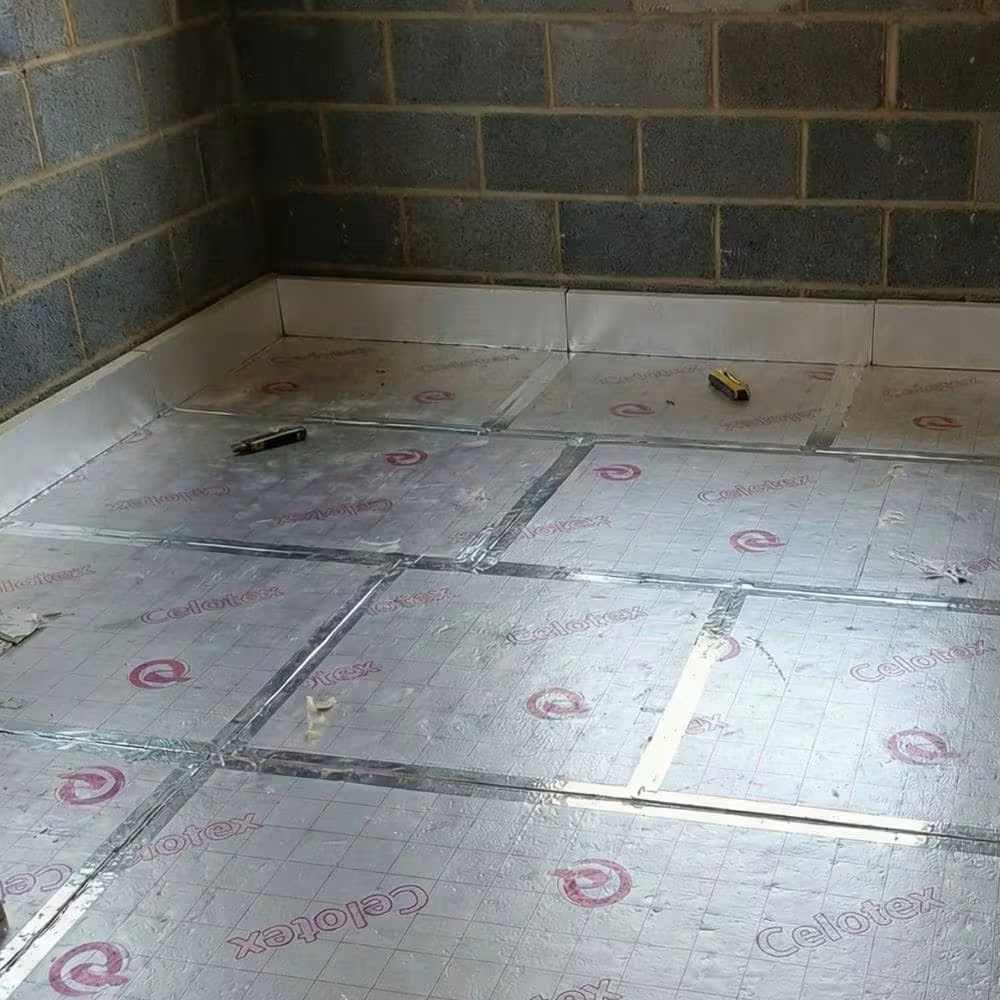
New screed floor being laid in new extension and existing part of the house. The walls are going to be float and set (not D&D plaster boarded).

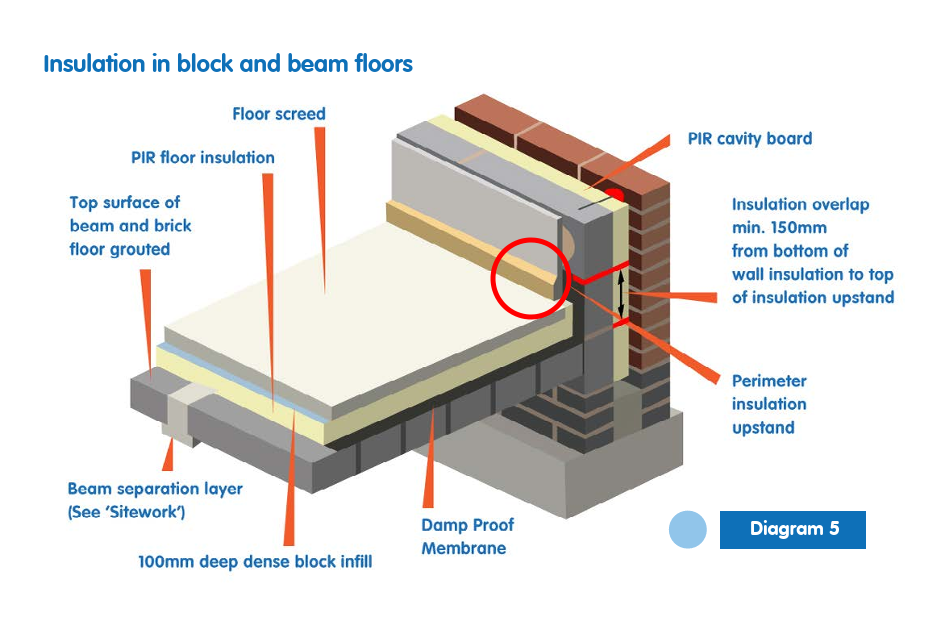
The internet suggests the 25mm PIR upstand needs to be installed up to the DPC level. Which is roughly where our screed will go up to as well.

By the time the foam expansion strip (which is required for the screed) is added, this is quite a lot of build up off the wall - around 35mm. And would not be covered by the screed either?

Surely this would be visible on the perimeter of the finished screed floor?

Is this correct or am I misunderstanding how this is to be installed?
1776628562882.png


1776629868759.png
 
Last edited:
Not a great diagram, I think the circled area is skirting board.

20/25mm thick insulation for the upstand, cut into strips and lay flat against the wall, then trap it in place with the floor insulation.
Or, if the insulation is already down, place against the wall on top of the insulation, hold in place with tape or adhesive.

It only needs to be flush with the top of the screed, either measure and cut it to match the screed finish level, or trim it back after the screed is down, but be careful not to cut into any dpm that might be behind it.
 
Not a great diagram, I think the circled area is skirting board.

20/25mm thick insulation for the upstand, cut into strips and lay flat against the wall, then trap it in place with the floor insulation.
Or, if the insulation is already down, place against the wall on top of the insulation, hold in place with tape or adhesive.

It only needs to be flush with the top of the screed, either measure and cut it to match the screed finish level, or trim it back after the screed is down, but be careful not to cut into any dpm that might be behind it.
I placed the red circle to be honest.

The floor insulation isn't down yet - How I've understood it is that if the insulation is 100mm and screed is 50mm, cut the 25mm board to 150mm and place it before butting the floor insulation up against it.

What I'm questioning is whether the insulation will/ should be visible once the screed is down? If skim is 3-4mm, 20mm+ of insulation will be visible around the external walls - I've never seen this on any screed photo. So checking it's correct :unsure:

1776632465877.png
 
It’s not an issue, as the screed isn’t the finished floor. The little bit of visible perimeter insulation gets covered by a combo of skirting and whatever flooring goes on the screed.
 
I placed the red circle to be honest.

The floor insulation isn't down yet - How I've understood it is that if the insulation is 100mm and screed is 50mm, cut the 25mm board to 150mm and place it before butting the floor insulation up against it.

What I'm questioning is whether the insulation will/ should be visible once the screed is down? If skim is 3-4mm, 20mm+ of insulation will be visible around the external walls - I've never seen this on any screed photo. So checking it's correct :unsure:

View attachment 413042
25mm of insulation is easily absorbed by the dabbed plasterboard (alone) and skirting.
 
internet suggests the 25mm PIR upstand
Don't rely on the internet! :rolleyes:
The images you see of 25mm upstands is just lazy detailing and everyone just copying something they saw on the internet

There is no requirement for an [insulating] upstand for screed, merely a thermal break to deal with preventing theoretical condensation from cold bridging.

Use a product that is no thicker than the plaster coat. You can get rolls of expanded or closed cell foam (like underlay), or EPDM foam or suchlike for this very purpose - probably the same thing as the required expansion strip.

BTW, the plaster in your sketch should not be touching the floor surface
 
I placed the red circle to be honest.

The floor insulation isn't down yet - How I've understood it is that if the insulation is 100mm and screed is 50mm, cut the 25mm board to 150mm and place it before butting the floor insulation up against it.

What I'm questioning is whether the insulation will/ should be visible once the screed is down? If skim is 3-4mm, 20mm+ of insulation will be visible around the external walls - I've never seen this on any screed photo. So checking it's correct :unsure:

View attachment 413042
You want 65 min screed over pir and I prefer to see 75 and your plaster is going to be rather thicker than your sketch
 
25mm of insulation is easily absorbed by the dabbed plasterboard (alone) and skirting.
What we're having/ Prefer the float and set method to avoid the wall build up.

Don't rely on the internet! :rolleyes:
The images you see of 25mm upstands is just lazy detailing and everyone just copying something they saw on the internet

There is no requirement for an [insulating] upstand for screed, merely a thermal break to deal with preventing theoretical condensation from cold bridging.

Use a product that is no thicker than the plaster coat. You can get rolls of expanded or closed cell foam (like underlay), or EPDM foam or suchlike for this very purpose - probably the same thing as the required expansion strip.

BTW, the plaster in your sketch should not be touching the floor surface
I appreciate the upstand isn't required for screed but what about building regs? "....25mm insulation to continue around floor perimeters to avoid thermal bridging".

The underfloor heating kit comes with the perimeter strip which I believe would provide that thermal break? Are you suggesting not bothering with the upstand?

(My sketch was just lazy - the plaster won't be touching the floor).

You want 65 min screed over pir and I prefer to see 75 and your plaster is going to be rather thicker than your sketch
We are having cement based liquid screed which doesn't need to be as thick as the sand and cement - and it's also over water UFH so need a balance between stability and not having ridiculous warm/ cool down times.
 
What we're having/ Prefer the float and set method to avoid the wall build up.


I appreciate the upstand isn't required for screed but what about building regs? "....25mm insulation to continue around floor perimeters to avoid thermal bridging".

The underfloor heating kit comes with the perimeter strip which I believe would provide that thermal break? Are you suggesting not bothering with the upstand?

(My sketch was just lazy - the plaster won't be touching the floor).


We are having cement based liquid screed which doesn't need to be as thick as the sand and cement - and it's also over water UFH so need a balance between stability and not having ridiculous warm/ cool down times.
Stick with building regs, not what some random on the interweb reckons!

A thinner upstand will be less effective. 25mm is a good all-round compromise.

Why are you worrying? Unless you're having no plaster or flooring, e.g. a shed, it won't be visible.
 
We used 25mm PIR around the external walls, and the 8-10mm foam expansion strip against inner walls (PIR will compress if required by screed).

Your wall will get 10mm or more of Hardwall or sand/cement, then 3mm skim. Then 18mm skirting will easily cover any remaining all up.
 
What we're having/ Prefer the float and set method to avoid the wall build up.
Not ideal - both thermally and at dealing with pipes behind. Has float and set been factored into your wall make-up U values? Do you know anyone with a mixing bath? I've still got mine but I binned my old darby years ago.
 
but what about building regs?
You mean the Approved Documents, which are just suggestions or one way of meeting Building Regulations.

10mm or less of insulation will acheive the same thing, as will a certain type of block inner leaf, or insulation within the cavity.

Your perimeter strip provides the thermal break that the Approved Document refers to.
 

If you need to find a tradesperson to get your job done, please try our local search below, or if you are doing it yourself you can find suppliers local to you.

Select the supplier or trade you require, enter your location to begin your search.


Are you a trade or supplier? You can create your listing free at DIYnot Local

 
Back
Top