In an effort to educate myself about my house’s circuitry and wiring, I have been busy reading up on some basic home electrics and investigating all my fixtures and light fittings. My consumer unit is no longer the daunting box of wires that it used to be. I now understand the basics of a ring main and a radial circuit. However could someone explain the following to me:
1. I have two MCB’s for upstairs and downstairs lights. Both MCB’s have two sets of twin and earth cables attached. Two red live wires are coming out the top, black and earth are connected to the relevant neutral and earth bars. As lighting circuits are usually of the radial type where the cable leaves the CU and runs to each outlet before terminating at the last fitting, why are there two cables instead of one?
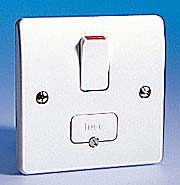
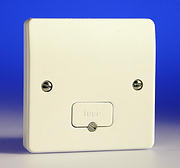
2. What is the difference between a fused connection unit and a switched fuse unit, or are they both the same thing?
3. I am in the very early planning stages of sorting out some power to the garage. Where a radial circuit wired in 2.5mm from a 20-amp MCB must not run across an area greater than 20m, does this include the cable run from the house to the garage or just the area of the garage interior?
Kind regards.
1. I have two MCB’s for upstairs and downstairs lights. Both MCB’s have two sets of twin and earth cables attached. Two red live wires are coming out the top, black and earth are connected to the relevant neutral and earth bars. As lighting circuits are usually of the radial type where the cable leaves the CU and runs to each outlet before terminating at the last fitting, why are there two cables instead of one?
2. What is the difference between a fused connection unit and a switched fuse unit, or are they both the same thing?
3. I am in the very early planning stages of sorting out some power to the garage. Where a radial circuit wired in 2.5mm from a 20-amp MCB must not run across an area greater than 20m, does this include the cable run from the house to the garage or just the area of the garage interior?
Kind regards.