Internal Insulation for Kitchen

Joined
22 Nov 2010
Messages
31
Reaction score
3
Location
West Glamorgan
Country
United Kingdom
Hi,

Posted this in the incorrect forum, so re-posting here with a bit more clarity:

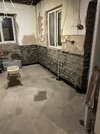
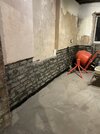
Looking for some guidance on a kitchen renovation/damp proofing diy project, ......

If I were to bond insulation to the walls, then batten over, is it possible to just bond insulation to the tanked area (depth 25-40mm), then bond a smaller depth insulation to the rendered section above to create a plumb surface to batten to?
Or does it just need re-rendering over tanking to bring it back out to the same depth?

Bear in mind, kitchen units, power outlets, switches and boiler, etc., will need to be fixed to the walls.
So open to a different method to achieve this other than battening over insulation.

Any help appreciated!
 

Attachments

  • IMG_8973.jpg
    IMG_8973.jpg
    306.6 KB · Views: 21
  • IMG_8974.jpg
    IMG_8974.jpg
    333.2 KB · Views: 21
Yes you could do that within reason, if the variation in thickness wasn't too great.
When you say tanking, is this room partially below ground?
 
It was in some areas, so to speak, with high-level ground up against the external walls, so tanked the lot after hacking off.
I've eventually removed the high-level areas also now, so probably overkill.
 
Yes, do that.

Another option is to stud the wall floor to ceiling, then you'd have a continuous flat wall to board up against, then you can fill the void with a wool slab to take up the various depths behind.

It would cost you a few inches but you could get away with a 2x2 stud wall, if you can affix it to the wall behind it in a couple of places.

If you need to run pipes and cables through it then perhaps a 3x2 would be better (use carcassing timber not CLS)

As it stands, you are looking at varying thicknesses of insulation board and varying depths of timber. Fiddly and could result in a lot of wasted insulation offcuts.
 
high-level ground up against the external walls


Is this by design, or where stuff has (been) piled up?

What I'm getting to is, can this high-level ground be dug out?
If so, this would likely go a long way towards reducing any damp problems you've had.
 
Is this by design, or where stuff has (been) piled up?

What I'm getting to is, can this high-level ground be dug out?
If so, this would likely go a long way towards reducing any damp problems you've had.
Yes, all dug out now! It was about 400mm above the internal level, right across the back wall.
 
As it stands, you are looking at varying thicknesses of insulation board and varying depths of timber. Fiddly and could result in a lot of wasted insulation offcuts.
Going back to the original question, the tanked area will need rendering over to the same depth as the render that's left above it to create an even surface and cover the tanking?

Not that I want to avoid rendering, but with it being potentially studded, insulation-bonded over etc., is it necessary?
I did read the tanking can sweat?
 
Going back to the original question, the tanked area will need rendering over to the same depth as the render that's left above it to create an even surface and cover the tanking?

Not that I want to avoid rendering, but with it being potentially studded, insulation-bonded over etc., is it necessary?
I did read the tanking can sweat?
No point in rendering it if you aren't gonna see it?
What tanking product did you use and what do the instructions say?

'sweat' just means condensation. As you are insulating over and using a vapour barrier or duplex boards (and an extractor fan and occasionally opening a window) then it shouldn't be a problem.
The other advantage of wool is that it's breathable, so any moisture that may happen to migrate behind the wall can get out through the untanked part of the wall.

Have you seen Charlie DIYte's video on this?

 
Last edited:
Yes, great Video, my only concern is the internal render im asuuming is cement render and also the external side is possible cement render. will this negate the breathing effect?
To a degree yes, but that will ensure you are extra diligent with the vapour control layer.
 

If you need to find a tradesperson to get your job done, please try our local search below, or if you are doing it yourself you can find suppliers local to you.

Select the supplier or trade you require, enter your location to begin your search.


Are you a trade or supplier? You can create your listing free at DIYnot Local

 
Back
Top