Iran

The press are playing into the hands of hamas's propaganda machine and is giving false information out, probably.

 
No idea. Israel don't either.

Palestine rejected the offer on numerous occasions when offered by Israel, I suppose the offer couldn't stay on the table forever, they're only demanding it again now because they're almost out of rockets.
Iran wont be sending them more any time soon.
 
Palestine rejected the offer on numerous occasions when offered by Israel, I suppose the offer couldn't stay on the table forever, they're only demanding it again now because they're almost out of rockets.
Iran wont be sending them more any time soon.
It's all just one big joke, isn't it...
 
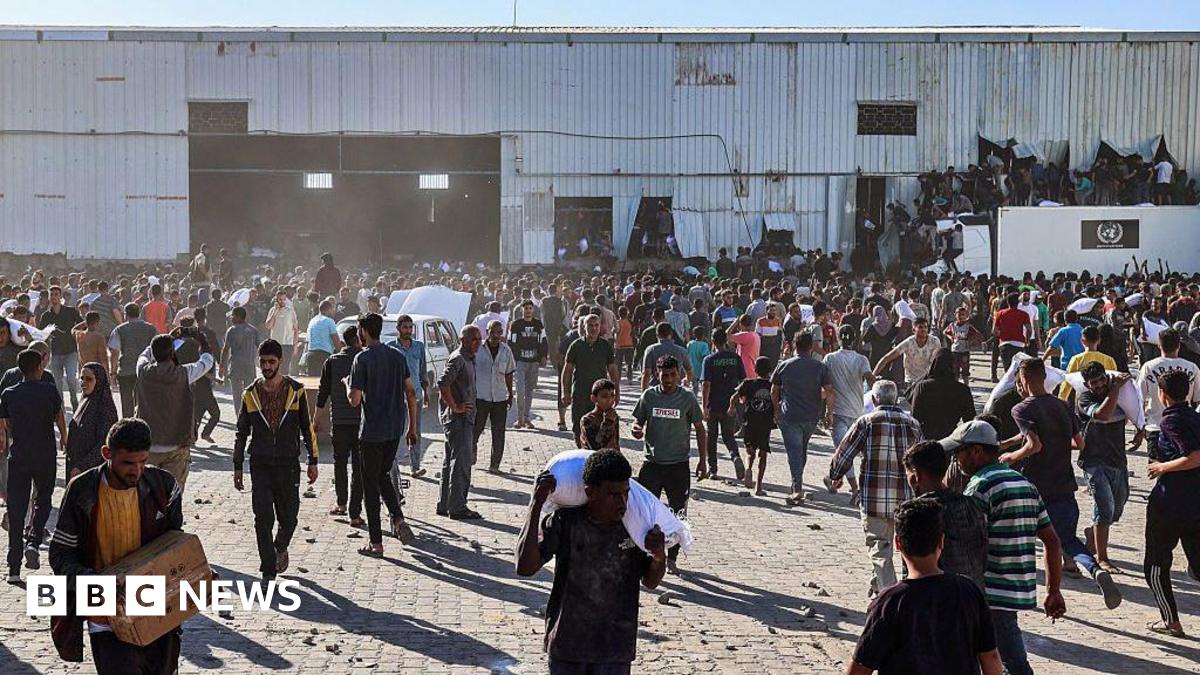
No, the BBC actually, they reported an attack on warehouse full of food, the warehouse would have been controlled by Hamas, this was toward the end of the aid blockade by Israel, doesn't make sense does it?


The UN's World Food Programme (WFP) says that "hordes of hungry people" have broken into a food supply warehouse in central Gaza.
Two people are reported to have died and several others injured in the incident, the programme said, adding that it was still confirming details.
Footage showed thousands of people breaking into the Al-Ghafari warehouse in Deir Al-Balah and taking bags of flour and cartons of food as gunshots rang out.
It was not immediately clear where the gunshots came from or who fired them.
In a statement, the WFP said humanitarian needs in Gaza had "spiralled out of control" after an almost three-month Israeli blockade that was eased last week.
The WFP said that food supplies had been pre-positioned at the warehouse for distribution.
The programme added: "Gaza needs an immediate scale-up of food assistance. This is the only way to reassure people that they will not starve."
The WFP said it had "consistently warned of alarming and deteriorating conditions on the ground, and the risks imposed by limiting humanitarian aid to hungry people in desperate need of assistance".
Israeli authorities said on Wednesday that 121 trucks belonging to the UN and the international community carrying humanitarian aid including flour and food were transferred into Gaza.
Israel began to allow a limited amount of aid into Gaza last week. However, UN Middle East envoy Sigrid Kaag told the UN Security Council this was "comparable to a lifeboat after the ship has sunk" when everyone in Gaza was facing the risk of famine.
A controversial US and Israeli-backed group - the Gaza Humanitarian Foundation (GHF) - was also established as a private aid distribution system. It uses US security contractors and bypasses the UN, which said it was unworkable and unethical.
The US and Israeli governments say the GHF, which has set up four distribution centres in southern and central Gaza, is preventing aid from being stolen by Hamas, which the armed group denies doing.
Large numbers of hungry people living in tents along the coast of Gaza have been going to the GHF distribution centres for food.
The UN Humans Right Office said 47 people were injured on Tuesday after people overran one of the GHF distribution sites in the southern city of Rafah, a day after it began working there.


No, the BBC actually, they reported an attack on warehouse full of food, the warehouse would have been controlled by Hamas, this was toward the end of the aid blockade by Israel, doesn't make sense does it?
It doesn't say full of food, or controlled by Hamas. It was after the blockade ended.
 
Then let the press in.


Israel’s military can continue barring foreign journalists from accessing the Gaza Strip, the High Court said Monday, citing ongoing security concerns after months in which only Gazans or correspondents accompanied by the army have been able to report from inside the enclave.

The Foreign Press Association, which had filed a petition seeking to force the Israel Defense Forces to open a crossing into the Strip so non-Israeli reporters could enter, slammed the ruling Tuesday, saying the “ban on independent foreign press access to Gaza… [was] unprecedented.”

The association filed the petition last month, arguing that it was “in the public interest to get a fuller picture of conditions inside Gaza after 10 weeks of extremely limited and highly controlled access.”

Israel blocked civilian access to Gaza on October 7 as the region was plunged into war by Hamas’s brutal attack on southern Israel, and since then only journalists already in the enclave, largely local freelancers, or those escorted by the military under tightly controlled conditions have managed to report from inside the enclave.

In their ruling, High Court justices Ruth Ronen, Khaled Kabub, and Daphne Barak-Erez accepted the Defense Ministry’s stance that the escorted tours provided an appropriate measure of press freedom given “extreme security concerns at this time and concrete security threats that go with approving entry permits for independent journalists.”

The verdict, authored by Ronen, claimed that operating a border crossing for foreign journalists would pose an undue onus on IDF resources in wartime. The Erez Crossing, which was previously used by journalists, was heavily damaged on October 7 and remains inoperable, according to the army.

It also cited worries that allowing foreign journalists to move around Gaza independently could endanger troops or lead to their positions being compromised.

In response, the press group noted that “Palestinian journalists continue to operate in Gaza,” and that it was “vital for foreign press to access areas of Gaza where troops are not present.”

Israel, October 19, 2023. (Nati Shohat/Flash90)
Israel’s military can continue barring foreign journalists from accessing the Gaza Strip, the High Court said Monday, citing ongoing security concerns after months in which only Gazans or correspondents accompanied by the army have been able to report from inside the enclave.
The Foreign Press Association, which had filed a petition seeking to force the Israel Defense Forces to open a crossing into the Strip so non-Israeli reporters could enter, slammed the ruling Tuesday, saying the “ban on independent foreign press access to Gaza… [was] unprecedented.”
The association filed the petition last month, arguing that it was “in the public interest to get a fuller picture of conditions inside Gaza after 10 weeks of extremely limited and highly controlled access.”


Israel blocked civilian access to Gaza on October 7 as the region was plunged into war by Hamas’s brutal attack on southern Israel, and since then only journalists already in the enclave, largely local freelancers, or those escorted by the military under tightly controlled conditions have managed to report from inside the enclave.
In their ruling, High Court justices Ruth Ronen, Khaled Kabub, and Daphne Barak-Erez accepted the Defense Ministry’s stance that the escorted tours provided an appropriate measure of press freedom given “extreme security concerns at this time and concrete security threats that go with approving entry permits for independent journalists.”

The verdict, authored by Ronen, claimed that operating a border crossing for foreign journalists would pose an undue onus on IDF resources in wartime. The Erez Crossing, which was previously used by journalists, was heavily damaged on October 7 and remains inoperable, according to the army.
It also cited worries that allowing foreign journalists to move around Gaza independently could endanger troops or lead to their positions being compromised.
In response, the press group noted that “Palestinian journalists continue to operate in Gaza,” and that it was “vital for foreign press to access areas of Gaza where troops are not present.”
Advertisement

It also pointed to Israel’s decision to begin allowing humanitarian aid directly into Gaza via the Kerem Shalom Crossing.
“The FPA believes solutions can be found to overcome security concerns and allow journalists to enter Gaza,” the organization said.
It rejected the court’s argument that Egypt’s Rafah Crossing was a suitable alternative, noting that “during the war only one foreign journalist has been granted entry into Gaza through Egypt on an escorted visit.”
The court, which cited a 2009 ruling rejecting foreign journalists’ access to Gaza during Operation Cast Lead, said that its position could change in the future as security conditions shift, inviting the group to continue pushing for access.

“The FPA will monitor Israel’s policies at the border and will expect independent press access as conditions develop,” said the organization, which represents some 370 journalists stationed in the region from media outlets around the world.

War broke out on October 7 as thousands of Hamas-led terrorists stormed into southern Israel, killing some 1,200 people, mostly civilians, and taking 240 people hostage. Israel has invaded Gaza with the goal of eliminating Hamas and freeing the captives.


In early November, the IDF began allowing journalists to enter Gaza under tight military supervision, and only after they had signed an agreement regulating their conduct in the Strip. A group of foreign journalists was allowed access to Gaza on December 8, also with IDF escort.

Throughout the current conflict, Israel has come under scrutiny for its alleged targeting of journalists. On Sunday, an Israeli drone strike in the southern Gaza Strip town of Rafah killed two journalists and seriously wounded a third. The army initially said they were with a terrorist piloting a drone, but later appeared to walk back the claim.

On December 15, Al-Jazeera video journalist Samer abu Daqqa, a member of the press association, was killed in an Israeli bombing of Khan Younis, also in the Strip’s south. In a statement, the press group called the killing “a grave blow to the already limited freedom of the press in Gaza.”
 
Israel’s military can continue barring foreign journalists from accessing the Gaza Strip, the High Court said Monday, citing ongoing security concerns after months in which only Gazans or correspondents accompanied by the army have been able to report from inside the enclave.
Well, yes?

The rest was too long.
 
It doesn't say full of food, or controlled by Hamas. It was after the blockade ended.

Apologies it was 10 days after the blockade ended.
Who was it controlled by, UNWRA?, and who raided the warehouse? would Hamas (with the help of UNWRA) bother raiding an empty warehouse.
 
Back
Top