Iron gate needs a new panel - wood or UPVC?

Joined
10 Jul 2013
Messages
103
Reaction score
1
Location
Warwickshire
Country
United Kingdom
Hi all

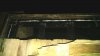
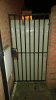
When I moved into my house, the back gate had just had a wooden panel fitted around it (bits on each outside edge, screwed into the main panel). A few years of bad weather mean it's now in a horrible state. I'm aware I should have sorted this ages ago but have had other priorities.

Just wanted to get some opinions - am I best off getting the same thing done again? Or would some sort of UPVC panel be better for simplicity/longevity?

Pics of the current one attached... you can see where gravity has pulled the main panel downwards off its screws. What option would you go for?

thanks
Matt
 

Attachments

  • gate1.jpg
    gate1.jpg
    74.4 KB · Views: 211
  • gate2.jpg
    gate2.jpg
    72.8 KB · Views: 205
Forgive me Matt but it's a fairly ghastly looking thing.....can you leave it uncovered?
If you wish to clad it, consider vertical timber boards, weather proofed with a small gap between them.
John :)
 
Forgive me Matt but it's a fairly ghastly looking thing.....can you leave it uncovered?
If you wish to clad it, consider vertical timber boards, weather proofed with a small gap between them.
John :)

Hi John, thanks for your comment - I fully agree. Unfortunately it was here when we moved in! I could leave it uncovered but we sit out there quite a bit in the warmer months (bbq/chimenea) and whenever the neighbours walk past we'll feel like goldfish.

I'm no chippy myself but I did think the existing panel was a bit of a **** design - pretty much its entire weight was hanging from the screws in the top. I'm tempted to just remove it completely for now until I can get a solution sorted. I was just going to ask a carpenter to quote on doing a similar thing, but thought perhaps there would be a more straightforward solution. My main concern is over how to actually fix the panel on.

cheers
Matt
 
No problem with fixing anything to metal, Matt - it's easily drilled with a HSS jobber drill bit.
So - plywood will delaminate over time, natural timber boards will last longer if treated with preservative and even longer if pressure treated timber (often green in colour) is used.
Don't forget, material can be fixed with small nuts and bolts, if what you choose is on the thin side.
For timber, holes are drilled in the steel that allow the chosen screw to pass through and then fix into the wood....a 6mm hole gives you loads of choice.
John :)
 
Thanks John - so am I better off just getting a 6ft panel (or some treated timber boards) thick enough to screw straight into (through the metal) rather than this overly-complicated "framing the gate" idea that was done last time? Would that be a B+Q job? It's a very thick very heavy gate but one thing I do have is a decent drill.

Then all I need to do is jigsaw out the bit around the handle.

cheers
Matt

No problem with fixing anything to metal, Matt - it's easily drilled with a HSS jobber drill bit.
So - plywood will delaminate over time, natural timber boards will last longer if treated with preservative and even longer if pressure treated timber (often green in colour) is used.
Don't forget, material can be fixed with small nuts and bolts, if what you choose is on the thin side.
For timber, holes are drilled in the steel that allow the chosen screw to pass through and then fix into the wood....a 6mm hole gives you loads of choice.
John :)
 
Obviously, any 6' solid panel would have to be of ply - as it was before. Fair enough, if you treat it well with Sadolin or whatever it will last a good while.
Consider 6' lengths of tanalised softwood, mounted vertically, maybe with a 6mm gap between each plank, fixed directly with screws to the steel gate....you could curve or point the tops of the planks if you like, just for effect. How does that sound?
John :)
 
Hi again - been having another look at this in preparation for doing the job in March.

I'm wondering if it's going to be an issue mounting the slats inside the frame as the welds at the ends of the bars are quite big in places so they might not fit well. You can see how the last guy did it - the top/sides have their own "frame" which is flush on the one side, but then overhangs by a few mm on the side you can see here. He then screwed those frame bits directly into the panel in the centre - hence the weight of it ripping itself free once the wood started to separate.

I'm torn over whether to try and copy what he's done, or to just try mounting them inside the metal frame and screwing in directly from the top and bottom as suggested. I'm not the most handy of people so the wooden frame idea probably wouldn't go well. Where the hinges meet the gate, he's cut holes in the wood accordingly but I'd probably make an arse of it.

A few lengths of wood isn't going to cost much so I guess I'll just try that option first and see how it goes! But will it not be a problem screwing into the end-grain of planks of wood? Thought the weather might get in too easily perhaps? Sorry for the stupid questions - I'm happy to have a go with this stuff but this is a new one to me.

cheers
Matt
 

Attachments

  • 12755219_10153518815971312_171527280_o.jpg
    12755219_10153518815971312_171527280_o.jpg
    94.3 KB · Views: 166
You're right - putting screws into the end grain isn't the best.
Is there any chance of drilling the steel frame and screwing directly into the new timber? If the timber is on the thin side and the screws likely to break through, you can always use 5mm countersink screws and nuts, drilling straight through 5.5mm.
John :)
 
You're right - putting screws into the end grain isn't the best.
Is there any chance of drilling the steel frame and screwing directly into the new timber? If the timber is on the thin side and the screws likely to break through, you can always use 5mm countersink screws and nuts, drilling straight through 5.5mm.
John :)

Excuse my ignorance here but I'm struggling to picture what you mean - do you mean having it so the wooden panels overlap the metal frame, then are just screwed directly into it? So rather than screwing into the frame from the top or sides, I'm screwing them on from the front? See my amazing mspaint picture attached for what I mean. I could only be bothered to add the screws to slat 1 but it explains what I mean! Oh and haven't done the vertical bars either but you get the point :p

cheers
Matt
 

Attachments

  • gate.jpg
    gate.jpg
    27 KB · Views: 164
That's about it, Matt....effectively you are cladding the metal frame so the wood is on display outside, and from the inside you can see the metalwork. So, if you can drill the steel, you can pass screws into the timber but if the timber is a bit too thin and the screws could protrude, you can use countersunk threaded screws and nuts to hold the timber on. Each plank would need two screws, top and bottom minimum and some in the middle, screw heads on the outside.
Is that OK?
John :)
 
That's about it, Matt....effectively you are cladding the metal frame so the wood is on display outside, and from the inside you can see the metalwork. So, if you can drill the steel, you can pass screws into the timber but if the timber is a bit too thin and the screws could protrude, you can use countersunk threaded screws and nuts to hold the timber on. Each plank would need two screws, top and bottom minimum and some in the middle, screw heads on the outside.
Is that OK?
John :)

Sounds good to me! Counter-sunk is the way to go I think - I have a metal case with pretty much every size screw you could dream of (thanks dad) so plenty fit for purpose. This sounds like a much much better option and seems obvious in hindsight! Thank you John I really appreciate all your advice. I'll post an update when it's done.

Thanks again and have a good weekend.

Matt
 
Me again... ha the panel cut, and it's currently drying after its second coat of treatment.

I was thinking about another possible and safer option than drilling directly into the 10mm frame... what about small L-brackets? I could paint them to match the gate and panel colour so they wouldn't be too obvious. This would avoid the problem of having to drill so closely to the edge of the frame. Do you reckon this would look a bit crap?
 
Personally I'd avoid extra brackets if possible, if only to minimise corrosion and the need to maintain.....they also don't tend to be very strong.
I notice the gate has existing holes drilled - could you use them where possible?
John :)
 
Hi John,

The holes are drilled in through the top and sides of the frame. My plan was to drill front-on, so into the 10mm wide bit of the gate (see the pic I drew above). I'm starting to think it's a crap idea because there's barely any margin for error. 6mm screws in a 10mm frame means 2mm between the edge of the hole and the edges of the metal. Any failures in measuring could ruin the whole idea.

It's only 12mm ply so I thought brackets might work but I take your point about maintenance etc. To be honest I'm half tempted to replace the whole thing with a new wooden gate but that defies the point of saving money.

Ta
Matt
 

If you need to find a tradesperson to get your job done, please try our local search below, or if you are doing it yourself you can find suppliers local to you.

Select the supplier or trade you require, enter your location to begin your search.


Are you a trade or supplier? You can create your listing free at DIYnot Local

 
Back
Top