Leak from cylinder - is it terminal?

Joined
24 Dec 2023
Messages
11
Reaction score
0
Country
United Kingdom
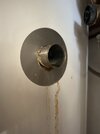
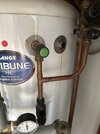
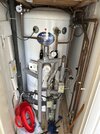
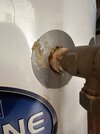
Moved into the house a couple of years ago. Have had a new boiler fitted and some of the pipe work/zone valves moved to be in the airing cupboard (rather than under the floor in my daughter’s room!). There is an old diy kit solar thermal system in it which I’m planning to run until it breaks then replace with an iboost. Two of the ports at the top of the cylinder have evidence of leaking and are wet to touch. One appears to be an unused sensor/outlet and the other has what I’m assuming is a pressure relief valve. Is there any way of repairing this or are they welded to the skin of the cylinder? Thanks in advance!
 

Attachments

  • image.jpg
    image.jpg
    220.8 KB · Views: 49
  • image.jpg
    image.jpg
    186.5 KB · Views: 49
  • image.jpg
    image.jpg
    194.3 KB · Views: 53
  • image.jpg
    image.jpg
    345.1 KB · Views: 51
1. As you know, that is an unvented hot water cylinder. It should be serviced annually, and only those with a current "G3" certificate may work on them.
2. Inside the white enamelled cylinder you can see is the actual cylinder, in this case of stainless steel. Between the two is a pretty substantial layer of insulation.
3. The pipes coming to the outside are sealed to the inner cylinder, the seal to the outer cylinder being cosmetic.
4. I suspect the inner cylinder is leaking. If this is the case the hot water cylinder has reached the end of its life.
5. The pipe with the green centred valve handle attached is linked to the Temperature and Pressure Relief Valve (TPRV) inside the inner cylinder. This is a key part of the essential safety system for such cylinders and should be specifically checked for correct operation at each annual service.
 
Thanks for the info - your point 4 is what I was worried about. I suspect the cylinder was damaged after the previous resident passed away and the house was unoccupied for a summer. The temperature at the solar thermal panel was >100 and the cylinder temperature was at around 80 for a couple of months…

I also had no idea about the requirement you mention at point 1 so I’ll do some research on that. Thanks
 
Have a look at the hot outlet connection on top of the cylinder..there's a faint chance it's the source.
 
Yes good thought will do. Guessing you mean it could be running between the two layers of the cylinder and out of the first opportunity of relief?
 

If you need to find a tradesperson to get your job done, please try our local search below, or if you are doing it yourself you can find suppliers local to you.

Select the supplier or trade you require, enter your location to begin your search.


Are you a trade or supplier? You can create your listing free at DIYnot Local

 
Back
Top