Light fitting hung on plasterboard really?

Joined
27 Jan 2008
Messages
29,846
Reaction score
3,708
Location
Llanfair Caereinion, Nr Welshpool
Country
United Kingdom
1792745359658.png

BS7671:2008 said:
559.6.1.5 Fixing of the luminaire
Adequate means to fix the luminaire shall be provided.
The fixing means may be mechanical accessories (e.g. hooks or screws), boxes or enclosures which are able to support luminaires or supporting devices for connecting a luminaire.
In places where the fixing means is intended to support a pendant luminaire. the fining means shall be capable of carrying a mass of not less than 5 kg.
I does continue where it weighs more, but 5 kg from plaster board seems a massive weight however well the weight is spread, can these devices really take 5 kg?
 
5 kg from plaster board seems a massive weight however well the weight is spread, can these devices really take 5 kg?

1792760875741.png


Although surely it must depend on what the ceiling is made from?
 
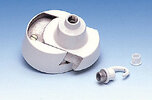
How do they work, do you drill a hole wide enough for the width then poke it up does it then spring flat. Looks like it comes with a stick that you use to pull it down whilst you screw in.
Looks good to me actually, much better than those PB big worm thread things.
 
I looked at the plaster board put up where I work, guys on stilts did a great job, but not that many nails held up each board, and the floor above is used, so there is some movement, so holding the lamp to the board I am sure it would work, but keeping the board attached to the beams, not quite so sure.

Even with ceiling roses attached to the beams, I have seen fixing nails work out of plaster board, never mind with the weight of a 5 kg chandelier hanging off it.

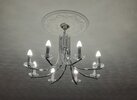
OK I know many light fittings are a lot less than 5 kg, and with a simple light shade and bulb likely no problem, but the ceiling rose is good for 5 kg, even my own Ceiling light.jpg I would not have liked to hold that weight while making the connections, but this Ceiling rose.jpg meant I did not need to, it was all assembled on the floor, well under the 5 kg rating, but would you trust it if only screwed to plaster board? Add to the 22 kg of the board, that's 27 kg falling on ones head if it comes off.
 
I suppose common sense may help when fitting heavy fittings but I have seen fittings that come with the crappyest plugs and screws that are no way suitable so that green thing is an upgrade.
I have a 9 lamp chandelier with no access from above that I slightly compromised on its position so i could get it on a joist
 
Surely no real difference to those silly perforated metal strips that have (had? I haven't seen them for years) been available for decades.
The massive difficulty was getting the screw started in them but then only if you managed to get it in the right place.
 
I know when my mother had a winch fitted to get her in/out of bed, lamp needed to move, and it was fitted to plaster board. Pro job, not DIY, but little option to where it went, so there are times lights are not fitted to the beam.

But in the main, as a pro, we have to consider what will happen latter, I know son was doing some council house refurbishment, and council rules did not allow chandeliers so he had to remove any fitted, and the tenants were charged to have their chandelier removed and skipped, seemed a bit unfair, but they knew the rules before fitting them, and so in that case, we know you can't have 5 kg on the plaster board.

But in the main, there is nothing to stop an occupier going to the limit, so the fitting must take the limit.

So to fit a winged type plaster board fitting to stop a cupboard tipping over, or for any other use, it is down to the user to decide if the fixing is good enough. But to market a device to hold light ceiling roses, not just general use, but for this job then it must clearly be able to take the 5 kg weight, should it fail, the responsibility has shifted from the person who has used it, to the manufacturer who has marketed them for that use.

 
...much better than those PB big worm thread things.
When I did night club sound and light installations back in 1995/6 my boss has some steel plates made up: 10mm thick, 400*400mm, 7mm holes along each edge total of 16, M10 stud welded to the centre, hole drilled and tapped for 32mm brass or plastic bush
1792834342634.png

We fitted moving head lights up to 15Kg using 16 of those fixings to PB ceilings or walls. I often wondered how long the fixings held.

They were stupidly over engineered and weighed over 2Kg each, I suggested 4 or even 3mm plate to reduce the weight but the boss was concerned about flexing where the stud was welded.
 
Last edited:
When I did night club sound and light installations back in 1995/6 my boss has some steel plates made up: 10mm thick, 400*400mm, 7mm holes along each edge total of 16, M10 stud welded to the centre, hole drilled and tapped for 32mm brass or plastic bushView attachment 425038
We fitted moving head lights up to 15Kg using 16 of those fixings to PB ceilings or walls. I often wondered how long the fixings held.
I would think they are still there :LOL:
They were stupidly over engineered and weighed over 2Kg each, I suggested 4 or even 3mm plate to reduce the weight but the boss was concerned about flexing where the stud was welded.
 
I have seen fittings that come with the crappyest plugs and screws that are no way suitable


I don't think I've ever used the screws and plugs supplied with anything - always use my own.

I've got a large collection of little plastic bags containing a few small screws and plugs that I've kept in case they are useful. They never have been.
 

If you need to find a tradesperson to get your job done, please try our local search below, or if you are doing it yourself you can find suppliers local to you.

Select the supplier or trade you require, enter your location to begin your search.


Are you a trade or supplier? You can create your listing free at DIYnot Local

 
Back
Top