Hi All
I’m trying to freshen up some paintwork here and there to prep for pre-estate agent valuation. I’m currently on the loft hatch surround and door (gloss paint). I’ve worked with oil based gloss for woodwork and emulsion in the past, but I’m beginning to think I haven’t got a handle on some of the modern products.
I’m not trying to achieve a competition standard finish and may not go by the book (primer, undercoat, topcoat) if I’m going on top of existing paint, but want an OK looking job.
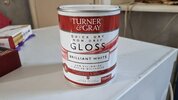
I know we’re all saving the planet now and we’re all told water based gloss (versus oil based) is the way to go, so I bought some cheap stuff, (with the Trades Descriptions Act in mind). I got it from B&M Bargains and it’s called Turner & Grey Quick Dry Non-Drip Gloss - £7.00 ish. Wow, I thought, sounds just like Farrow & Ball, I’ll be quids in!!! Not really, but I thought it might be passable.
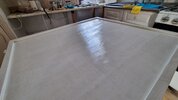
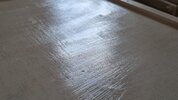
I sanded the hatch with 120 grit as the existing paintwork was a bit sparse but pretty flat and then started laying it on with a reasonable brush. I was expecting to do at least a couple of coats given the lack of prep, but was stunned as soon as I got the first dozen strokes on. There were brush stokes galore and no way to lay them off – See pic | Hatch-Sanded then 1st Coat I know it’s hot weather but still…
I carried on and painted the whole hatch door. Supposed to be 8 hours to dry, so I left it 2 days then thought I’d try to sand down lightly and attempt the next coat with the same, or an oil based paint.
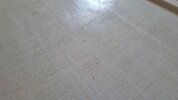
When I sanded it, the swarf created was like little balls of paint rather than dust. It reminded me of when you rub excess Copydex off and get little balls of rubber forming – See pic Hatch-Result of sanding-Zoom
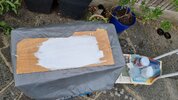
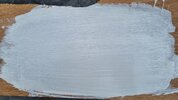
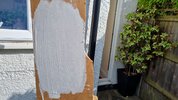
WTF I think. What new hell have I unleashed here? At this point wanted to do a Cher and turn back time. I was so Pi**** off I thought I'd come back to it later. The next day I thought I’d try a control experiment and just lay on a ton of this Turner & Grey on a bit of ply to see if it would settle flat. Not a cat’s chance – See pics:
- Turner&Grey -Control Test A
- Turner&Grey -Control Test - Zoom
- Turner&Grey -Control Test - Edge on to sun
I have subsequently read a bit about what a bitch water based paints can be and seen some opinions on how to use it.
Just wondering what you guys think about:
Cheers
I’m trying to freshen up some paintwork here and there to prep for pre-estate agent valuation. I’m currently on the loft hatch surround and door (gloss paint). I’ve worked with oil based gloss for woodwork and emulsion in the past, but I’m beginning to think I haven’t got a handle on some of the modern products.
I’m not trying to achieve a competition standard finish and may not go by the book (primer, undercoat, topcoat) if I’m going on top of existing paint, but want an OK looking job.
I know we’re all saving the planet now and we’re all told water based gloss (versus oil based) is the way to go, so I bought some cheap stuff, (with the Trades Descriptions Act in mind). I got it from B&M Bargains and it’s called Turner & Grey Quick Dry Non-Drip Gloss - £7.00 ish. Wow, I thought, sounds just like Farrow & Ball, I’ll be quids in!!! Not really, but I thought it might be passable.
I sanded the hatch with 120 grit as the existing paintwork was a bit sparse but pretty flat and then started laying it on with a reasonable brush. I was expecting to do at least a couple of coats given the lack of prep, but was stunned as soon as I got the first dozen strokes on. There were brush stokes galore and no way to lay them off – See pic | Hatch-Sanded then 1st Coat I know it’s hot weather but still…
I carried on and painted the whole hatch door. Supposed to be 8 hours to dry, so I left it 2 days then thought I’d try to sand down lightly and attempt the next coat with the same, or an oil based paint.
When I sanded it, the swarf created was like little balls of paint rather than dust. It reminded me of when you rub excess Copydex off and get little balls of rubber forming – See pic Hatch-Result of sanding-Zoom
WTF I think. What new hell have I unleashed here? At this point wanted to do a Cher and turn back time. I was so Pi**** off I thought I'd come back to it later. The next day I thought I’d try a control experiment and just lay on a ton of this Turner & Grey on a bit of ply to see if it would settle flat. Not a cat’s chance – See pics:
- Turner&Grey -Control Test A
- Turner&Grey -Control Test - Zoom
- Turner&Grey -Control Test - Edge on to sun
I have subsequently read a bit about what a bitch water based paints can be and seen some opinions on how to use it.
Just wondering what you guys think about:
- Is a good brand of water based Quick Dry Non-Drip Gloss going to be any easier?
- Does wetting the surface you’re about to paint really help slowing down the Open time before it looks like carp? Sounds nuts to me…
- I hear the paint conditioner “Floetrol” helps reduce the effects I getting above. Does anyone use it? Do I really have to faff with another product to paint a square yard of ply?
Cheers
Attachments
-
 Turner&Grey B&M-WB Gloss.jpg89.3 KB · Views: 380
 -
 Hatch-Sanded then 1st Coat.jpg126.8 KB · Views: 166
 -
 Hatch-Sanded then 1st Coat-Zoom.jpg190.5 KB · Views: 264
 -
 Hatch-Result of sanding-Zoom.jpg146.7 KB · Views: 165
 -
 Turner&Grey -Control Test A.jpg226.6 KB · Views: 227
 -
 Turner&Grey -Control Test - Zoom.jpg153.9 KB · Views: 182
 -
 Turner&Grey -Control Test - Edge on to sun.jpg191.6 KB · Views: 239