

Ah right, if it's old then it's excusable.
Cement works, but lime mortar has something of a cult following these days. I've pointed with cement over lime mortar, it looked great and didn't immediately explode. Many will tell you all the bricks will spall, but this doesn't seem to actually happen in the real world. Old bricks can crumble at any time, but if there's cement pointing then some immediately jump on this as the cause.
A mate of mine is a pointer. He only uses lime if the customer specifies it and wants to pay an extra 20(ish)% premium. Over 95% of the houses he works on are Victorian or Edwardian. The majority of those houses have soft red rubber bricks on the front. I have only known him for about 10 years, but I have seen houses that he pointed 35 years ago. None of the red rubber bricks have spalled.
Here is a house in Ealing that had been rendered (same render as the house to the right). He manually hacked away the render- 9" wall, so he couldn't use an SDS chisel.
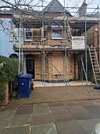
And this is the house once he finished.

I was there on day 1 to use my Festool tracksaw angle grinder to cut a straight line in between the two properties and then back to paint the front elevation.
My understanding is that lime mortar smudges the bricks and requires brick acid to remove the smudges when using weather struck pointing. Additionally, the acid can slightly change the colour of the newly applied pointing.


