No Lintel, wall cracks

Joined
27 Jun 2025
Messages
6
Reaction score
1
Country
United Kingdom
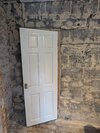
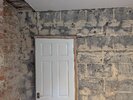
I'm getting some refurbishment work done on a 1930s house. I'd noticed a crooked doorframe but whilst removing deteriorating wall plaster, it turns out that the door was installed without a lintel. Either that or other historic subsidence has caused some cracks in the wall around the door.

What's the options to address this?
 

Attachments

  • PXL_20250626_071407666.MP.jpg
    PXL_20250626_071407666.MP.jpg
    526.9 KB · Views: 79
  • PXL_20250626_071335980.MP.jpg
    PXL_20250626_071335980.MP.jpg
    554.5 KB · Views: 77
Not uncommon to build on door standards in those days.
I would put a precast concrete lintel in..depending if the floor joists are resting on that wall will determine the size of lintel.
 
Not uncommon to build on door standards in those days.
I would put a precast concrete lintel in..depending if the floor joists are resting on that wall will determine the size of lintel.

To my eye, it looks as if the door frame, and the masonry above it, has remained well-supported, but the masonry to the right of the door has somehow dropped.
 
I tend to agree with Harry and would be looking for movement below the floor level, as you say historic subsidence.
 
I tend to agree with Harry and would be looking for movement below the floor level, as you say historic subsidence.
I was thinking so too as we're in an area with higher subsidence risk. Just that the frame is visibly lopsided going to the right and the door top has been shaved to align with the slanting frame made me think the crack could have arisen because of inadequate support.
 
I was thinking so too as we're in an area with higher subsidence risk. Just that the frame is visibly lopsided going to the right and the door top has been shaved to align with the slanting frame made me think the crack could have arisen because of inadequate support.

I thought the lopsided frame, was a trick of the photo. In that case - it was either built like that, or both the masonry, and the frame have dropped on the right.
 
Going by the chamfer on the door at the top, I'd be inclined to look at the floor to see how that has behaved over the years.
Is it a solid or suspended ground floor or is this upstairs?
 
I reckon you've opened a can of worms here.

I suspect it's a much later wall and has been built on top of the floor boards and joists. The part to the left of the door is reasonably firm, but the rest has sagged.

It possibly needs to be removed, the floor reinforced and replaced with a lighter stud wall. But first establish exactly what it is...

Is there a supporting wall beneath it? Either on the floor below, or a wall below the floor if it's the ground floor.
 
I reckon you've opened a can of worms here.

I suspect it's a much later wall and has been built on top of the floor boards and joists. The part to the left of the door is reasonably firm, but the rest has sagged.

It possibly needs to be removed, the floor reinforced and replaced with a lighter stud wall. But first establish exactly what it is...

Is there a supporting wall beneath it? Either on the floor below, or a wall below the floor if it's the ground floor.
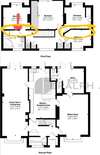
This is a first floor room. I've shown the problem area in the floor diagram.
1) Crack in wall marked with red arrow
2) The two block built walls (shown in amber) possibly rest on the 1st floor joists (no supporting wall or beam that I can see), so could be the reason for sagging.

Will be opening up the floorboards to find out!
 

Attachments

  • Screenshot_20250627-223122~2.png
    Screenshot_20250627-223122~2.png
    227.5 KB · Views: 30
This is a first floor room. I've shown the problem area in the floor diagram.
1) Crack in wall marked with red arrow
2) The two block built walls (shown in amber) possibly rest on the 1st floor joists (no supporting wall or beam that I can see), so could be the reason for sagging.

Will be opening up the floorboards to find out!
Take it out and replace with a stud wall.
 
Edit: found a pic in another thread that answers most my questions about the plan..

If the same clowns that built a concrete block wall on timber joists did the extension which involved knocking the downstairs back wall out, I'd have serious misgivings about the quality of support offered to the upstairs wall where the extension was added. Have you seen any indications of problems there?
 
Last edited:

If you need to find a tradesperson to get your job done, please try our local search below, or if you are doing it yourself you can find suppliers local to you.

Select the supplier or trade you require, enter your location to begin your search.


Are you a trade or supplier? You can create your listing free at DIYnot Local

 
Back
Top