I've been trying to avoid much discussion about 'details' (particularly about 'what is theoretically possible'), since I think that detracts from my main point - which is that, particularly when 'major decisions' are to be made (like 'to ban' something - or, at the other extreme, to 'require/demand'something), those decisions should be based on information/data/evidence about what is actually seen to happen, in practice, in the real world - rather than considerations of 'what is theoretically possible'.
Ah, the "wait till there's actual evidence of harm before acting" approach.
Yeah, I think this bridge will be safe, I've never had one of
my designs
collapse before. Sure, don't worry about this DIY reactor in the back garden, I've never had one
of mine go wrong before. Don't worry,
I've never had a
submarine collapse before.. OK, some sarcastic hyperbole there, but you get the drift ?
• It's hard to argue that shoving something with wrong size pins into a socket risks damaging the socket in various ways - whether that's damaging the contacts such that a fire is more likely in the future, or damaging the shutter and defeating a safety feature.
• It's hard to argue that having something which easily deforms such that it's "earth" pin can be used to open the shutters without blocking access to the L&N contacts doesn't defeat a safety feature.
• It's hard to argue that having a device which opens the shutters and has holes which give ready access to the L&N contacts doesn't defeat a safety feature.
• It's slightly harder to argue that having these covers will instil a false sense of safety because many people will not recognise the extra risks they create over and above any risks already present. But my opinion is that it's a valid argument to say that people are likely to be less cautious about child safety with these things fitted even though there are demonstrated risks not present with an uncovered socket.
• It's more of a stretch to argue that using these covers changes attitudes to "uncovered" sockets, possibly in a bad way.
So there we have a number of clearly demonstrable risks, even if there's little or no evidence of those risks realising into events, which are totally avoidable. Against that are some rather tenuous claims that some of these devices might make an already "reasonably" safe socket safer.
Both of us are familiar with the principle of ALARP, and I could not argue that adding avoidable risks is in any way ALARP.
BS1363 dates from when I think we had more respect for BSI and the standards setting process, and I would credit them with having considered the options and come up with something that was deemed ALARP, if you consider the RP part to include "and won't just annoy users into bypassing a feature" like some safety functions can end up as.
Having said that, to briefly remind you of something I've written in the past as regards 'inserting plugs upside down', what BS1363-2 requires (of sockets, include those in 'extension leads) seems (at least to me!) to be rather (very!) odd ...
The only requirement regarding placement (relative to 'edge' of the plate/whatever) of the 'apertures' to receive plug pins appears to relate to the L& N pins, but
not the earth one .....
View attachment 415404
... as I've said before, unless I'm missing something (like a corresponding requirement relating to the earth pin receptacle), that appears to mean that it would be perfectly possible to have a compliant socket (with earth pin 'receptacle' fairly close to edge) into which the earth pin of a compliant plug could be inserted with the plug 'upside down' if the socket were attached to a surface pattress box or was one of the outlets of an 'extension lead', hence allowing something like this (as mentioned by you) that I once illustrated...
View attachment 415405
Going from memory, I was sure there was something about the size of sockets to prevent upside-down insertion of the earth pin. I don't have time to dig out the BS and look. Separately, there are rules around the size of plugs and sockets to make it hard to touch the L&N pins while it is partially inserted (along with the revised version which requires partially insulated pins.)
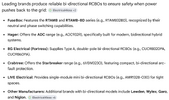
No matter what you (or 'we') may 'hope', and as I've said, it it is surely the case that there are countless millions of RCDs (presumably 'unidirectional') out there in service (including well over a dozen in my house) which do
NOT bear any such marking, isn't it?
For that reason, I find it hard to understand how any 'regulations' about plug-in inverters could possibly address this issue - if many/most people don't know (and probably can't ascertain) whether their RCDs are unidirectional or bidirectional, they can hardly be expected to comply with regulations that would require that knowledge ?!

I think we all agree that no regulations will help because users will ignore them. Even banning the sale wouldn't help given the ease of buying direct via various online sites that
appear to not care about product safety laws and the lilke.
OK, but a requirement (per your suggestion) to 'label' sockets would surely not be enough to achieve that - the only guaranteed way 'to make tenants safe' (at least, 'as safe as possible') would surely be to introduce legislation that required all sockets in rental properties to be protected by bidirectional RCDs, wouldn't it?
Please don't give them ideas for any more regulations

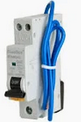
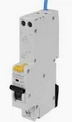
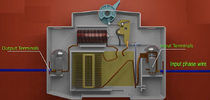
As to even if all MCBs are bidirectional I don't know? Seem to remember something about the arc chamber, and it's needing to be before the trip coil?
I can't see there being any problem with the typical design of MCBs in CUs. It doesn't really matter which way round the trip and contact are - the contact is still breaking the current, and the system needs to break a fault of any polarity, and quench any ensuing arc. Unlike the RCDs, there's typically no electronics to get damanged.


 What you say is correct. However, nearly all people buying 'plug-in solar' kit will probably know even less about BS7671 (or Amd 3 thereof) than they do about the unidirectional/bidirectional issue in general - so, again, if the kit is going to be sold directly to members of the general public, it doesn't look as if any of this 'regulation' will achieve anything!