Options for removing surround / gas fireplace

Joined
19 Mar 2022
Messages
5
Reaction score
0
Country
United Kingdom
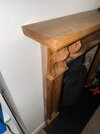
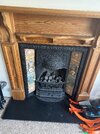
We live in a 1930s semi, lounge still has chimney breast with a gas fire and surround as pictured below. I want to take out the gas fire and suround, and hearth; and board it over. Grateful for any advice of whether I should do this myself, or an idea of the scale/cost of getting it done. My sense is it might depend on the state of the gas...

1. We've not used the gas fire in the 10 years we've lived hear, but understand from the previous owner that the chimney is open, the gas fire works, and that there is a gas 'tap' in the left-hand alcove. Can I just confirm the gas tap is switched off, then remove it myself?

2. How do I actually take it apart? The hearth, gas fire and surround all seem rock solid. I can't see any screws or release points. There are a couple of points that look like there might be sunken nails, but it seems all firmly and permanently attached. I assume the surround needs to come off first, then the fire, then the hearth. Left to my own devices I would probably knife around the edge of the surround and the wall and see if that makes a difference; otherwise crowbar or SDS chisel. Is this the best way? Or should I be prising the 'facia' parts of the surround off, to hopefully reveal wall attachments?

4. Any tips for the hearth or fire?

5. With everything out, is there anything important to do when boarding up? Do I need to 'balloon' the chimney? Leave a vent? Just board up and plaster?

many thanks for any advice!
 

Attachments

  • IMG_2192.jpg
    IMG_2192.jpg
    534.4 KB · Views: 40
You will need a gasman to cap off the gas pipe that feeds the fire , the fireplace is 3 pieces the wooden mantel will have brackets to fix it to the wall just prize it forward and they will crack the plaster and show up , the back tiles and cast iron will come out in one piece , then just lift the hearth
 
Thanks - so if I prise of, literally the top horizontal mantle (i.e. just the top-most put of wood on the top of the surround), that will expose the brackets?

When you say the "fire place is 3 pieces" - is that left "tiles, central unit, right tiles" or something else?

What's a reasonable price SW London/Surrey to have the pipe capped off? Presumably by a gas-safe engineerin/plumber?

Thanks
 
Thanks - so if I prise of, literally the top horizontal mantle (i.e. just the top-most put of wood on the top of the surround), that will expose the brackets?

When you say the "fire place is 3 pieces" - is that left "tiles, central unit, right tiles" or something else?

What's a reasonable price SW London/Surrey to have the pipe capped off? Presumably by a gas-safe engineerin/plumber?

Thanks
no prize from the side , the brackets will be down the sides , no 3 pieces will be the wooden mantel/sides , 2nd will be the cast iron / tiles in one piece then the hearth
 
Is it a gas tap or a chrome restrictor elbow ?
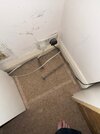
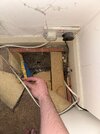
So I had no idea about this, but I just moved the furniture to expose the tap, and to my surprise - it has been removed. It used to stick-up through the carpet, but now gone - with just a couple of holes in the floorboards. TBH, I don't have a clear memory of this at at all - but we did a big extension that impacted the kitchen gas, so it must have been taken out then.

So this presumably makes removal easier.

I might try crowbarring the marked section pictured below of the surround tomorrow. Do you think I'll need any special tools to remove the gas fire itself? presumably will be screwed down? And connected to metal pipework that will need a wrench to remove?

Thanks
 

Attachments

  • WhatsApp Image 2026-03-22 at 20.07.50 (1).jpeg
    WhatsApp Image 2026-03-22 at 20.07.50 (1).jpeg
    278.3 KB · Views: 32
  • WhatsApp Image 2026-03-22 at 20.07.51.jpeg
    WhatsApp Image 2026-03-22 at 20.07.51.jpeg
    327.5 KB · Views: 32
  • WhatsApp Image 2026-03-22 at 20.07.50.jpeg
    WhatsApp Image 2026-03-22 at 20.07.50.jpeg
    396.8 KB · Views: 32
does not matter if it is a gas tap or a restrictor elbow , leaving an open gas pipe is a RIDDOR reportable offence , it must be capped
Calm down....My near 50 years as a gas fitter/plumber entitles me to ask the question or any question i feel like asking.
 
So this presumably makes removal easier.
If you’re certain it’s capped then yes.
Do you think I'll need any special tools to remove the gas fire itself? presumably will be screwed down? And connected to metal pipework that will need a wrench to remove?
No special tools should be required. You should install a vent in the unused chimney part though, otherwise you may get damp.
 
I should have looked after moving the furniture yesterday, but I presume that if I lift that floorboard, I should see the old pipe with a cap on it.

Ref the vent - do you mean when i board over the hole with plasterboard? So a vent in the actual plasterboard?

I think the chimney itself is 'open' at the top and I hear of people getting them closed and/or putting a balloon in. Or even getting them swept to remove soot because the soot attracts damp somehow. We've had no issued the last 10 years with anything falling down the chimney, so minded to put a balloon in for good measure (as they are quite cheap), then board up. But I guess if might be unfortunate if something was to fall down the chimney and start stinking...
thanks
 
Get a chimney specialist in to survey and recommend a suitable approach to the chimney, they can be areas for damp accumulation or debris depending on it's condition.

If it had been used for solid fuel previously and then a gas fire fitted then it should have already been swept clean as part of that work.
 
People pay good money for tiled cast iron fire surrounds so make sure its removed carefully and not smashed out and chucked in a skip.
 
OP,
Best, & safest practice says (as above) use a gas person to do gas work - no matter if you think the existing gas work is redundant or active. The gas person will test the soundness of the whole gas installation.

Use a knife to cut the outline seal/paint to your fire surround - it will allow better removal of the wood fire surround & mantle without spelching the surrounding plaster.
If fixing brackets have been used then Its possible that the wood surround can be lifted up & off its fixings?

The cast iron legs of the tiled cheeks will often have fixing lugs set about 150mm down from the top & up the bottom - the lugs will have been screwed to the brickwork.
Gently prise the hearth up but keep it in one piece if possible?

Best practice is to sweep the flue or drop a camera down it to determine if the flue is sooted up or blocked. It might be a good time to check the flue terminal, the stack and the flaunching but IMO stay away from using a balloon.
Simply brick up the fireplace opening & insert a 9" x 3" hit-&-miss vent.

FWIW: your sub-area soil is pretty damp - there's a patch of swollen plaster near the elec outlets. Do you have good underfloor ventilation from an adequate number of air bricks?
 

If you need to find a tradesperson to get your job done, please try our local search below, or if you are doing it yourself you can find suppliers local to you.

Select the supplier or trade you require, enter your location to begin your search.


Are you a trade or supplier? You can create your listing free at DIYnot Local

 
Back
Top