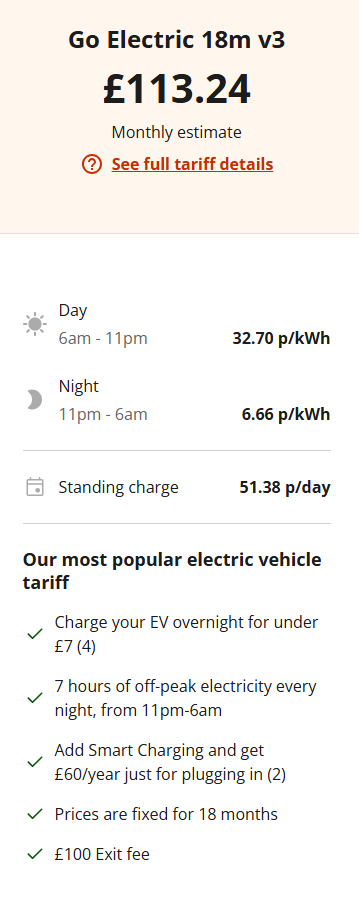
Just got my new & increased lecy bill tariff. I was paying around 6.6p off-peak & 23p peak. Good energy now want 8.8p & 34p an increase of 19% & 39%. So i have had a shop around & EDF seem to be the best of the rotten increases around, pluss an extra 2 hours off-peak than most others. Have you seen better. ???

You are using an out of date browser. It may not display this or other websites correctly.
You should upgrade or use an alternative browser.
You should upgrade or use an alternative browser.
Ouch! on the electric bill increase coming. 39%
- Thread starter Collectors
- Start date
do you need the off peak rate?

- Joined
- 27 Jan 2008
- Messages
- 29,639
- Reaction score
- 3,665
- Location
- Llanfair Caereinion, Nr Welshpool
- Country

Electricity Prices from 1st May 2026
Standing charge (per day) 69.699p
Unit rate - day (per kWh) 32.277p
Unit rate - night (per kWh) 8.625p Seems wrong, they are lower, see #8
This is Mid Wales with Octopus, it does change area to area, it is with no supplier control of any of my devices. It was cheaper for a month, that did not last long, but also export dropped 15p/kWh to 12p/kWh.
This however is not the whole story, I was using British Gas before, which offered a really good rate, but used every excuse under the sun not to pay it to me, so I had 20 months with no payment for export. The main problem was a £75 exit charge, if I left before time.
It clearly depends on battery size, and how much imported and exported at each price, as long as off-peak cost less to export, I can fully charge battery overnight, and it does not matter if solar produces over what I need. Once the export drops below off-peak import then I need to consider how much to charge my battery.
Today already exported 1.8 kWh.
Each household will have their own patten of use, and I know I am moving to time of year when my solar production is going to drop.
Clearly as you add an EV or storage radiators the situation changes. I can split my day into 4, at 00:30 I get off-peak, this stops at 05:30 and I rarely have a problem building the state of charge back up during the day, but by 16:00 the solar is slowing down if not stopped, and it often runs out before 00:30 the next day.
So for me evening use is critical, and to cook mid-day would save me money, but I have no intension of doing that.
Standing charge (per day) 69.699p
Unit rate - day (per kWh) 32.277p
Unit rate - night (per kWh) 8.625p Seems wrong, they are lower, see #8
This is Mid Wales with Octopus, it does change area to area, it is with no supplier control of any of my devices. It was cheaper for a month, that did not last long, but also export dropped 15p/kWh to 12p/kWh.
This however is not the whole story, I was using British Gas before, which offered a really good rate, but used every excuse under the sun not to pay it to me, so I had 20 months with no payment for export. The main problem was a £75 exit charge, if I left before time.
It clearly depends on battery size, and how much imported and exported at each price, as long as off-peak cost less to export, I can fully charge battery overnight, and it does not matter if solar produces over what I need. Once the export drops below off-peak import then I need to consider how much to charge my battery.
Today already exported 1.8 kWh.
Each household will have their own patten of use, and I know I am moving to time of year when my solar production is going to drop.
Clearly as you add an EV or storage radiators the situation changes. I can split my day into 4, at 00:30 I get off-peak, this stops at 05:30 and I rarely have a problem building the state of charge back up during the day, but by 16:00 the solar is slowing down if not stopped, and it often runs out before 00:30 the next day.
So for me evening use is critical, and to cook mid-day would save me money, but I have no intension of doing that.
Last edited:
I got a largish bungaloiw & a 30,000 BTU boiler & its great for heating but way to big for a 2200lt hot water tank. So i am on emersions at around £15 a month compaired to £33 on gas with myself & 3 lodgers living here. So at least a £250pa saving. Plus now i have 2x300a battery bank's i would like to charge on the off-opeak as i wont get much solar for the next 5 months.do you need the off peak rate?

What makes you think your boiler is unsuitable for heating a hot water cylinder?I got a largish bungaloiw & a 30,000 BTU boiler & its great for heating but way to big for a 2200lt hot water tank. So i am on emersions at around £15 a month compaired to £33 on gas with myself & 3 lodgers living here. So at least a £250pa saving. Plus now i have 2x300a battery bank's i would like to charge on the off-opeak as i wont get much solar for the next 5 months.
Is it a very old one?
I get your thinking about the night rate but cheaper night rate often means more expensive day rate
- Joined
- 27 Jan 2008
- Messages
- 29,639
- Reaction score
- 3,665
- Location
- Llanfair Caereinion, Nr Welshpool
- Country
I have found the same, non modulating 20 kW boiler, will run for 20 minutes, before it starts cycling off-on, set the timer for ½ hour a day, and found 4 times a week water not really hot enough, and 7 times a week water too hot, and since no tank thermostat was considering a mixture to ensure over the 60°C, setting the immersion heater to turn on after the boiler had switched off, but never got around to it.What makes you think your boiler is unsuitable for heating a hot water cylinder?
Is it a very old one?
So when solar panels fitted, had an iboost+ (in hind sight a mistake) but it recorded how much as it put it saved by using solar, so could actually see how much the immersion heater was costing, also went from 9" to 27" in length.
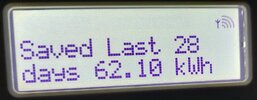 So I know in summer, 2.2 kWh per day average, and around 3.8 kWh at least per day using oil, could be up to 6.5 kWh if run every day. But also the extra would be heating the house, so can add the cost of running the AC to cool it again, so makes sense to use solar at 12p/kWh loss if exported instead, to using oil.
We do use very little hot water, and an over night timer would likely save more, I suppose removing batteries from CT coil and I could use overnight off-peak, but never set it up.
But off-peak only pays if you use enough. As peak rate is higher. But AI tells me "30,000 BTU/hr is equal to approximately 8.79 kW." which is quite small, and in winter my boiler does heat DHW, I can't stop it doing so.
"2x300a battery bank's" without the amp/hour and voltage or kWh that means nothing. I have 2 x 3.2 kWh and they are not big enough in the heart of winter, but more than needed in the summer, and 6 kW of solar and 5 kW inverter.
So December can see battery run out at 16:00, so recharge overnight with off-peak, and also use washing machine, tumble drier, dishwasher and immersion heater over night.
Some homes also have EV charging, and some use storage heaters, and in some cases, one questions does off-peak really pay?
Also I see no point of being a slave to solar panels and batteries, if I want to use the oven I do.
It seems I am £421.95 in credit, but this is start of winter, I pay £39.18 a month which seems a bit high, but I look at yearly totals
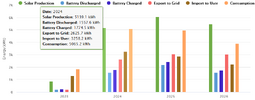 shows 2024 totals, but I can see electric is not a big expense. The difference between selling and buying price, plus standing charge, means I do pay something, but this year produced around 1,000,000 KWh more than I have used. So last month used about £6 worth of electric.
Just looked at rates, lower than I thought.
I have found the same, non modulating 20 kW boiler, will run for 20 minutes, before it starts cycling off-on, set the timer for ½ hour a day, and found 4 times a week water not really hot enough, and 7 times a week water too hot, and since no tank thermostat was considering a mixture to ensure over the 60°C, setting the immersion heater to turn on after the boiler had switched off, but never got around to it.
My cylinder and pipes are very well insulated, and I have a condensing, modulating boiler.
In summer, when it supplies HW, cost of gas used (excluding standing charge) averages about 50p a day.
It is much more economical than the old iron boiler.
Fully pumped, with cylinder stat, of course.
- Joined
- 27 Jan 2008
- Messages
- 29,639
- Reaction score
- 3,665
- Location
- Llanfair Caereinion, Nr Welshpool
- Country
Mine is oil, C Plan, and near impossible to measure how much oil used, but we use to need two deliveries per year, now down to one, never let the tank get empty, 600 gallon tank, so next week it will get topped up ready for winter, but the sight glass does not move enough to really work out how much used per week.
But 50p a day, is £182.50 per year, against £97.14 in lost revenue I would pay when using electric at 0.12p/kWh, so your paying about twice what I pay. Just topped up tank at 499 litres, think that will be around £550, not as bad as I thought it would be. In winter I use off-peak to also heat water, so really less than 0.12p/kWh. But only two of us.
But 50p a day, is £182.50 per year, against £97.14 in lost revenue I would pay when using electric at 0.12p/kWh, so your paying about twice what I pay. Just topped up tank at 499 litres, think that will be around £550, not as bad as I thought it would be. In winter I use off-peak to also heat water, so really less than 0.12p/kWh. But only two of us.
Its a a bit of diferant horses for different courses. 30kw boiler & a 3kw emersion, 1 is overkill in the summer & 1 cost £33pm & the other £15pm. Another way it can work the other way around is cars. I have had older jags for the last 20 years & the last one was a 2.2 d 6 speed box. on a long run at a steady 70 mph I would get 60 mpg; & around town 25 mpg if lucky. I now have a little Citroën C1 900cc petrol & get 50mpg on a run & about 50mpg around town. The reason the jag was so good on a run was 1700 RPM at 70mph, the C1 was 3000RPM at 70mph.What makes you think your boiler is unsuitable for heating a hot water cylinder?
Is it a very old one?
- Joined
- 27 Jan 2008
- Messages
- 29,639
- Reaction score
- 3,665
- Location
- Llanfair Caereinion, Nr Welshpool
- Country
Until I got solar, I just accepted what everyone had told me, I had no way to measure what way used by the immersion heater, and for years oil and gas per kWh was a lot cheaper to electric. We have always known using electric used less kWh, but the price resulted in gas and oil still winning.
But it costs to heat the boiler and pipework, and so a boiler always uses more power to electric. The problem is the break even point changes due to how much water used, and losses from the boiler, so in winter, the boiler is in use anyway, so heat up time for boiler does not matter, and also any heat escaping from the pipes, heats the house, the problem is how to ensure the domestic hot water (DHW) is heated only when boiler in use for central heating (CH)?
For me easy, using a C Plan so can't turn DHW off, so if boiler is running for CH then the DHW is also heated.
The Y and S plan not so easy. With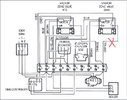
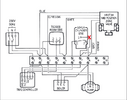 a switch where the X is a valve will open/close, but it will not fire boiler, so DHW only heated when CH is called. But it would require the switch being off so in winter DHW only heated when boiler is running anyway.
But, I have found, in winter not enough solar, and anyway solar paid at 12p/kWh and off peak cost 8.21p/kWh so for me, a simple time switch is enough and run the immersion heater overnight only.
But cost of electric varies even region to region never mind tariff to tariff, so although for me, no question an immersion is cheaper, not so sure if that would always be the case.
So we need a leap of faith, we simply can't work out the maths. Even with a combi boiler, with my mothers I had to have Eco on, as otherwise the shower would run cold, hot, cold then hot and stay hot, as the reservoir ran out before the boiler could heat replacement water. So taps had to be turned on full, set to a trickle and boiler would not fire, and needed even in the kitchen (where boiler located) to run a whole bowl of water to get hot water even to wash hands. Where here I would wash hands under the tap and only run half bowl of water, even after waiting for hot water to arrive. So likely use twice as much water with a combi boiler to with an immersion heater.
But, we are looking at electric price, since March mine has gone down, don't know when, did not realise until I looked at the app. The idea is to reduce energy use, I use smart socket adaptors, many tell me how much an appliance has used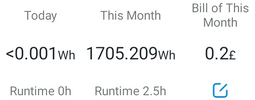 this is the one used on the oil filled radiator, only used it yesterday, so the 1.7 kW is what I used to run the oil filled radiator last night. Cost is around 20p which is cheaper than firing up the central heating, this will change as we get more into winter, however we do need to check what things use.
I first did this some 10 or more years ago, in the main no surprises, most stuff has a label saying how much it uses, and the one watt limit has been in for stand-by for some time, the old Sky+ box was a surprise, as back then to be able to start recording early if there was a program change, it needed to keep the LNB powered so it could read the program guide, so was using more like 15 watts, so around £30 a year, the other three items, which are hard to work out costs, are the tumble drier, washing machine, and dishwasher, as there are so many programs, each one uses a different amount of energy, and they weigh clothes and vary amount of water heated etc, and sense humidity and change drying time. I found using a vented drier at 1 kW or a heat pump drier at 750 watts, worked out nearly the same. But with a condenser drier, often no option to turn down heat and extend the time, so they use a lot more power.
The other is the freezers, it may say 250 kWh per year, but most take more than the label says, so if it says 250 kWh per year, likely more like 350 kWh per year, however if they loose gas, they use more power, so every year I put the monitor on them, and see how it compares with the last year. Mainly as a warning it is likely to fail, rather than a reason to get new.
So we are left with the likes of the oven, can't use a plug in energy monitor, so we again have to guess, the smart meter or solar app may help, but you are measuring totals, so we look are different ways to cook food.
Deep fat frier, air frier, micro wave, fan oven, pan, kettle, and again gas v electric, if you can have a gas cooker. And resistive v induction as well.
So pick a food, for example a baked potato, the micro wave runs all the time it is cooking, but the air frier and fan oven, have thermostatic control, if the fan oven is needed to cook a pizza as well, then likely fan oven wins, other wise likely air frier wins, we tend to use microwave to part cook the baked potato then finish it with the pizza, giving cooked all the way through and outer skin looks right. So cooking method also affects the taste a little, but cooking is likely the most costly use of electric, having a afternoon dinner would cost less to an evening meal, as we would have solar, and it would be unlikely to cause battery to run out, but we like having an evening meal.
I was rather surprised when daughter compared boiling water in a pan on a gas cooker to using an electric kettle, in spite of the gas ring being rated 5 kW and the kettle 2.8 kW the kettle won by a massive margin, so repeated at home, induction hob and electric kettle, very little between the two kettle was best, but not worth transferring the boiling water, did not realise how much faster an induction hob is compared with gas.
So yes, if you don't have solar or battery, it may be worth looking at, but if doing it now, at 75 year old, I would need to live to 85 to save money, so that is not cut and dried.
But it costs to heat the boiler and pipework, and so a boiler always uses more power to electric. The problem is the break even point changes due to how much water used, and losses from the boiler, so in winter, the boiler is in use anyway, so heat up time for boiler does not matter, and also any heat escaping from the pipes, heats the house, the problem is how to ensure the domestic hot water (DHW) is heated only when boiler in use for central heating (CH)?
For me easy, using a C Plan so can't turn DHW off, so if boiler is running for CH then the DHW is also heated.
The Y and S plan not so easy. With
a switch where the X is a valve will open/close, but it will not fire boiler, so DHW only heated when CH is called. But it would require the switch being off so in winter DHW only heated when boiler is running anyway.But, I have found, in winter not enough solar, and anyway solar paid at 12p/kWh and off peak cost 8.21p/kWh so for me, a simple time switch is enough and run the immersion heater overnight only.
But cost of electric varies even region to region never mind tariff to tariff, so although for me, no question an immersion is cheaper, not so sure if that would always be the case.
So we need a leap of faith, we simply can't work out the maths. Even with a combi boiler, with my mothers I had to have Eco on, as otherwise the shower would run cold, hot, cold then hot and stay hot, as the reservoir ran out before the boiler could heat replacement water. So taps had to be turned on full, set to a trickle and boiler would not fire, and needed even in the kitchen (where boiler located) to run a whole bowl of water to get hot water even to wash hands. Where here I would wash hands under the tap and only run half bowl of water, even after waiting for hot water to arrive. So likely use twice as much water with a combi boiler to with an immersion heater.
But, we are looking at electric price, since March mine has gone down, don't know when, did not realise until I looked at the app. The idea is to reduce energy use, I use smart socket adaptors, many tell me how much an appliance has used
this is the one used on the oil filled radiator, only used it yesterday, so the 1.7 kW is what I used to run the oil filled radiator last night. Cost is around 20p which is cheaper than firing up the central heating, this will change as we get more into winter, however we do need to check what things use.I first did this some 10 or more years ago, in the main no surprises, most stuff has a label saying how much it uses, and the one watt limit has been in for stand-by for some time, the old Sky+ box was a surprise, as back then to be able to start recording early if there was a program change, it needed to keep the LNB powered so it could read the program guide, so was using more like 15 watts, so around £30 a year, the other three items, which are hard to work out costs, are the tumble drier, washing machine, and dishwasher, as there are so many programs, each one uses a different amount of energy, and they weigh clothes and vary amount of water heated etc, and sense humidity and change drying time. I found using a vented drier at 1 kW or a heat pump drier at 750 watts, worked out nearly the same. But with a condenser drier, often no option to turn down heat and extend the time, so they use a lot more power.
The other is the freezers, it may say 250 kWh per year, but most take more than the label says, so if it says 250 kWh per year, likely more like 350 kWh per year, however if they loose gas, they use more power, so every year I put the monitor on them, and see how it compares with the last year. Mainly as a warning it is likely to fail, rather than a reason to get new.
So we are left with the likes of the oven, can't use a plug in energy monitor, so we again have to guess, the smart meter or solar app may help, but you are measuring totals, so we look are different ways to cook food.
Deep fat frier, air frier, micro wave, fan oven, pan, kettle, and again gas v electric, if you can have a gas cooker. And resistive v induction as well.
So pick a food, for example a baked potato, the micro wave runs all the time it is cooking, but the air frier and fan oven, have thermostatic control, if the fan oven is needed to cook a pizza as well, then likely fan oven wins, other wise likely air frier wins, we tend to use microwave to part cook the baked potato then finish it with the pizza, giving cooked all the way through and outer skin looks right. So cooking method also affects the taste a little, but cooking is likely the most costly use of electric, having a afternoon dinner would cost less to an evening meal, as we would have solar, and it would be unlikely to cause battery to run out, but we like having an evening meal.
I was rather surprised when daughter compared boiling water in a pan on a gas cooker to using an electric kettle, in spite of the gas ring being rated 5 kW and the kettle 2.8 kW the kettle won by a massive margin, so repeated at home, induction hob and electric kettle, very little between the two kettle was best, but not worth transferring the boiling water, did not realise how much faster an induction hob is compared with gas.
So yes, if you don't have solar or battery, it may be worth looking at, but if doing it now, at 75 year old, I would need to live to 85 to save money, so that is not cut and dried.
3 things that are great for saving money? A top emersion if you have one to top up if ever needed. 3kw / 2 hours 30ppkh =60p A slow cooker about 60-80watt for 5 hours at 30ppkw = 12p total, & an electric blanket, also 60-80watt also 12p for 5 hours & might be less as thermostats will cut them off periodically.Until I got solar, I just accepted what everyone had told me, I had no way to measure what way used by the immersion heater, and for years oil and gas per kWh was a lot cheaper to electric. We have always known using electric used less kWh, but the price resulted in gas and oil still winning.
But it costs to heat the boiler and pipework, and so a boiler always uses more power to electric. The problem is the break even point changes due to how much water used, and losses from the boiler, so in winter, the boiler is in use anyway, so heat up time for boiler does not matter, and also any heat escaping from the pipes, heats the house, the problem is how to ensure the domestic hot water (DHW) is heated only when boiler in use for central heating (CH)?
For me easy, using a C Plan so can't turn DHW off, so if boiler is running for CH then the DHW is also heated.
The Y and S plan not so easy. With View attachment 423961View attachment 423962 a switch where the X is a valve will open/close, but it will not fire boiler, so DHW only heated when CH is called. But it would require the switch being off so in winter DHW only heated when boiler is running anyway.
But, I have found, in winter not enough solar, and anyway solar paid at 12p/kWh and off peak cost 8.21p/kWh so for me, a simple time switch is enough and run the immersion heater overnight only.
But cost of electric varies even region to region never mind tariff to tariff, so although for me, no question an immersion is cheaper, not so sure if that would always be the case.
So we need a leap of faith, we simply can't work out the maths. Even with a combi boiler, with my mothers I had to have Eco on, as otherwise the shower would run cold, hot, cold then hot and stay hot, as the reservoir ran out before the boiler could heat replacement water. So taps had to be turned on full, set to a trickle and boiler would not fire, and needed even in the kitchen (where boiler located) to run a whole bowl of water to get hot water even to wash hands. Where here I would wash hands under the tap and only run half bowl of water, even after waiting for hot water to arrive. So likely use twice as much water with a combi boiler to with an immersion heater.
But, we are looking at electric price, since March mine has gone down, don't know when, did not realise until I looked at the app. The idea is to reduce energy use, I use smart socket adaptors, many tell me how much an appliance has used View attachment 423963 this is the one used on the oil filled radiator, only used it yesterday, so the 1.7 kW is what I used to run the oil filled radiator last night. Cost is around 20p which is cheaper than firing up the central heating, this will change as we get more into winter, however we do need to check what things use.
I first did this some 10 or more years ago, in the main no surprises, most stuff has a label saying how much it uses, and the one watt limit has been in for stand-by for some time, the old Sky+ box was a surprise, as back then to be able to start recording early if there was a program change, it needed to keep the LNB powered so it could read the program guide, so was using more like 15 watts, so around £30 a year, the other three items, which are hard to work out costs, are the tumble drier, washing machine, and dishwasher, as there are so many programs, each one uses a different amount of energy, and they weigh clothes and vary amount of water heated etc, and sense humidity and change drying time. I found using a vented drier at 1 kW or a heat pump drier at 750 watts, worked out nearly the same. But with a condenser drier, often no option to turn down heat and extend the time, so they use a lot more power.
The other is the freezers, it may say 250 kWh per year, but most take more than the label says, so if it says 250 kWh per year, likely more like 350 kWh per year, however if they loose gas, they use more power, so every year I put the monitor on them, and see how it compares with the last year. Mainly as a warning it is likely to fail, rather than a reason to get new.
So we are left with the likes of the oven, can't use a plug in energy monitor, so we again have to guess, the smart meter or solar app may help, but you are measuring totals, so we look are different ways to cook food.
Deep fat frier, air frier, micro wave, fan oven, pan, kettle, and again gas v electric, if you can have a gas cooker. And resistive v induction as well.
So pick a food, for example a baked potato, the micro wave runs all the time it is cooking, but the air frier and fan oven, have thermostatic control, if the fan oven is needed to cook a pizza as well, then likely fan oven wins, other wise likely air frier wins, we tend to use microwave to part cook the baked potato then finish it with the pizza, giving cooked all the way through and outer skin looks right. So cooking method also affects the taste a little, but cooking is likely the most costly use of electric, having a afternoon dinner would cost less to an evening meal, as we would have solar, and it would be unlikely to cause battery to run out, but we like having an evening meal.
I was rather surprised when daughter compared boiling water in a pan on a gas cooker to using an electric kettle, in spite of the gas ring being rated 5 kW and the kettle 2.8 kW the kettle won by a massive margin, so repeated at home, induction hob and electric kettle, very little between the two kettle was best, but not worth transferring the boiling water, did not realise how much faster an induction hob is compared with gas.
So yes, if you don't have solar or battery, it may be worth looking at, but if doing it now, at 75 year old, I would need to live to 85 to save money, so that is not cut and dried.
- Joined
- 27 Jan 2008
- Messages
- 29,639
- Reaction score
- 3,665
- Location
- Llanfair Caereinion, Nr Welshpool
- Country
The slow cooker is a problem, if too cool they can kill you, so leave it 6 instead of 8 hours, or even use it in a cold kitchen, and they can make you very ill.
As to the top and bottom immersion, yes my iboost+ is designed to use them, so it heats the top first, and once top up to temperature it auto swaps to bottom one.
The other method is the Willis system, I am not happy it being fitted by a Welsh plumber, an Irish one no problem, but I don't want to be his guinea pig.
Since I don't have the boss to take the lower unit, so one of these
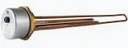 dual 24 and 11 inch would do it, there is also an 11/27 inch version would allow heating top first, but I note by midday the whole tank is hot, and although the twin element heats it faster, it takes 2 to 3 days to cool, once a full tank is heated, but top 11 inches, is cool again within the day, so unless left on 24/7, the 11 inch immersion heater simply does not heat up enough water to bridge the gap if we have a poor solar day.
As to the top and bottom immersion, yes my iboost+ is designed to use them, so it heats the top first, and once top up to temperature it auto swaps to bottom one.
The other method is the
Willis system, I am not happy it being fitted by a Welsh plumber, an Irish one no problem, but I don't want to be his guinea pig.Since I don't have the boss to take the lower unit, so one of these
I have been ok at 5 hours, but my stomach will take most things. On the emersion side of things, i got a preasurised tank a while back with 2 emersions & noticed the lower one whas a 1/4 of the way up the tank & both you fit hand tight with an extra 10th turn as they come with O-rings these days. I fitted them, & all has been fine. I think of all the emerions i have changeed & had to get a junior hacksaw to the gasgit on most to release the things.The slow cooker is a problem, if too cool they can kill you, so leave it 6 instead of 8 hours, or even use it in a cold kitchen, and they can make you very ill.
As to the top and bottom immersion, yes my iboost+ is designed to use them, so it heats the top first, and once top up to temperature it auto swaps to bottom one.
The other method is the View attachment 423968Willis system, I am not happy it being fitted by a Welsh plumber, an Irish one no problem, but I don't want to be his guinea pig.
Since I don't have the boss to take the lower unit, so one of these View attachment 423969dual 24 and 11 inch would do it, there is also an 11/27 inch version would allow heating top first, but I note by midday the whole tank is hot, and although the twin element heats it faster, it takes 2 to 3 days to cool, once a full tank is heated, but top 11 inches, is cool again within the day, so unless left on 24/7, the 11 inch immersion heater simply does not heat up enough water to bridge the gap if we have a poor solar day.
I also see a tesla smart one a while back. https://www.teslauk.com/category/520/immersion-heaters-thermostats

DIYnot Local
Staff member
If you need to find a tradesperson to get your job done, please try our local search below, or if you are doing it yourself you can find suppliers local to you.
Select the supplier or trade you require, enter your location to begin your search.
Please select a service and enter a location to continue...
Are you a trade or supplier? You can create your listing free at DIYnot Local
Similar threads

- Replies
- 2
- Views
- 471

- Replies
- 48
- Views
- 7K
- Replies
- 56
- Views
- 4K
