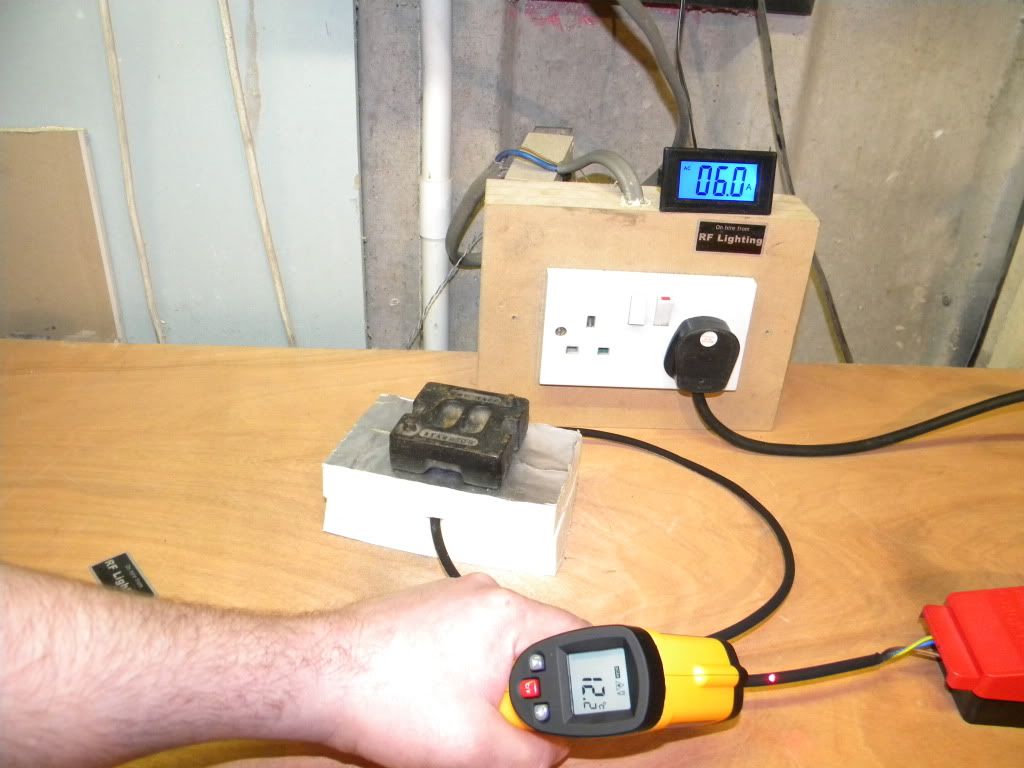
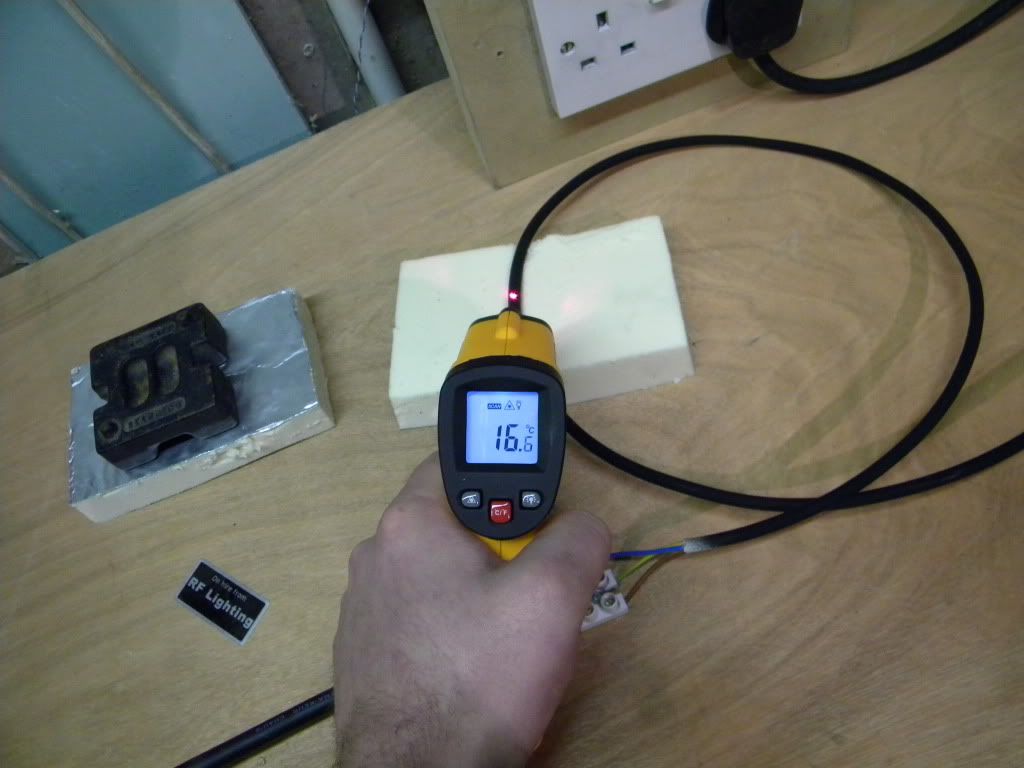
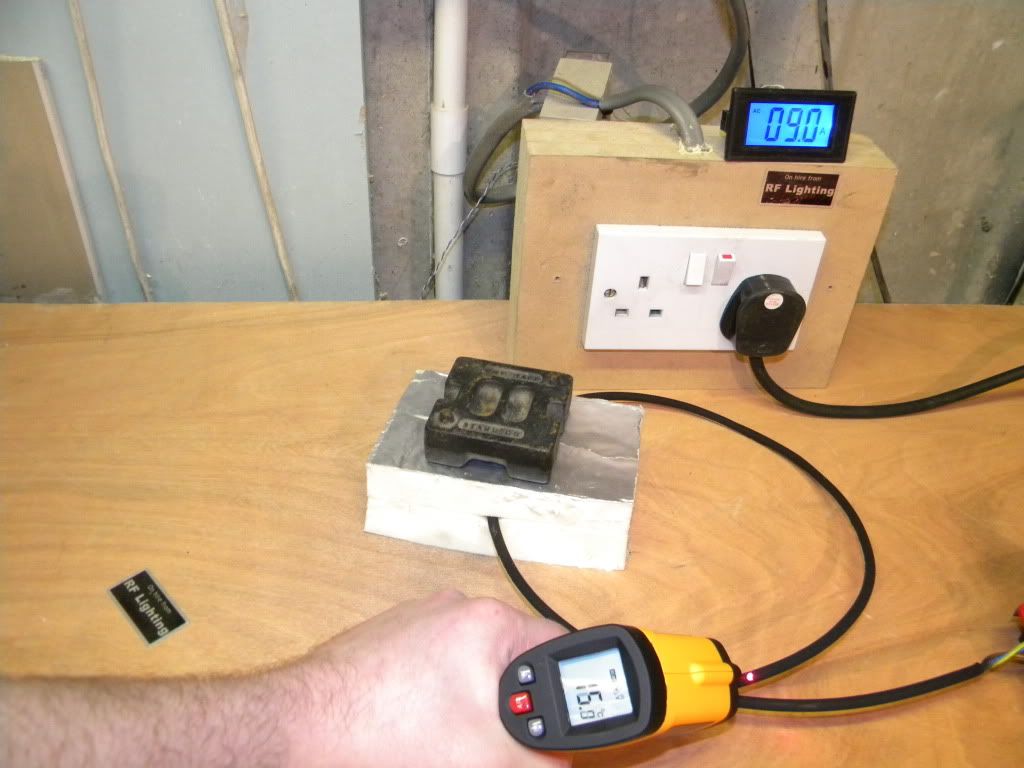
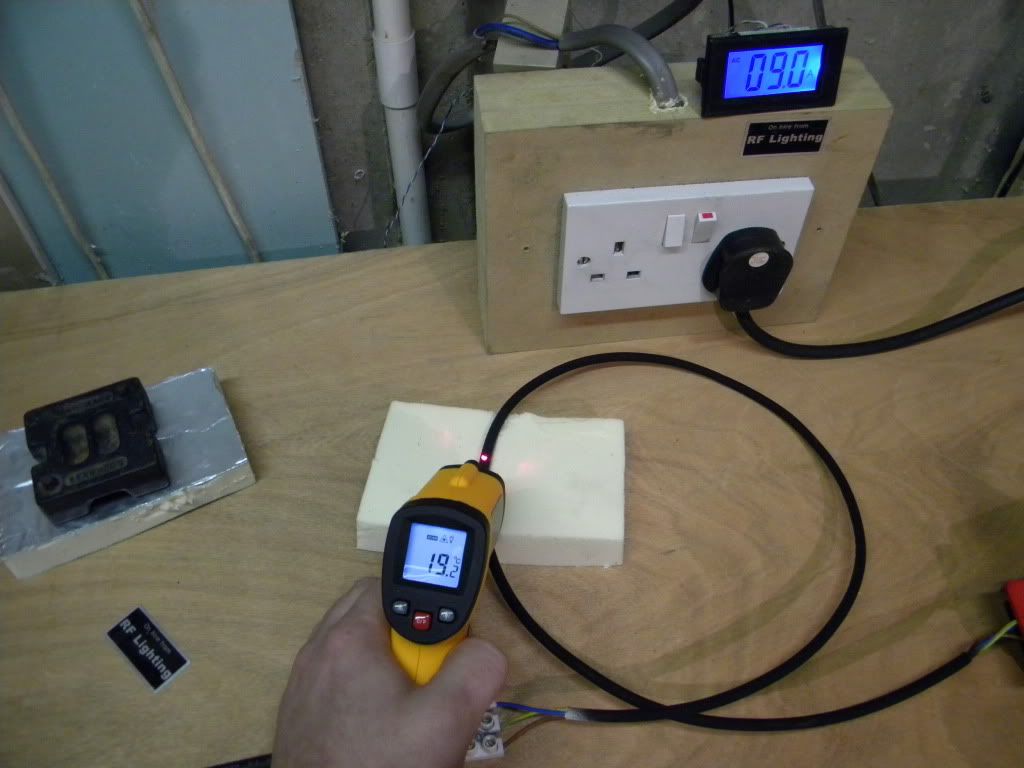
I'd have done it with a step down transformer fed from a variac, and the "far end" of the cable just shorted. Easier control of larger currents, and no need to waste much power.
Insulation probably wants to be larger as well - the temperature of the cable will drop off away from the middle as heat conducts along the cable. In fact, this is one thing where the regs don't really make too much sense - if the cable is inside good insulation, then the current carrying capacity is "somewhat unknown" since on a long run there will be negligible loss of heat along the cable once you get a short distance inside the insulation, and the actual thermal losses will be indeterminate (unless assuming some upper limit on domestic insulation).
So I was thinking of splitting the sheath and slipping a thermocouple inside, and then embedding the test cable in insulation.
If you need to find a tradesperson to get your job done, please try our local search below,
or if you are doing it yourself you can find suppliers local to you.
Select the supplier or trade you require, enter your location to begin your search.
Please select a service and enter a location to continue...
Are you a trade or supplier? You can create your listing free at DIYnot Local