• Looking for a smarter way to manage your heating this winter? We’ve been testing the new Aqara Radiator Thermostat W600 to see how quiet, accurate and easy it is to use around the home. Click here read our review.

Professional v DIY tools, what is good enough?

Joined
27 Jan 2008
Messages
27,414
Reaction score
3,310
Location
Llanfair Caereinion, Nr Welshpool
Country
United Kingdom
Be is a SDS drill, multi-tool, or multi-meter, there are clearly tools aimed at the pro, and the DIY, but DIY tools do seem to have improved over the years, and quantity produced means the DIY version is so much cheaper, so is it worth even the professional buying the tools aimed for the professional?

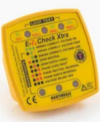
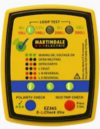
OK some times no option, my loop impedance tester and RCD tester does not have a calibration certificate, so is not really any good for the pro, but I look at this plug in socket tester with loop 1730807097347.pngat £67.90 and this one Loop impedance tester.jpgaround the same price, and it seems Martindale is milking it some what, specially since with a ring final the pass point is 1.38Ω and the Martindale version starts at 1.7Ω so don't even know if the socket has passed.
My cheap battery SDS drill does not have a rotor stop so can't be used with a chisel, my pruning tool (little chain saw) is on the end of an arm a little unwieldy, but it does the job.

Where I work they have bought good quality tools, but when it came to the final tidy up of the season, most of the volunteers brought in their own strimmers, chain saws, brush cutters etc, because they were lighter and easier to use.

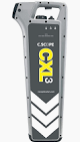
One walks up the specials aisle in Aldi or Lidi and they are full of reasonable quality DIY tools. Specials like this cable finder 1730808267045.pngeven the tradesman tends to hire when required, the Fluke clamp meter
1730808450644.png
one sees as a professional tool, but it will not measure DC amps, there are specials Ethos for example designed to read down to 1 mA to test earth leakage, but the name is not well known, and the Diffrence line neutral 8 Feb 24.jpg UT210E from UNI-T will measure DC amps and down to 1 mA for a fraction of the price, so is it worth buying the professional models anymore?
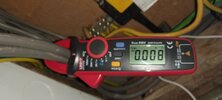
As to lasting, well I still have my grandads wolf cub drill, and my Black & Decker hammer drill the latter bought in the 70's former likely the 60's so DIY tools do last. OK would not use the Black & Decker hammer drill now I have a SDS drill, and most the tools for it have been lost, I only keep it as it will still work my wood turning lathe, but for DIY use they have lasted.

I look at my Parkside 16 volt drill/screwdriver, and realise now they are 20 volt, so when the battery fails, good by drill. But it has and still is giving sterling service, sons DeWALT was stolen, and this is the problem with expensive stuff, one spends more time securing it than using it, if you want to keep it.
 
One of the key things to consider is the continuous length of time time that you might use a machine. I can use my Festool sanders for 8 hours straight- not a problem, a DIY sander might need 20 minutes to cool down every 40 minutes (I am plucking numbers out the air).

Other things to consider are ergonomics/vibration/noise/dust extraction, oh, an the availability of spares.
 
In my opinion it depends how much it is going to be used.

For example I use a ratchet all day long every day. I want the most hard wearing reliable 1 I can get, afford

Some specific tools I probably only use once a year or so. If it does the job, it's ok

There is a difference between good diy and cheap diy type tools though
 
I use parkside (Lidl) tools at work, they are good enough for industrial use when needed.
Yet they are considered a DIY tool.

A lot depends upon how you use and look after them.
Some cheap tools are total garbage and are considered 1 use only (i.e. Silverline) others albeit on the DIY market are made by the same manufacturers as other more expensive tools.

No way would I pay for a knipex tool as what they cost when a far cheaper one that cuts the same although only lasts a year works well for that year - I can buy a new one then, still at a small fraction of the knipex.
(Knipex is just a brand name that came to mind - could be anyone).
 
my thoughts powertools wise
do not buy an expensive trade tool for diy use unless you have loads and loads off use planed because-----
----it will last possibly several life times pottering about over the generations when the most likely outcome will be when you snuff it no one will want it and it will get passed on in the house clearance sold on ebay for 10% or less off value or just dumped as unwanted item

go for lidl aldi
avoid ryobi unless around 40% off as well overpriced compared to 10-15 years ago when i swore by them for those starting up
 
Last edited:
avoid ryobi unless around 40% off as well overpriced compared to 10-15 years ago when i swore by them for those starting up

The only time I used Ryobi (One) was to cut through my stepson's water resistant T&G flooring. New blade, new battery. Kept
stopping every few minutes. Perhaps a duff battery?
 
The only time I used Ryobi (One) was to cut through my stepson's water resistant T&G flooring. New blade, new battery. Kept
stopping every few minutes. Perhaps a duff battery?
if its a modern brushless motor and say a small or old battery the motors can draw immense power and the batteries can struggle to keep up for example iff a tool can draw say 500w and the battery is say 2ah it contains 2x18 =36wh x60 to give you watts per min so 2160wm so would run out at perhaps 3 mins [1500wm] as the battery protection will hold a bit back and after a bit off time it can recover slightly and give you further spurts but never all the energy as you can not charge a flat li-ion battery

ryobi tools are really really good tools but not when you pay full price
 
if its a modern brushless motor and say a small or old battery the motors can draw immense power and the batteries can struggle to keep up for example iff a tool can draw say 500w and the battery is say 2ah it contains 2x18 =36wh x60 to give you watts per min so 2160wm so would run out at perhaps 3 mins [1500wm] as the battery protection will hold a bit back and after a bit off time it can recover slightly and give you further spurts but never all the energy as you can not charge a flat li-ion battery

ryobi tools are really really good tools but not when you pay full price

TBH, I don't know if it was brushless or not. Nor do I know which battery it had.
 
Professional tools every time, for the reliability and warranty. They are often so much better than the diy counterparts.
 
Professional tools every time, for the reliability and warranty. They are often so much better than the diy counterparts.

I kinda agree with you, but how important is a 3 year professional warranty on a tool that will be seldom used. I tend to buy pro tools but there have been occasions when I purchased retail for one off jobs. Two that spring to mind are my wall chaser and an a larger SDS drill/breaker. Neither tool was particularly nice to work with but sufficed. The drill failed after about 70(?) hours of (total) use. The wall chaser has done about 12 (total) hours thus far.
 
I kinda agree with you, but how important is a 3 year professional warranty on a tool that will be seldom used. I tend to buy pro tools but there have been occasions when I purchased retail for one off jobs. Two that spring to mind are my wall chaser and an a larger SDS drill/breaker. Neither tool was particularly nice to work with but sufficed. The drill failed after about 70(?) hours of (total) use. The wall chaser has done about 12 (total) hours thus far.
Knowing what tne good but cheap tools are is important, i would certainly consider tne #crewfix sds breaker because it has excellent reviews and is very cheap, cheaper than hiring a pro tool for a week
 
I will agree my SDS DIY drill has no rotor stop, so can't be used with a chisel, but in the main, my battery powered tools have failed because the battery has failed, and although my 2004 battery drill could have the battery renewed, it would cost more than getting a whole new drill.

As an electrician in the main, the power is turned off to do my job, so any mains powered tools have very limited use. So looking at battery powered tools, Dewalt drill battery £35 (2 AH) Parkside (Lidi) around £20 so the big question is which will still be available in 10 years time? And if doing a job where I can't recharge batteries do I want two Dewalt batteries or four Parkside?

I am now locked in, I have at least 3 Parkside tools, and 4 batteries, with their fast twin battery charger. So it does not matter how much better Dewalt is, the interchangeable batteries have locked me to Parkside.

But with other tools, the situation is different, my loop impedance meter, and RCD tester died some years ago. So I was looking at a plug in socket tester now retired, as don't use it much, so good quality Martindale 1731153902341.png£60 however it passes items at 1.7Ω and the pass point for a B32 MCB/RCBO as used with a ring final is 1.38Ω and as to the RCD test, god knows what it passes. So I thought look out for a second hand tester, but even second hand expensive.

Then I saw this 1731154398386.png meter for around £70, and this one will show 1.4Ω or 1.3Ω etc, so actually know if within the limits, and it tests 10, 30, 100, 300, and 500 mA RCD's at full or half, or ramp, it does not have the type A or AC settings found with pro meters, and it is unlikely to ever be calibrated. So as an electrician I could not really use one of these to enter the results in a certificate, but DIY wise it is so much better to the Martindale plug in tester.

My pro testers lasted about 5 years after I retired, and not killed by leaking batteries, so even buying a pro tester, after first year, can't really use it without paying nearly what the tester I now have cost me to buy. As would need calibrating. I take the tester to where I work, and test a socket with works tester, and with mine, and if results match, I feel mine is OK. That the limit to my calibration.
 
From memory, the drill/breaker was a Titan from screwfix. I paid about £80 to break up a small amount of concrete in my garden. I pretty much treated it as disposable.
 
I will agree my SDS DIY drill has no rotor stop, so can't be used with a chisel, but in the main, my battery powered tools have failed because the battery has failed, and although my 2004 battery drill could have the battery renewed, it would cost more than getting a whole new drill.

As an electrician in the main, the power is turned off to do my job, so any mains powered tools have very limited use. So looking at battery powered tools, Dewalt drill battery £35 (2 AH) Parkside (Lidi) around £20 so the big question is which will still be available in 10 years time? And if doing a job where I can't recharge batteries do I want two Dewalt batteries or four Parkside?

I am now locked in, I have at least 3 Parkside tools, and 4 batteries, with their fast twin battery charger. So it does not matter how much better Dewalt is, the interchangeable batteries have locked me to Parkside.

But with other tools, the situation is different, my loop impedance meter, and RCD tester died some years ago. So I was looking at a plug in socket tester now retired, as don't use it much, so good quality Martindale View attachment 362181£60 however it passes items at 1.7Ω and the pass point for a B32 MCB/RCBO as used with a ring final is 1.38Ω and as to the RCD test, god knows what it passes. So I thought look out for a second hand tester, but even second hand expensive.

Then I saw this View attachment 362182 meter for around £70, and this one will show 1.4Ω or 1.3Ω etc, so actually know if within the limits, and it tests 10, 30, 100, 300, and 500 mA RCD's at full or half, or ramp, it does not have the type A or AC settings found with pro meters, and it is unlikely to ever be calibrated. So as an electrician I could not really use one of these to enter the results in a certificate, but DIY wise it is so much better to the Martindale plug in tester.

My pro testers lasted about 5 years after I retired, and not killed by leaking batteries, so even buying a pro tester, after first year, can't really use it without paying nearly what the tester I now have cost me to buy. As would need calibrating. I take the tester to where I work, and test a socket with works tester, and with mine, and if results match, I feel mine is OK. That the limit to my calibration.

Wow, the Martindale is now £60? I paid £22 for the same one (many years ago).
 
My first SDS was from B&Q very cheap, did a good job, lent to son, and was stollen from his garage. And if I look at all my tools over the years, theft was a major problem, I did not buy shiny spanners, one they were too thin and damaged your hands pulling on them, and two the magpies seem to take them first.
 

If you need to find a tradesperson to get your job done, please try our local search below, or if you are doing it yourself you can find suppliers local to you.

Select the supplier or trade you require, enter your location to begin your search.


Are you a trade or supplier? You can create your listing free at DIYnot Local

 
Back
Top