Most bathroom lights are out of zones and take no more consideration than any other light as per the regs.
which is irrelevant.

Most bathroom lights are out of zones and take no more consideration than any other light as per the regs.

I'm not sure that I agree with your electrician. Any electrical work (particularly if done for money, by an 'electrician') should result in some sort of certificate, whether a minor works one or an EIC, as appropriate.I am having downlights replaced in the bathroom (directly above bathtub) and living areas, including the switches that control the lights. I have asked for minor work certificate for the work, but the electrician says certificate is not required because it's not alteration. Is this correct?
I'm not sure that I agree with that, either - although it obviously depends upon what you mean by "under obligation" (there's obviously no explicit legal 'obligation' to test).. Although, as we know, many/most DIYers are not equipped to do much testing, electricians (or 'electricians') certainly should be, and any electrical work should really be 'tested'.He's under no obligation to test given the scope of work though

There is no requirement for like-for-like replacements. Appropriate inspection and testing should, of course, be carried out. (Likely just an EFLI test for many straight replacements, plus RCD as appropriate.)I'm not sure that I agree with your electrician. Any electrical work (particularly if done for money, by an 'electrician') should result in some sort of certificate, whether a minor works one or an EIC, as appropriate.

Nowhere in the regulations is 'like for like' mentioned; just 'replacement'.There is no requirement for like-for-like replacements.
Then why would you not record the results and give a copy to the customer?Appropriate inspection and testing should, of course, be carried out. (Likely just an EFLI test for many straight replacements, plus RCD as appropriate.)
Maybe they would instill confidence in your work for the customers.Hundreds and hundreds of extra certificates won't add anything.
Indeed - but I don't think that phrase has been used in this discussion.There is no requirement for like-for-like replacements.
Quite so - but, as has been said, if you undertake tests, you surely should record and 'provide' the results, shouldn't you?Appropriate inspection and testing should, of course, be carried out.
See above. With a certificate, how would anyone but you even know that tests had been done?Hundreds and hundreds of extra certificates won't add anything.


 . The only reason for not testing is lack of test equipment, in which case should not be doing the work.
Yes noted, and it is so easy for the replacement not to be like for like, pre-1966 one could use filament lamp in a pendent, with some other requirements as well without an earth. Today, even if a filament lamp, it would not be as the regulation intended.Nowhere in the regulations is 'like for like' mentioned; just 'replacement'.
At least in England, that's only true of work on ceiling lights if the the ceiling is less than 2.25m above floor level - which I think is is relatively unusual.And to work in a bathroom on needs either to be a scheme member, or use the LABC ...
I'm not sure what "following BS7671" has got to do with anything - the work being discussed here (replacement of downlights) is surely very unlikely to NOT be compliant with BS7671, regardless of whether or not the person doing it is a 'scheme member'?.... and if a scheme member you have signed to say you will follow BS7671, so to be able to find a domestic electrician who is not a scheme member would be rare.
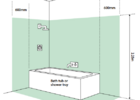 does not follow the text.
Sure, but that's true of any electrical work, notifiable or not - and if it's not notifiable, there is no specific need to have the work undertaklen by "a scheme member who has signed to say that they will follow BS7671".It will not be compliant if the inspection and testing is not done.
We're not talking about showers, but ....And with a shower ...
It's surely obvious that it's not talking about 2.25m between shower head and ceiling, isn't it? A room would have to be well over 4 metres high for that to be the case, and there can be almost no rooms in domestic properties that are that high!.... "the position of the shower head where it is attached to a wall or ceiling at a point higher than 2.25 metres from that level; and ceiling at a point higher than 2.25 metres from that level;" I know my shower is high enough up the wall to include the whole room. There is not 2.25 meters from shower head to ceiling.
As above, you're interpretation would seem to be pretty ridiculous, even for BS7671Although if not a shower then yes 2.25 meters from finished floor level. .... I must admit, seems odd the picture ........ does not follow the text. It seems down to what one considers "that level" refers to? It seems to me to refer to where the shower is attached.


If you need to find a tradesperson to get your job done, please try our local search below, or if you are doing it yourself you can find suppliers local to you.
Select the supplier or trade you require, enter your location to begin your search.
Are you a trade or supplier? You can create your listing free at DIYnot Local


