Replacing and old tube light

Joined
20 Dec 2013
Messages
426
Reaction score
2
Location
London
Country
United Kingdom
hi there I have noticed an old tube light around 21 inches very thin very short in length to your normal one

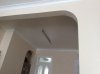
This is in the back of the arch you can see in the pic below where display cabinet is

I turned light switch on at behind unit and tube light faintly lit up so guessing it's all working but tube light needs replacing

But what are these type of tube lights called and are they efficient ?

It's a living room / dining room so maybe better I change the whole thing to something more efficient and more dim to create a better mood in the room??

In which case any advice welcome please with regard to which type of light to replace with and if I can use existing wiring from the light switch thank you
 

Attachments

  • image.jpeg
    image.jpeg
    104.3 KB · Views: 243
  • image.jpeg
    image.jpeg
    142.1 KB · Views: 221
sounds like a 13watt T5 tube, it will be printed on it as well as the colour,possibly either 30,35,40,830,835,840 depending how bright you want it, theres also a starter possibly in the fitting, if so thats an FSU starter
 
They are efficient! The tube light is probably the best type of light for your application as it provides a gentle diffused light without glare and shadows. You might want to replace the large centre light with something more decorative though.

FSU (flourescent starter universal) is the type of starter fitted which should be replaced at the same time as the tube.
 
Even when I replace the main tube light in the dining room - The central on the ceiling shown (tube light 6 ft) I never replace the Starter! Is that what u should do everyone ?!?
 
It is recommended to replace both tube and starter at the same time to ensure long tube life. The only exception is if one of the electronic starters is fitted, often branded pulsestarter.
 
If you do decide to get a new tube, get one from the same make as the original.

I have found that the length of 13W T5 tubes can vary by a few mm, making some incompatible.
 
Even when I replace the main tube light in the dining room - The central on the ceiling shown (tube light 6 ft) I never replace the Starter! Is that what u should do everyone ?!?

Not at all. Starters outlast tubes many times over.

Also note the starters in 6 ft fittings are not the same as commonly used in smaller fittings.
 
I think I'd rather change the whole light a tube light is too bright for that room it should be dim and cosy no??
 
There have been some talk about fluorescent v LED there is really nothing in the efficiency between the two lamps however LED does allow a smaller lamp to be fitted in the same fitting in some cases so there is a perception that LED is more economic as a result. I swapped a 5 foot fluorescent tube at 5800 lumen for a LED tube at 2400 lumen clearly not as much light but it was not the amount of light which was important but the spread of light. So I reduced the tube size from 65W to 24W but there was less light.

It seems we get tricked because of colour temperature. If the light is very high in colour temperature we see it as being bright, but when you come to read a book you find you need extra light. So my claim that swapping 10 x CFL at 8W each to 10 x LED at 3W each at first looked brighter, but when I came to read a book I needed a reading lamp so there was a drop 3800 lumen to 2400 lumen even though I did not see it as a drop.

Fluorescent does dim with age so renew a tube with a LED or fluorescent and it will look brighter. LED also can dim with age but non of mine are old enough to see this.

The 8W tube and 12W tubes used in caravans and small lamps often had very poor running gear and would use well over the 8W and 12W the same with some of the larger units, the running gear does two things it gives a high voltage to strike the tube and then controls the run current. So compare a fluorescent with a ballast (a coil of wire on an iron former) with the same tube using an electronic ballast (still called ballast but not really a ballast) then you will get very different results.

So the lamp which you can see on the ceiling could be replaced with a round or square fitting which would look more modern, it could have LED, or the 2D shaped fluorescent tube the latter with either wire wound or electronic ballast and very little in the cost of fitting. However when the LED goes it's a whole new fitting and when the fluorescent goes it just needs a new tube.

I would say small lamps less than 10W then look at LED and over 15W look at fluorescent. Your right on the border line between the too.

Note electronic ballast unit does not need a starter.
 
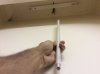
Attached is the tube light currently I'm there

I've decided to keep the fighting but just want a much dimmer tube light

Could somebody kindly please advise where I can get one from pls or the model / tube light number??
 

Attachments

  • image.jpeg
    image.jpeg
    42.6 KB · Views: 163

If you need to find a tradesperson to get your job done, please try our local search below, or if you are doing it yourself you can find suppliers local to you.

Select the supplier or trade you require, enter your location to begin your search.


Are you a trade or supplier? You can create your listing free at DIYnot Local

 
Back
Top