Hi,
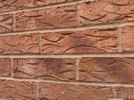
I am not expert in this but I am trying to come close not match exactly but get as close to the original mortar as possible. The house was built in 1992 and since the mortar has weathered significantly on one half of the property but the other half is very sheltered and remains very much intact.
The mortar has some very fine grit in it maybe something like granite but overall I am more concerned it being a relatively close colour match and not a dogs dinner. I keep being told to use mortar dyes but generally I feel like I am going to be there all year trying to get the right combo and a friend of mine used some red dye earlier this year and felt it looks unnatural. As the house is abut 30 years old I hope the mortar colour can be achieved by mixing either of the common sand options we use in building today. Plus there homes were thrown up so I don't imagine they took too much care in mixing special coloured mortar.
The mortar looks to have a red tinge to it with a hint of very light brown. I realise mortar colour can vary with sand and even the colour of cement. If anyone has the expertise to have an idea of what sand might have been used then I would really appreciate it and it would save me a lot of time.
Thanks in advance.
Mandy
I am not expert in this but I am trying to come close not match exactly but get as close to the original mortar as possible. The house was built in 1992 and since the mortar has weathered significantly on one half of the property but the other half is very sheltered and remains very much intact.
The mortar has some very fine grit in it maybe something like granite but overall I am more concerned it being a relatively close colour match and not a dogs dinner.
I keep being told to use mortar dyes but generally I feel like I am going to be there all year trying to get the right combo and a friend of mine used some red dye earlier this year and felt it looks unnatural. As the house is abut 30 years old I hope the mortar colour can be achieved by mixing either of the common sand options we use in building today. Plus there homes were thrown up so I don't imagine they took too much care in mixing special coloured mortar.The mortar looks to have a red tinge to it with a hint of very light brown. I realise mortar colour can vary with sand and even the colour of cement. If anyone has the expertise to have an idea of what sand might have been used then I would really appreciate it and it would save me a lot of time.
Thanks in advance.
Mandy