Should I repoint or have a rethink

Joined
15 Jul 2014
Messages
4
Reaction score
0
Location
London
Country
United Kingdom
Dear DIYnot,

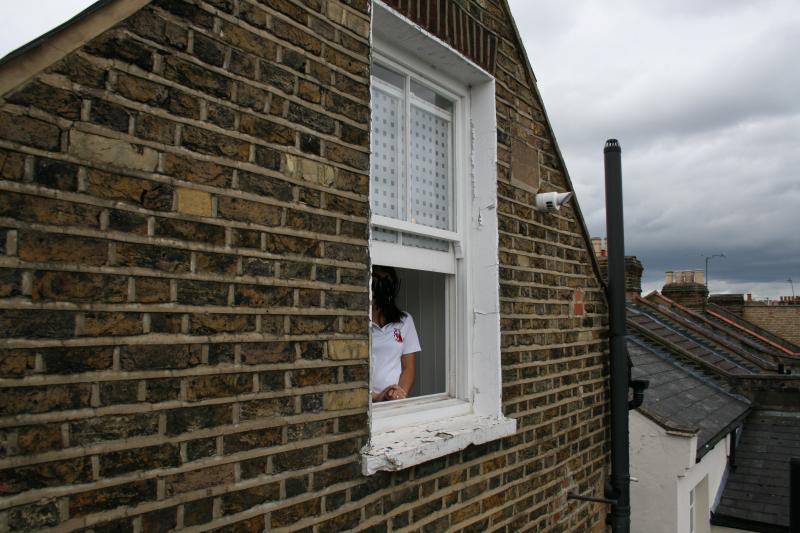
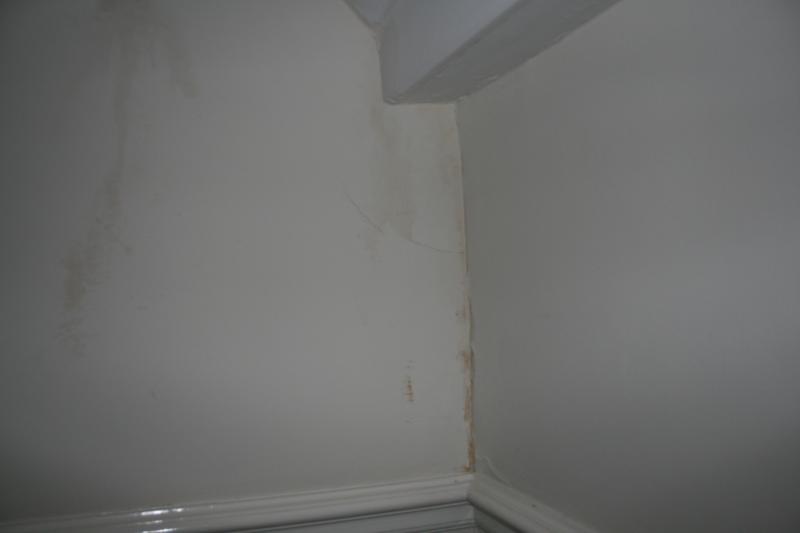
Hopefully this forum can help, and the advice given will help me and others. I live in an end-terrace 3-storey house in South-West London built in the 1880s. This winter and spring we have had some water ingress (see photographs) into the wall around the stair case.

What is not clear is whether it is coming from a leak in the roof (seems unlikely) or from pointing that needs to be redone, or something else I haven't though of, like the flashing. I know Victorian houses need to breath etcetc but this seems like something more.

Please see the photographs and tell me if you think I should just get the area repointed. I have had a roofer look at it who couldn't see anything of concern, and it looks in reasonable nick to me (was done 5 years ago). There is a slightly dodgy lead area also.

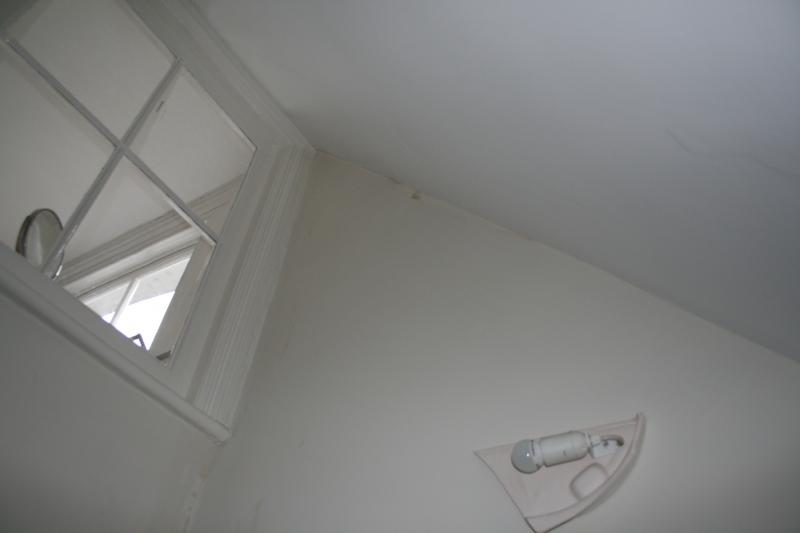
In addition, I do wonder whether some the damp is running down the stair case as there are some areas of damp there that seem to have coincided and seem connected. The rest of the house is fine, and the gutters are clear and were inspect/remedied not that long ago before anyone asks.

Many thanks for your help,

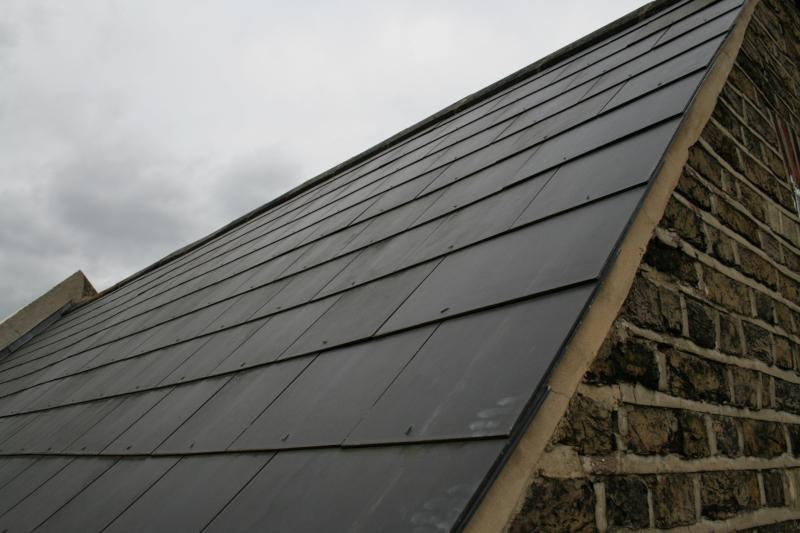
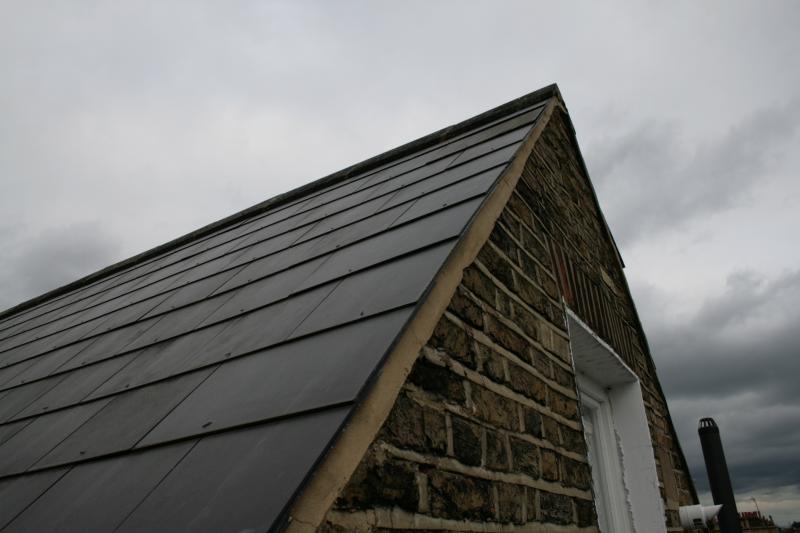
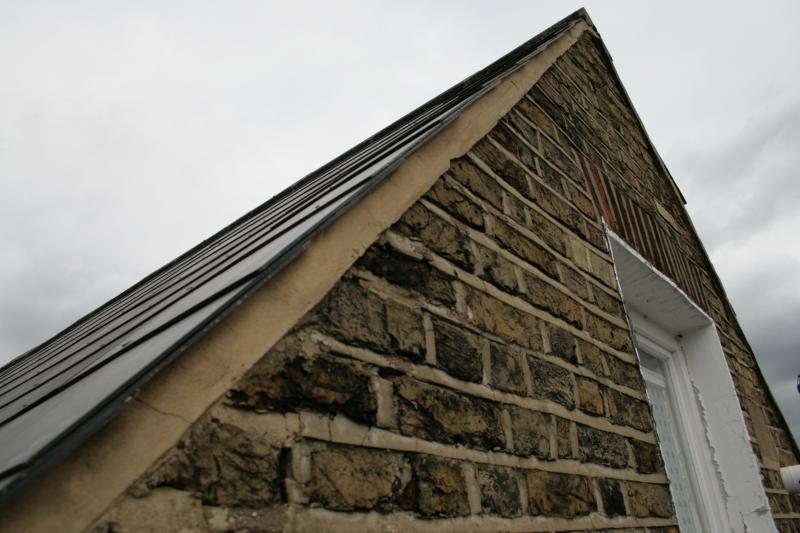
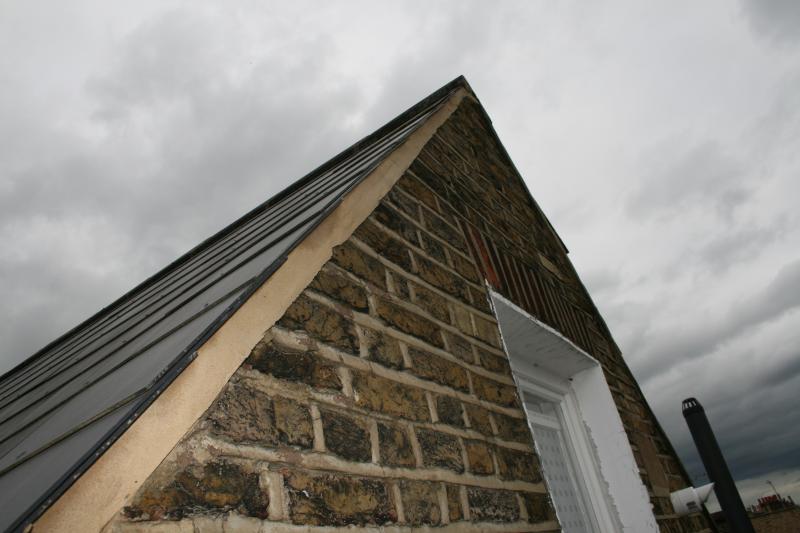
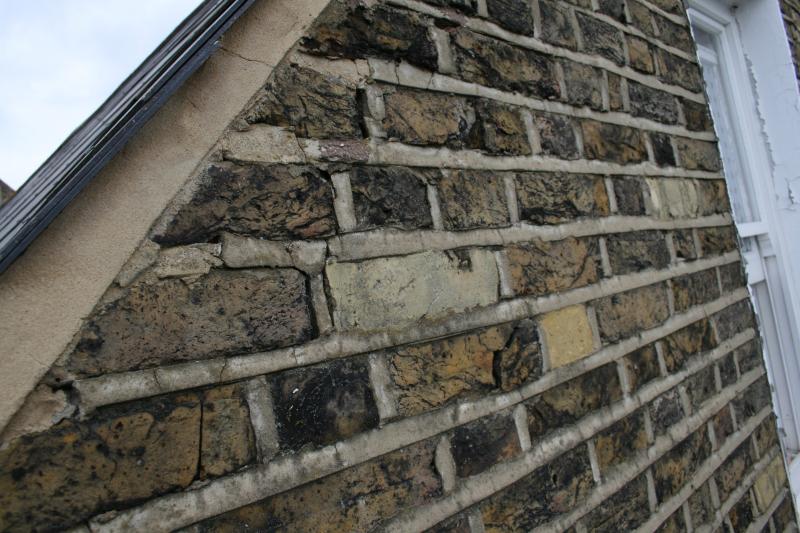
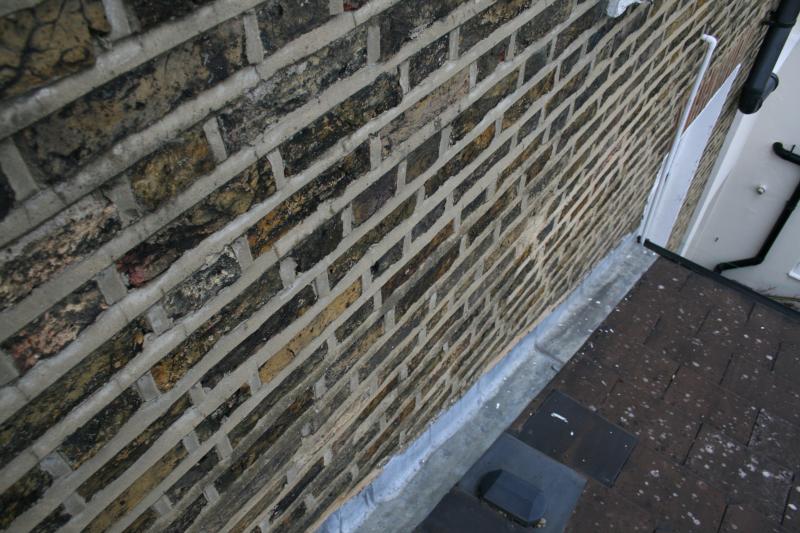
Global view
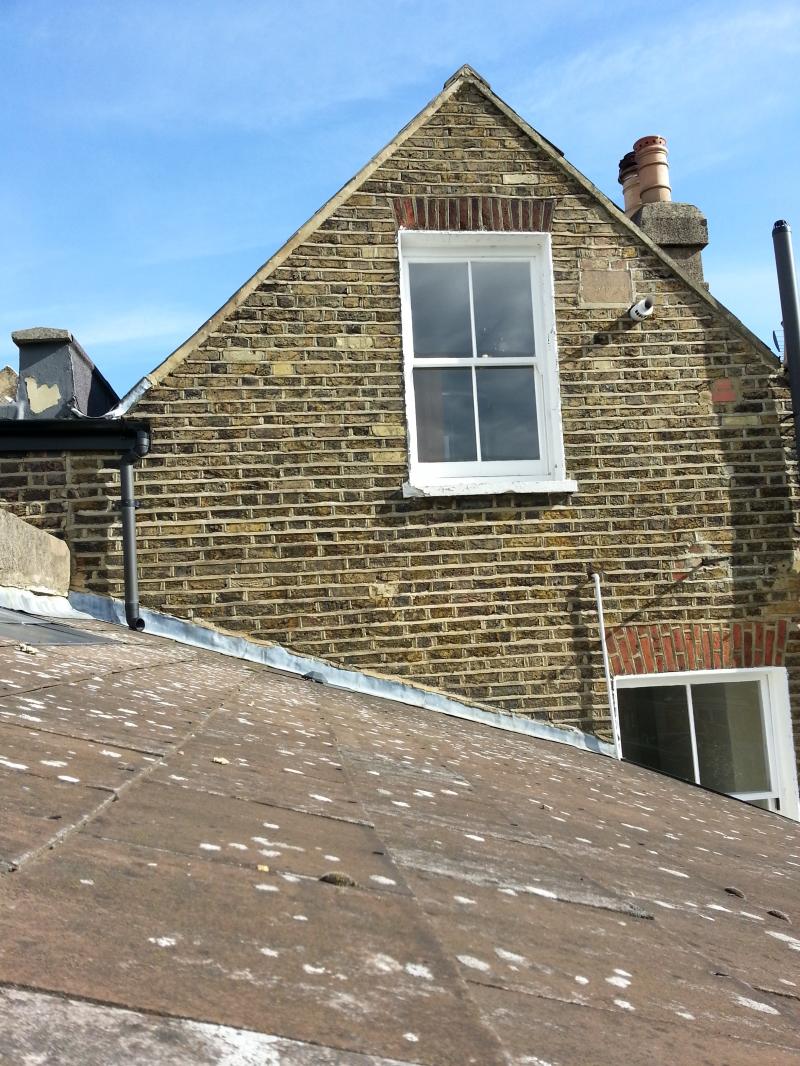

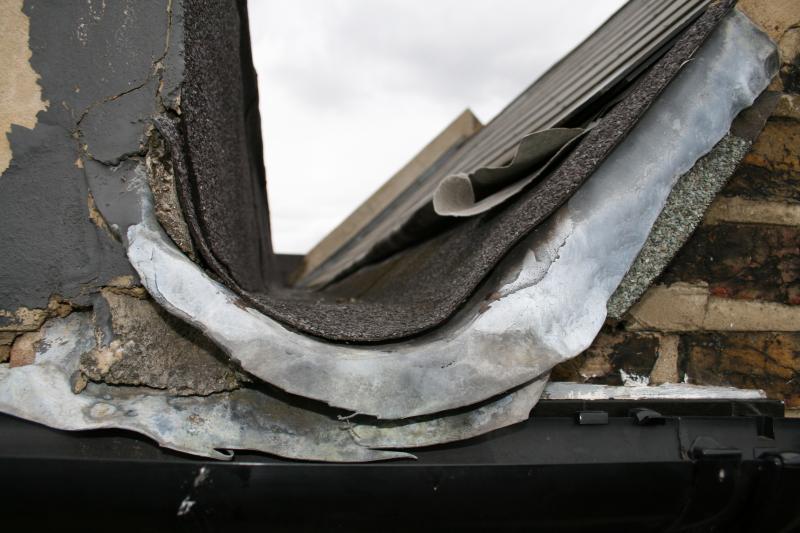
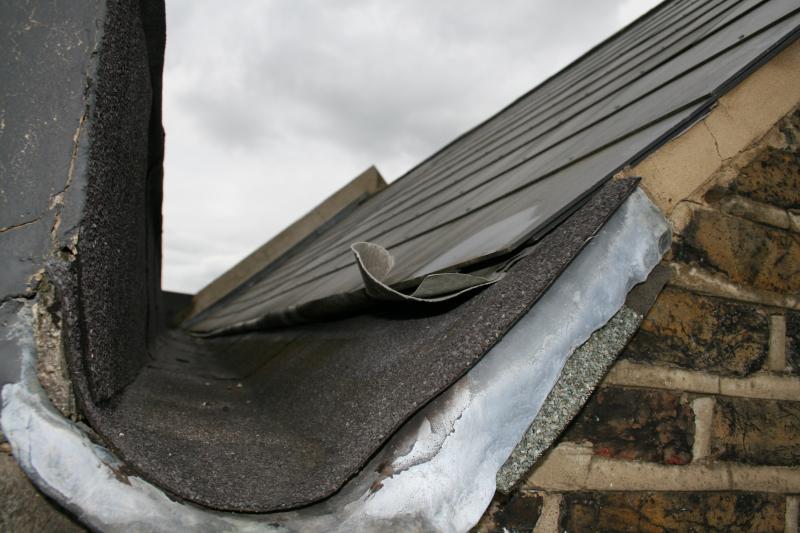
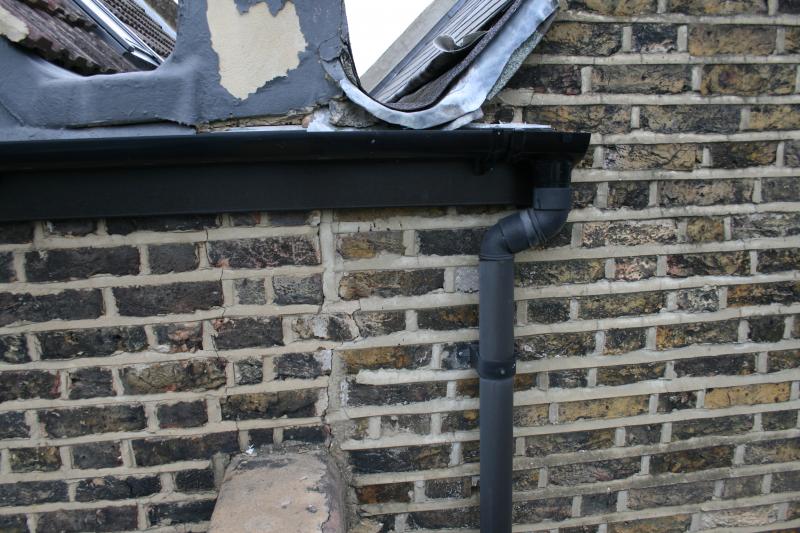
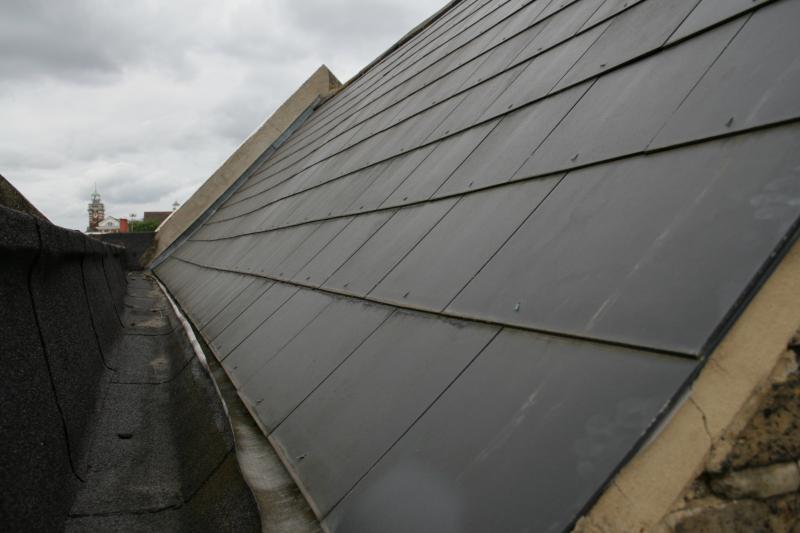
The roof

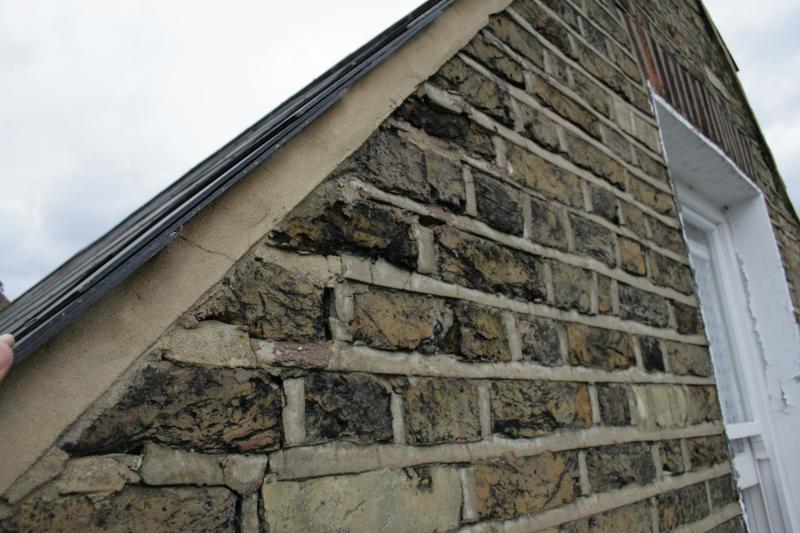
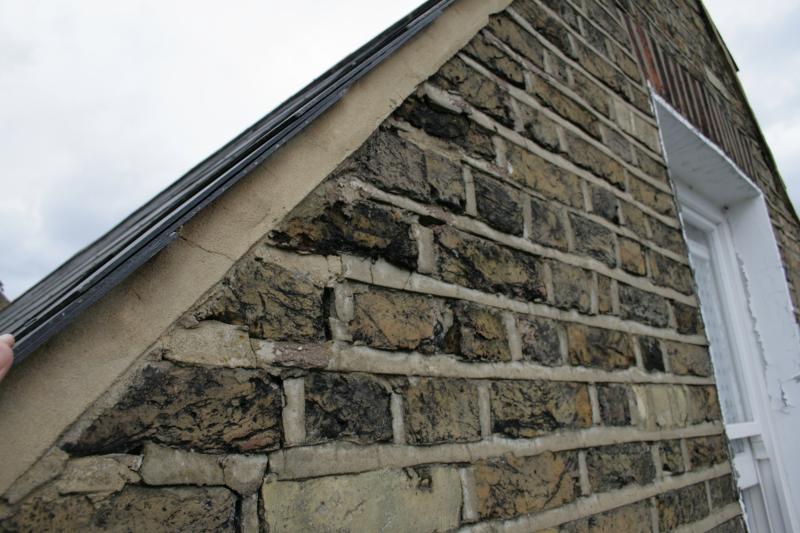
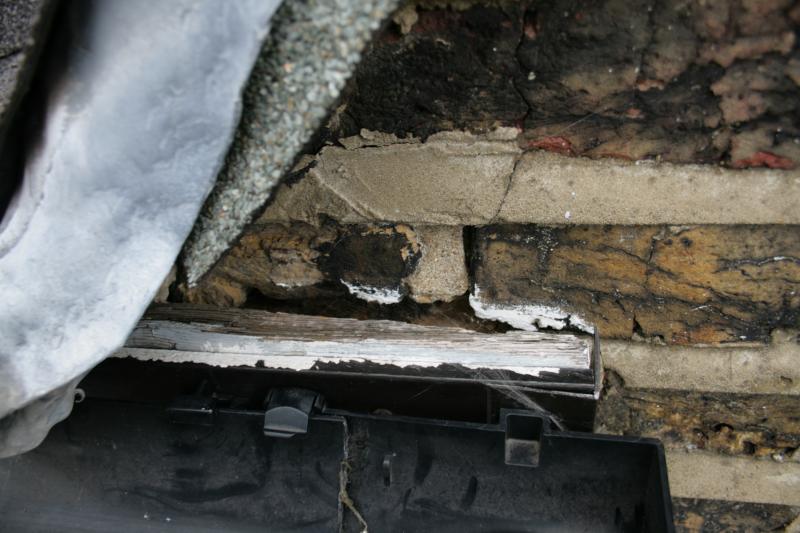
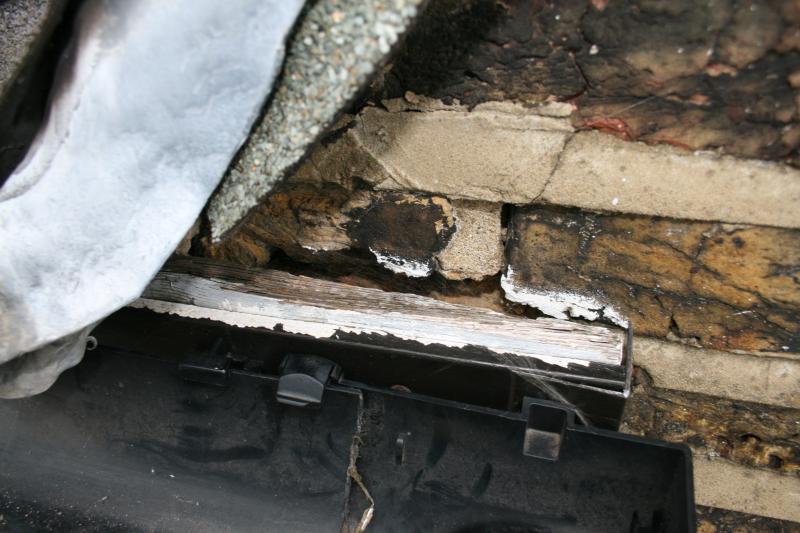
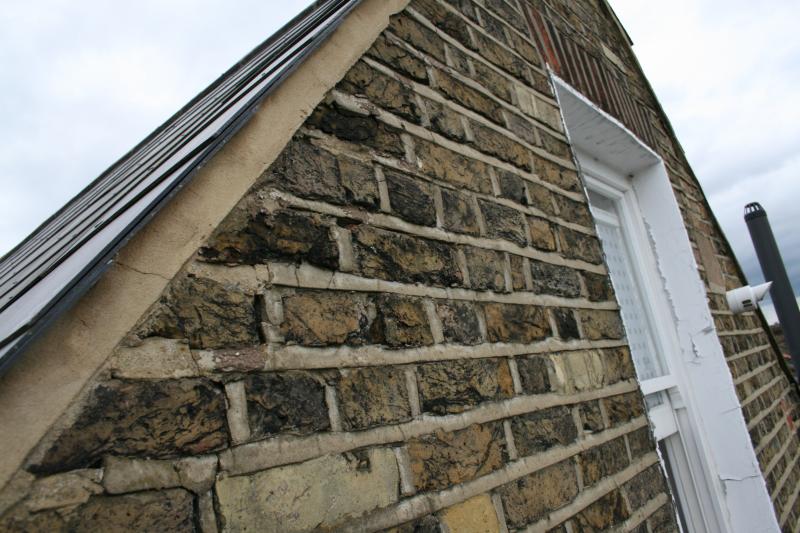
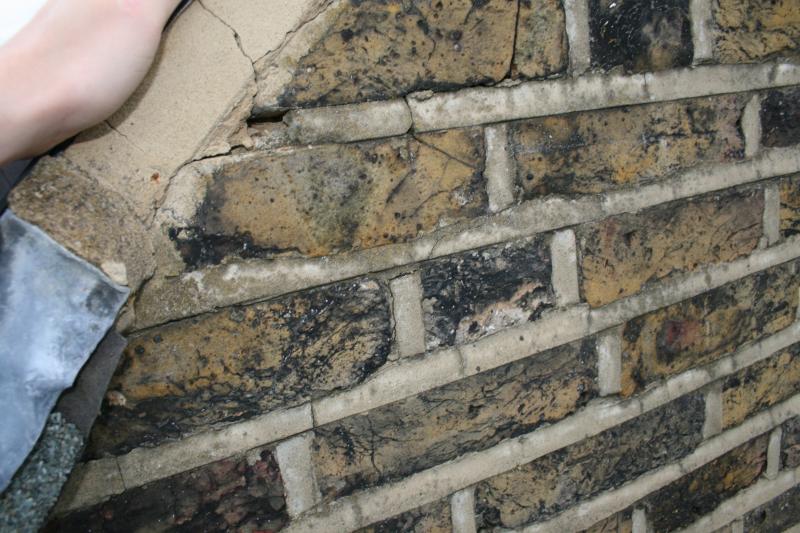
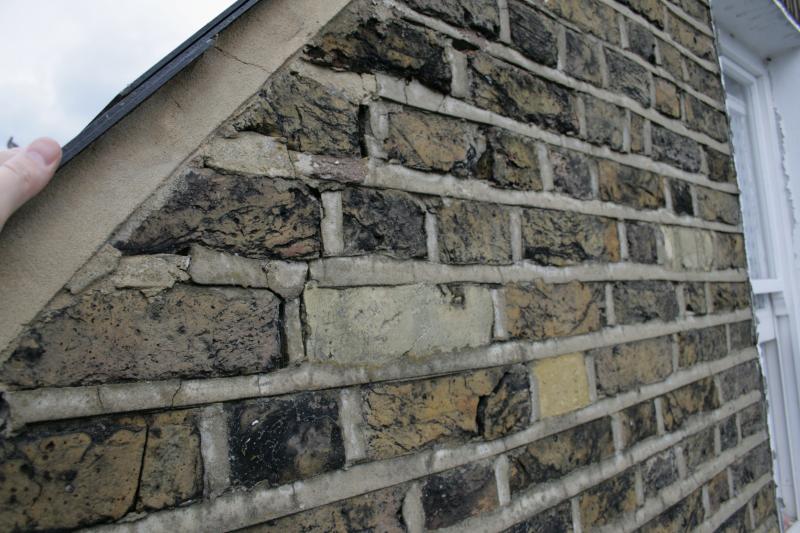
closeup of brick work

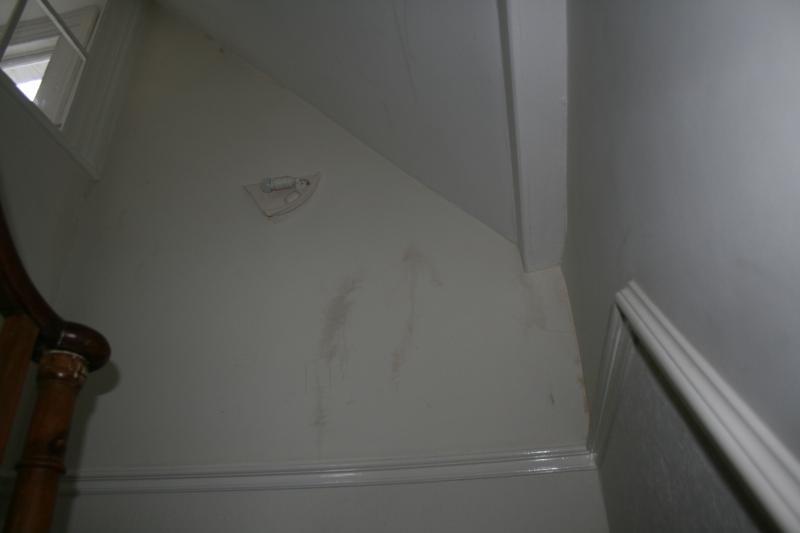
The internal problem

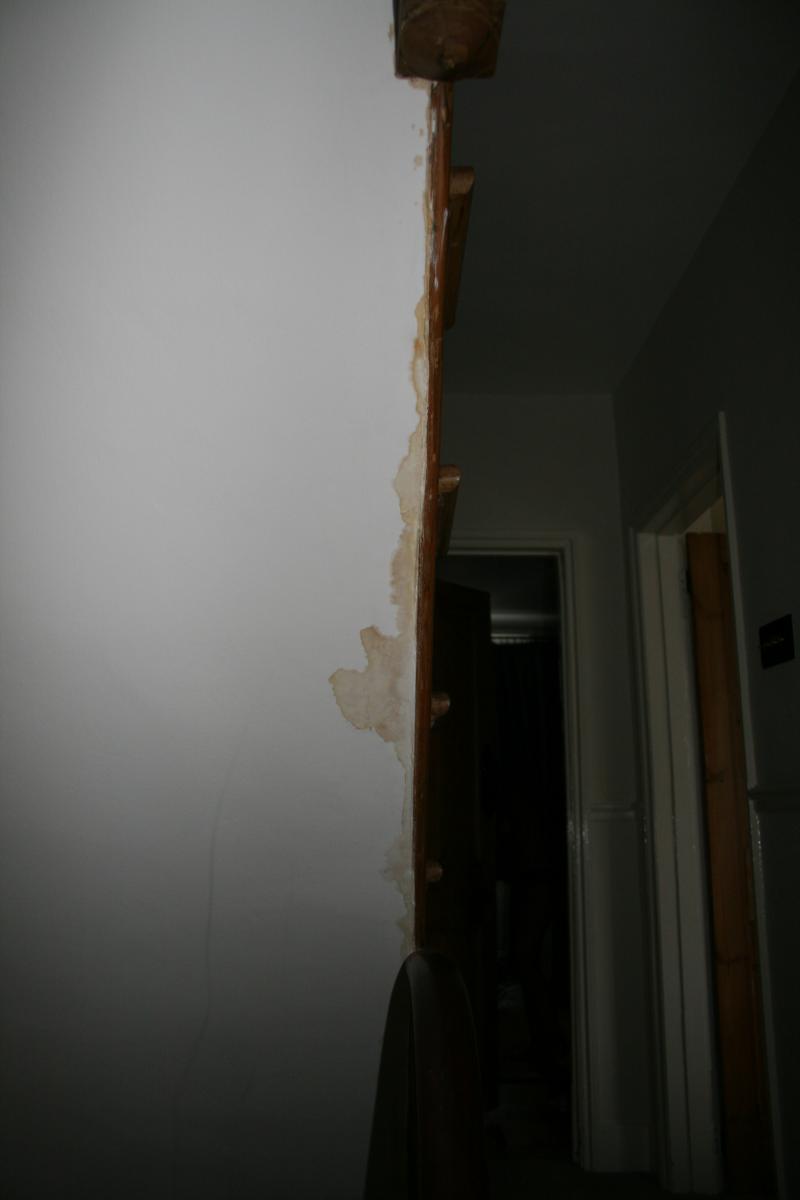
and also under the stairs ?connected
 
That downpipe should not be discharging onto the lower roof.
It needs to have additional downpipes that take the water off and down to ground level. Into a soakaway, rainwater gulley or water butt.
 
bigbear,

As above: the RWP needs clipping to the wall above the flashing, and running down to discharge in the lower gutter.

1. Pic number 1. lead flashing from the RH roof is in one piece and curled back - max. lengths of sheet lead 1500mm. At the far end of the box gutter its come away from below the slates.

Perhaps its not shedding cleanly into the box gutter - it appears to be too short - wider pieces should have been installed.

Pic 1. the box gutter is felt lined, its best lined with lead, and it doesn't have a v. good fall.

Pic 1. The cover flashing to the lower roof is badly pointed in.
The one piece cover flashing is wrong for use over slates - soakers should have been used. google pics.

Pic 1. the undercloak on the LH verge is missing. The very thick verge pointing is cracked.

Pic 2. The pointing is pathetic, simply smeared on and struck - the beds and perps have not been raked out to, say 18 - 20mm and then pointed up. Its failing.

Discharge from the box gutter should go clear into the lower plastic gutter - Its not happening, and moisture might be creeping back under the layers of felt and lead in the box gutter. Capillary action could pull the moisture into the building fabric.

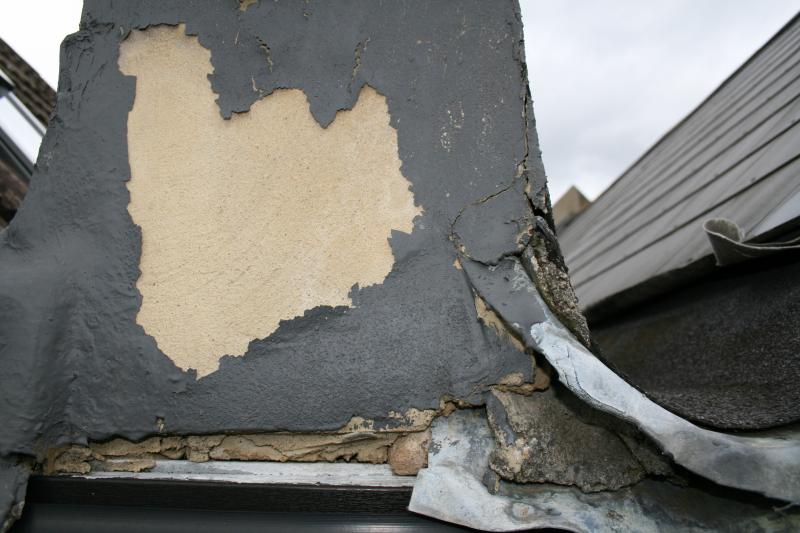
The render (and grey application) to the party wall parapet is degrading and the flashing at the stop end is incomplete.

The wood fascia is wet rotting - it should have been replaced by 18 - 22mm PVC fascia.

The lower parapet requires a lead saddle. There is a crack leading up from the parapet to behind the fascia above.

The upper black plastic gutter stop end is incorrectly located and fixed.

Have the neighbour's mentioned any damp on their side? Parapet work often leads to a joint neighbour's approach.

Fibre cement slates are v. fragile (but cheap), some have been renewed. The neighbour's have concrete tiles.

The damp lower down the staircase is, in all probability, directly connected with the upper wall damp ingress.

What is the building work history of you and this damp, and you and this house/flat?

The box gutter lining, and flashing and discharge could be the main culprit's but a careful on-site examination with pic evidence is probably needed.
 
bigbear,

As above: the RWP needs clipping to the wall above the flashing, and running down to discharge in the lower gutter.

1. Pic number 1. lead flashing from the RH roof is in one piece and curled back - max. lengths of sheet lead 1500mm. At the far end of the box gutter its come away from below the slates.

Perhaps its not shedding cleanly into the box gutter - it appears to be too short - wider pieces should have been installed.

Pic 1. the box gutter is felt lined, its best lined with lead, and it doesn't have a v. good fall.

Pic 1. The cover flashing to the lower roof is badly pointed in.
The one piece cover flashing is wrong for use over slates - soakers should have been used. google pics.

Pic 1. the undercloak on the LH verge is missing. The very thick verge pointing is cracked.

Pic 2. The pointing is pathetic, simply smeared on and struck - the beds and perps have not been raked out to, say 18 - 20mm and then pointed up. Its failing.

Discharge from the box gutter should go clear into the lower plastic gutter - Its not happening, and moisture might be creeping back under the layers of felt and lead in the box gutter. Capillary action could pull the moisture into the building fabric.

The render (and grey application) to the party wall parapet is degrading and the flashing at the stop end is incomplete.

The wood fascia is wet rotting - it should have been replaced by 18 - 22mm PVC fascia.

The lower parapet requires a lead saddle. There is a crack leading up from the parapet to behind the fascia above.

The upper black plastic gutter stop end is incorrectly located and fixed.

Have the neighbour's mentioned any damp on their side? Parapet work often leads to a joint neighbour's approach.

Fibre cement slates are v. fragile (but cheap), some have been renewed. The neighbour's have concrete tiles.

The damp lower down the staircase is, in all probability, directly connected with the upper wall damp ingress.

What is the building work history of you and this damp, and you and this house/flat?

The box gutter lining, and flashing and discharge could be the main culprit's but a careful on-site examination with pic evidence is probably needed.

Apart fom this, is everything OK? :lol:
 
Thanks very much for your detailed advice.

We have had the house a year, of note, approximately 10 months ago the neighbours had an extension installed part of this meant having the chimney stacks removed, though I don't think this is likely to be the cause/contributer. I haven't asked them if they have a problem yet.

So what would you recommend my best course of action is? I am keen to try and implement some solutions myself, are there any areas I should specifically try, or should I just bite the bullet and call in the professionals (you sound like you know what you are doing!).

If so, who? Roofer? Damp specialist?
Ideas on how much I should expect to pay?

I am always quite keen to try and solve these problems myself first if at all possible but if it is affecting the woodwork/tracking down to the bannister I probably should just bite the bullet I guess.

Your thoughts greatly appreciated.

Rob


bigbear,

As above: the RWP needs clipping to the wall above the flashing, and running down to discharge in the lower gutter.

1. Pic number 1. lead flashing from the RH roof is in one piece and curled back - max. lengths of sheet lead 1500mm. At the far end of the box gutter its come away from below the slates.

Perhaps its not shedding cleanly into the box gutter - it appears to be too short - wider pieces should have been installed.

Pic 1. the box gutter is felt lined, its best lined with lead, and it doesn't have a v. good fall.

Pic 1. The cover flashing to the lower roof is badly pointed in.
The one piece cover flashing is wrong for use over slates - soakers should have been used. google pics.

Pic 1. the undercloak on the LH verge is missing. The very thick verge pointing is cracked.

Pic 2. The pointing is pathetic, simply smeared on and struck - the beds and perps have not been raked out to, say 18 - 20mm and then pointed up. Its failing.

Discharge from the box gutter should go clear into the lower plastic gutter - Its not happening, and moisture might be creeping back under the layers of felt and lead in the box gutter. Capillary action could pull the moisture into the building fabric.

The render (and grey application) to the party wall parapet is degrading and the flashing at the stop end is incomplete.

The wood fascia is wet rotting - it should have been replaced by 18 - 22mm PVC fascia.

The lower parapet requires a lead saddle. There is a crack leading up from the parapet to behind the fascia above.

The upper black plastic gutter stop end is incorrectly located and fixed.

Have the neighbour's mentioned any damp on their side? Parapet work often leads to a joint neighbour's approach.

Fibre cement slates are v. fragile (but cheap), some have been renewed. The neighbour's have concrete tiles.

The damp lower down the staircase is, in all probability, directly connected with the upper wall damp ingress.

What is the building work history of you and this damp, and you and this house/flat?

The box gutter lining, and flashing and discharge could be the main culprit's but a careful on-site examination with pic evidence is probably needed.
 
I have advised you above on how to first go about finding out what is/are the cause(s) of the damp.

A roofer would be the one to investigate - perhaps a builder who claims expertise in damp and roofing?

Occasionally, its necessary to open up below (ceilings, boxing-in, sofitts) to attempt to find the point(s) of moisture entry.

Going on a roof is not DIY work.

When did leaks/damp first show?

Where were "the chimney stacks removed" from? Was your permission required or sought?

You must start talking with the neighbour's.
 
thanks.

yes i have some specialists coming round, but am now armed with some technical terms and questions.

Thank you for your help!

Rob
 
Perhaps, seeing how you've benefited from this forum, you will tell us what happened next and how things eventually turned out?

The thing is, there are many other silent DIY'ers following these posts, and they will be eager to know.
 
Yes...good idea. Will keep you updated,. There is a long wait for a decent roofer and they reckon it will be 4 weeks before they can come round.
 

If you need to find a tradesperson to get your job done, please try our local search below, or if you are doing it yourself you can find suppliers local to you.

Select the supplier or trade you require, enter your location to begin your search.


Are you a trade or supplier? You can create your listing free at DIYnot Local

 
Back
Top