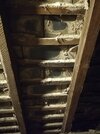
The slates are fixed to the battens (in view). The mortar is known as 'torching' (or torture as some unfortunate labourers liked to call it) and is there to prevent wind blown issues and tile lift.
The slates are fixed to the battens (in view). The mortar is known as 'torching' (or torture as some unfortunate labourers liked to call it) and is there to prevent wind blown issues and tile lift
Torching isn't really used any more. Membrane under the tiles if the modern solution, but you'd have to strip off the tiles to have membrane fitted. The torching will be falling off by now anyway and just making a mess in your loft and not really doing anything.
Not especially and the torching will become redundant with a modern re-roof. Make sure that you improve the roof tiles before adding the insulation below.
You do need an air gap on the cold side of the insulation.
Torching isn't really used any more. Membrane under the tiles if the modern solution, but you'd have to strip off the tiles to have membrane fitted. The torching will be falling off by now anyway and just making a mess in your loft and not really doing anything.
Ah. My first thought was that it was a DIY to stop tile movements in high winds but to stop ingress at joins makes sense when there is no membrane. Only went up there to measure for Sky slights! Found tiles that need put back into place and now I also have the cost of tiles fully removed and membrane put in ouch.
If you need to find a tradesperson to get your job done, please try our local search below,
or if you are doing it yourself you can find suppliers local to you.
Select the supplier or trade you require, enter your location to begin your search.
Please select a service and enter a location to continue...
Are you a trade or supplier? You can create your listing free at DIYnot Local