The one thing of which you can be sure is that, in the absence of heated water being drawn (or substantial heat losses), so long as the element is energised (or other source of heat active) the change in water temp will be monotonic - i.e. it will rise, but never fall. The question of thermostat hysteresis therefore does not arise until hot water is drawn or substantial losses of heat have occurred.Yes of course, I have I will admit often wondered about how a cylinder does heat up.

You are using an out of date browser. It may not display this or other websites correctly.
You should upgrade or use an alternative browser.
You should upgrade or use an alternative browser.
Thermostat cut-out with a twist
- Thread starter niceboy
- Start date

- Joined
- 27 Jan 2008
- Messages
- 29,545
- Reaction score
- 3,636
- Location
- Llanfair Caereinion, Nr Welshpool
- Country

Stratification in water is something I have wondered about, and not wanting to take over this thread I started my own thread mainly as it does not really cause a problem where the immersion heater is always 3 kW, only with a system like mine, where the immersion heater is run at variable wattages depending on sunlight does the question arise.
I was surprised at the increased losses with a longer immersion heater,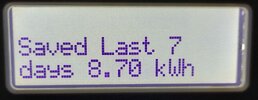 short element
 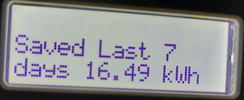 long element. From 11 inches to 27 inches, one would think copper is a good conductor of heat, and would transfer heat from top of the tank to bottom, and the heating would start some circulation within the tank. Also increased insulation would reduce costs, this
 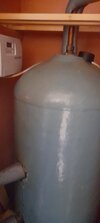 to this
  made minimal difference,
 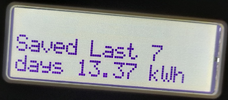 it was not worth the cost of the extra jacket, as to side entry rather than top not a clue, the whole idea was to use water heating as an energy store, the results were not what I expected.
It seems @niceboy may have found the problem, and there was a similar problem with mine,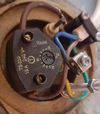 you can see heat damage on the neutral wire, but when the whole immersion was changed the connections were re-made, and would have expected the same with @niceboy so what not what I expected.
I was surprised at the increased losses with a longer immersion heater,
short element long element. From 11 inches to 27 inches, one would think copper is a good conductor of heat, and would transfer heat from top of the tank to bottom, and the heating would start some circulation within the tank. Also increased insulation would reduce costs, this to this made minimal difference, it was not worth the cost of the extra jacket, as to side entry rather than top not a clue, the whole idea was to use water heating as an energy store, the results were not what I expected.It seems @niceboy may have found the problem, and there was a similar problem with mine,
you can see heat damage on the neutral wire, but when the whole immersion was changed the connections were re-made, and would have expected the same with @niceboy so what not what I expected.Thanks. John Ward of Flameport had a wonderfully helpful tear-down of an immersion thermostat on his YouTube channel - the only one I could find on this topic (in the world?!) and, as usual, superbly presented. It confirms the suspicion that a wiring hot-spot could be the cause. Fingers still crossed.I hope you are correct. Good luck.
One of the many things that bugs me about this episode is the patronising way they treat a customer who shows an interest in the job. "Don't worry your pretty little head" taints every conversation while, without wishing to appear cocky, it must have become clear that I know more about the subject than he does! The electrician didn't know what a vented/unvented system was and the plumber had no idea how to test the element. He also made a lousy job of preparing cables. It was the first electrician who charged me £160 for delivering the verdict "You'll have to replace the cylinder" (which I did) when now appears that all it needed was ten minutes' work to trim and re-seat the cables.
But that electrician must be good because his website now boasts that he has gained a qualification in installing EV chargers.
But that electrician must be good because his website now boasts that he has gained a qualification in installing EV chargers.
You're not the only one to be bugged by such things. I use 'professionals' as little as I can but, when I do, the sort of people you refer to are the ones who are very quickly "shown the door" by me (when possible) and certainly not used again.One of the many things that bugs me about this episode is the patronising way they treat a customer who shows an interest in the job. "Don't worry your pretty little head" taints every conversation while, without wishing to appear cocky, it must have become clear that I know more about the subject than he does! The electrician didn't know what a vented/unvented system was and the plumber had no idea how to test the element. He also made a lousy job of preparing cables. It was the first electrician who charged me £160 for delivering the verdict "You'll have to replace the cylinder" (which I did) when now appears that all it needed was ten minutes' work to trim and re-seat the cables.
It's not so true in some walks of life, but no sort of "qualifications" necessarily mean much in relation to electricians.But that electrician must be good because his website now boasts that he has gained a qualification in installing EV chargers.

- Joined
- 5 Nov 2024
- Messages
- 5,749
- Reaction score
- 2,710
- Country
The one thing I said in the plumbing section that you didn't find useful and disregarded itI may be close to a solution. The live feed to the thermostat was discoloured for the last cm or so, with a rather threadbare clump of copper wire stuffed into the screw-down terminal.
Glad you've hopefully sorted it.The reset button on the thermostat. Nothing wrong with the wiring. A steady 240v in and clean switch-off from the timer.
Quite right, CountryFan, you did suggest getting someone competent to "check out the wiring". Thank you. It was not my first line of inquiry as the wiring had just been done by a "competent" electrician. Also very low resistance (<1 ohm) is hard to measure with a conventional multimeter but could be the source of heat at higher current loads.The one thing I said in the plumbing section that you didn't find useful and disregarded it
Glad you've hopefully sorted it.
Of greater concern was another mistake by this "competent" electrician. He told me he had shown the tenant how to perform a reset if it happened again. So he was asking a woman who spoke little English and clearly knew nothing about electrics to remove the cap on the thermostat and poke a pointed metal object into the hole right next to a live terminal while quite possibly holding onto an uncovered, earthed, copper tank with the other hand. About the best electrocution set-up imaginable, short of taking a shower first without drying off.

We have been talking about an immersion thermostat, which I presume has no 'anti-hysteresis' functionality.
They do include a few degrees of hysteresis built in, otherwise the contacts would very quickly wear out..
Fair enough - and sounds sensible. Do you know how that is achieved?They do include a few degrees of hysteresis built in, otherwise the contacts would very quickly wear out..
Yes of course, I have I will admit often wondered about how a cylinder does heat up.
I've gone to a little trouble, to make use of the free power times, from Octopus, using the never used - immersion element, to heat the cylinder, to save a bit of gas. Both are set for 65C, and what I notice....
Whilst the water in the upper part of the cylinder, gets to a similar temperature, the depth of heated water is much less using the immersion heater. The element is a 27 inch, the thermostat the maximum 18", whereas the gas heated coils are somewhat lower. The gas temperature sensor (note - not a thermostat), is in contact with the copper, at the usual height.
My theory, is that a traditional 18" thermostat, really ought to be somewhat longer, to allow a greater depth of heated water.
- Joined
- 27 Jan 2008
- Messages
- 29,545
- Reaction score
- 3,636
- Location
- Llanfair Caereinion, Nr Welshpool
- Country
I have also had my fair share of poor tradesmen, in my home town, in the main, I used people who I had grown up with, one mate was a builder etc. But when I moved out of the area, I lost the use of long known tradesmen, and they were getting fewer anyway, they would do unforgivable things like dieing. This happens as one gets older.You're not the only one to be bugged by such things. I use 'professionals' as little as I can but, when I do, the sort of people you refer to are the ones who are very quickly "shown the door" by me (when possible) and certainly not used again.
But also some of the retired mates, had simply not kept updated, often leaving collage in the late 60s early 70s and never returning.
As an industrial electrician I was required to return to classroom, or at least attend tool box talks throughout my working life, but often domestic guys only have to prove they can read a book, given a book with all the answers and sat in front of a PC and asked questions about the book.
I do wonder what the effect of using pulsed DC and reducing the wattage being used does to the heating of the water. I realised after fitting iboost+ that once I was being paid for export, it was actually cheaper to use off-peak at 8.5p/kWh to using solar and forgoing the 15p/kWh I would have otherwise been paid. Seems unlikely, I got my money back in first 18 months before I got export payment.They do include a few degrees of hysteresis built in, otherwise the contacts would very quickly wear out..
The short 11-inch immersion heater was simply not heating enough water to ensure we did not run out, only needed one dull day, the change to a 27-inch immersion heater, cured this problem, but it also resulted in the contacts being operated less. And likely also a reduction in any hysteresis, as the heat stored in the element and water very close to it would have a larger area to dissipate that heat into.
I was surprised at how much more electricity was used with the longer immersion heater, I had thought it was well insulated, so losses from the tank would be low, seems I got it wrong again dad!
- Joined
- 27 Jan 2008
- Messages
- 29,545
- Reaction score
- 3,636
- Location
- Llanfair Caereinion, Nr Welshpool
- Country
Thank you for that, I think in Winter cheaper to heat DHW with oil, as any losses in the pipework go to heating the house anyway, so not really losses. But Summer is completely different, any losses overheat the house, may result in an AC unit being used for longer, and losses are so high cheaper to use the immersion heater. My boiler has no tank thermostat, (C Plan) to which heater the DHW the hotter I don't know, I have the controller set to use off-peak in summer, but not winter, and also solar if available summer and winter, and I never have the Nest Gen 3 turn on just for DHW, but can't stop it heating DHW when running for the central heating.I've gone to a little trouble, to make use of the free power times, from Octopus, using the never used - immersion element, to heat the cylinder, to save a bit of gas. Both are set for 65C, and what I notice....
Whilst the water in the upper part of the cylinder, gets to a similar temperature, the depth of heated water is much less using the immersion heater. The element is a 27 inch, the thermostat the maximum 18", whereas the gas heated coils are somewhat lower. The gas temperature sensor (note - not a thermostat), is in contact with the copper, at the usual height.
My theory, is that a traditional 18" thermostat, really ought to be somewhat longer, to allow a greater depth of heated water.
You're not the only one to be bugged by such things. I use 'professionals' as little as I can but, when I do, the sort of people you refer to are the ones who are very quickly "shown the door" by me (when possible) and certainly not used again.
I'm similar, I don't have many good experiences with employed pros..
We differ a bit there. Over the decades, I've had many good experiences, but also my fair share of 'bad' onesI'm similar, I don't have many good experiences with employed pros..

- Joined
- 27 Jan 2008
- Messages
- 29,545
- Reaction score
- 3,636
- Location
- Llanfair Caereinion, Nr Welshpool
- Country
The same applies with co-workers, some better than me, and some you do wonder how they passed their exams.I'm similar, I don't have many good experiences with employed pros..
I remember watching some pipe fitters, working for GEC Large Steam Turbines, working out how to grind 36" pipes so when on the crane they fitted first time. A skill I simply don't have. Then watched another pipe fitted installing a 10 mm pipe on tray work, and thinking oh dear, I am sure he will get the sack.
As to asking a plumber to wipe a lead pipe, if they can't work with lead, they are not a plumber, the word means a worker of lead, but even the solder they use is lead free, the only plumber today you find is an organ tuner, seems lead free alters the tone of the organ.
So if plastic is made from wood, would someone who works with plastic pipes be called a joiner?

DIYnot Local
Staff member
If you need to find a tradesperson to get your job done, please try our local search below, or if you are doing it yourself you can find suppliers local to you.
Select the supplier or trade you require, enter your location to begin your search.
Please select a service and enter a location to continue...
Are you a trade or supplier? You can create your listing free at DIYnot Local
Similar threads
- Replies
- 18
- Views
- 616
- Replies
- 16
- Views
- 2K


- Replies
- 19
- Views
- 21K
