Thinking of Hive

Joined
5 Dec 2022
Messages
9
Reaction score
1
Country
United Kingdom
Hi,

Sorry this must of been done a thousand times.

I have a LP722 and a drayton thermostat. Initially I was going to order the dual channel Hive and crack on.

However I have an oil fired boiler with separate water and heating controls. But importantly no hot water cylinder - only super heated water when the water timer or switch is on and it fires up accordingly.

The bit I cant figure out is that when you switch the heating on it circulates the water through the radiators but will not fire the boiler up unless the hot is on as well. Its handy as you can switch the hot off and use the heating to pump until the remaining system heat is spent.

Anyone got any advice or is it best to call it a day and get someone in?
 
We call them combi boilers, but they don't modulate like gas, they have a reserve of hot water in the boiler, basic a W Plan.

I think Hive will work well, but don't really know that boiler.
 
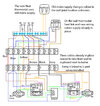
The LP722 is a Twin Channel Programmer for controlling central heating and hot water. The Hive Dual Channel would be a direct replacement for it. As you can see from the diagrams below they have identical backplates and electrical connections, so would be a straight swap. From an electrical point of view, both devices simply contain two simple switches. One for Heating and one for Hot Water.

LP722
1670325254460.png


1670325267428.png


The second channel of the LP722 is normally used for controlling the heating of a hot water cylinder, which you say you don't have, but according to your post it is being used to control something (hot water reserve? as @ericmark) If the hot water side of the LP722 is doing something, you would need the Dual Channel Hive in which case, the hot water control of the Hive would take over the same control of whatever is being currently done by the hot water side of the LP722.

With some systems, their design dictates that the Hot Water has to be 'on' before the Central Heating will work. If yours is like this there will be a switch (or a link with some versions) on the back of the LP722 that should be in the G position.

Capture.JPG


The Dual Channel Hive also has this facility and should also be set accordingly. Sorry, I'm an electrical engineer, so whilst I understand the controls, I'm not very knowledgeable when it comes to the inner workings of oil boilers.

If you fit a Dual Channel Hive to the backplate, then the existing Drayton room thermostat should either be removed and a small wiring modification made to complete the broken circuit caused by its removal. Or, alternatively, it can be left in situ but set permanently to maximum to prevent it interfering with the operation of the Hive.
 
Last edited:
Thankyou - I guess the next step is to take the controls off and have a look at the wiring to see what its doing. Going on this basis looks like a dual channel order for the Hive is the first step - then when I get stuck a further post asking for help (inevitably!)
 
Thank you @stem I am also an electrical engineer, so in real terms my central heating knowledge is limited.

I use oil, but all controls are exterior to boiler, what has happened over the years is the controls have moved to inside the boiler, likely due to number of times installers got it wrong. Phoning around to find some one to do the plumbing I realise finding a good central heating man is hard.

I found one, who was good at plumbing and cleaning out the boiler and setting it up, he admitted he did not know how to wire it, which to me was good, prefer some one honest to some one who plays not knowing what they are doing.

I went for Nest Gen 3, in hind sight, and hind sight is easy, likely Hive would have been better. But the first stage was to make a plan, I ended up with this, C_Plan_My_HouseD.jpgand there are errors, but at least once laid out, I can work out where the errors are, since mine is heating two dwellings I had to add relays, but once the layout was made out, I could see the errors.

I did consider using a PLC, (programmable logic controller) I have a few spare, but I am 70+ and the day will come when I can't do it any more, so as much as I could wanted the system normal, so my wife can get some one to fix it, in real terms likely my son, and he also programs PLC's, but domestic tradesman don't tend to keep as updated as commercial ones, the fancy controls cost money, and home owners always want things doing on the cheap.

I will admit not easy for DIY, but if you learn how to do it, you can also fix when it goes wrong. However you have a huge advantage, you know what boiler and can download the installation instructions.

So step one name of boiler followed by installation instructions in google, and find how wired.
 
Thanks for all the help so far. I have taken the unit off to examine the back plate and the wiring is as suspected missing the key element of heating triggering the boiler unless the water is set to on.

Oddly that back of the unit is set to "pump" rather than gravity mode.

So I assume I replicate the wiring but set the Hive to gravity mode which will automatically kick both off at the same time?

I will post a picture before the dual channel one arrives.

Then there is the question of the existing thermostat so may need help with that too, tho I think I can get it to very high initially until I get the nest working so it doesnt interfere?
 
the wiring is as suspected missing the key element of heating triggering the boiler unless the water is set to on.
Not sure what you mean by that. If your LP722 only has wires in terminals N, L, 3 and 4 that may be all your system needs. Is one of those missing? Don't take the drawing of his system that @ericmark has posted as being gospel, it is unlikely to be exactly the same as yours.

Oddly that back of the unit is set to "pump" rather than gravity mode.
This setting is normally used by systems that have a hot water cylinder that is heated by the natural (gravity) circulation of hot water rising and cooler water falling. It automatically switches the hot water 'on' whenever the heating is switched 'on'. Although from your description, it maybe an operating restriction of your boiler that the hot water has to be heated up before the heating will work. In which case the gravity setting would be correct.

Then there is the question of the existing thermostat so may need help with that too, tho I think I can get it to very high initially until I get the nest working so it doesnt interfere?
Yes you can do that and set it to maximum. Alternatively if you want to remove it, you would have to make a small wiring modification to complete the circuit. Post back details of the thermostat and its wiring if you want to do that and need any help.
 
Last edited:
Hive gravity mode means the supply to pump is independent to boiler, one set of contacts works pump, the other the boiler, since your boiler has the pump inside, unlikely this will work.

Many boilers have all the stuff to get domestic hot water inside the boiler, and external controls are for central heating only.

Main control for central heating today is the TRV, works very well with modulating gas boilers, still works with off/on oil boilers, but not quite as well, and mush harder to set up, the lock shield valves control speed, and each home is slightly different, but end of the day the wall thermostat is not that important, it is the TRV heads which do all the work, and having the TRV head linked to a wall thermostat really helps.

So you select the TRV head, then a wall thermostat to work with it, at least in theory, and it seems at the moment the Drayton Wiser TRV heads have the best reviews. They claim to have algorithms to work out how long it takes to heat a room, so you set time you want the room warm for, and it works out when heating needs to go on.

I unfortunately selected Nest Gen 3 which is pretty useless at working out when to switch on, and no longer has TRV heads which link to it.
 
@stem

Thankyou - here are the pictures. What I meant was from my limited understanding. The wiring means that the heating call only operates the pump, but the hot water has to be on to produce the heat to be pumped. So assuming my assumption is correct, then gravity mode will in effect replicate this. So as you say its only 3/4 that are needed.

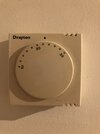
The thermostat has 3 wires. From what I understand if I loop the call and constant wires then it will create a constant call which means the Nest wont get interfered with. I can do this at the thermostat and just put a blanking plate over it just in case there is a need for it in the future.

@ericmark thanks for the input - TRVs may be next on the list perhaps - I am going to try it as outlined. The pump does operate when called on the heating circuit, its just that without the hot water call it simply pumps cold water. The combi has an internal boiler as you say, so both in effect need to be on before it can heat the water then the heating call switches the pump on. Its very basic I suspect. There are no controls inside the boiler for hot water other than a temp setting (which is way too high) but I will work on that once the Hive is operational.

IMG_5501.jpg
IMG_5500.jpg
IMG_5502.jpg
 
The wiring means that the heating call only operates the pump, but the hot water has to be on to produce the heat to be pumped. So assuming my assumption is correct, then gravity mode will in effect replicate this.
Sounds good to me. (y)

The thermostat has 3 wires. From what I understand if I loop the call and constant wires then it will create a constant call which means the Nest wont get interfered with. I can do this at the thermostat and just put a blanking plate over it just in case there is a need for it in the future.
It looks like a Drayton RTS1 thermostat. If so, there should be wires in its terminals N, L and 3, in which case, the wires in L and 3 should be joined together, and the wire in N isolated safely out of the way. There rarely is a backbox behind a thermostat, so you might not be able to fit a blanking plate, and may need to replace the thermostat with a junction box to make the connections. Alternatively, leave the thermostat in situ and move the wire from terminal 3 to the L terminal with the wire that is already there. This will effectively take the old thermostat out of the control circuit. If you do this, I suggest you still isolate the neutral as otherwise the old thermostat will be consuming a very small amount of electricity unnecessarily.

A third option is to trace the thermostat cable back to its origin. Note where the 3 wires are connected at their origin and then remove them. Then add a link between the terminals that the wires connected to the thermostat L and 3 have just been removed from to complete the circuit.
 
So just to finish this off mostly. It came today after a few delays. The wiring was like for like but the back plates still needed swapping.

Got that done and switched to gravity mode - works perfectly.

Too late tonight to get the thermostat wiring sorted but its bumped up to max to not interfere with anything.

@ericmark @stem thankyou both for the input, was a breeze after all that advice/help.

I do need to figure out the oil boiler output tho. The hotwater is scalding and the thermostat overshoots since there is so much heat in the radiators. So going to investigate that next!
 

If you need to find a tradesperson to get your job done, please try our local search below, or if you are doing it yourself you can find suppliers local to you.

Select the supplier or trade you require, enter your location to begin your search.


Are you a trade or supplier? You can create your listing free at DIYnot Local

 
Back
Top