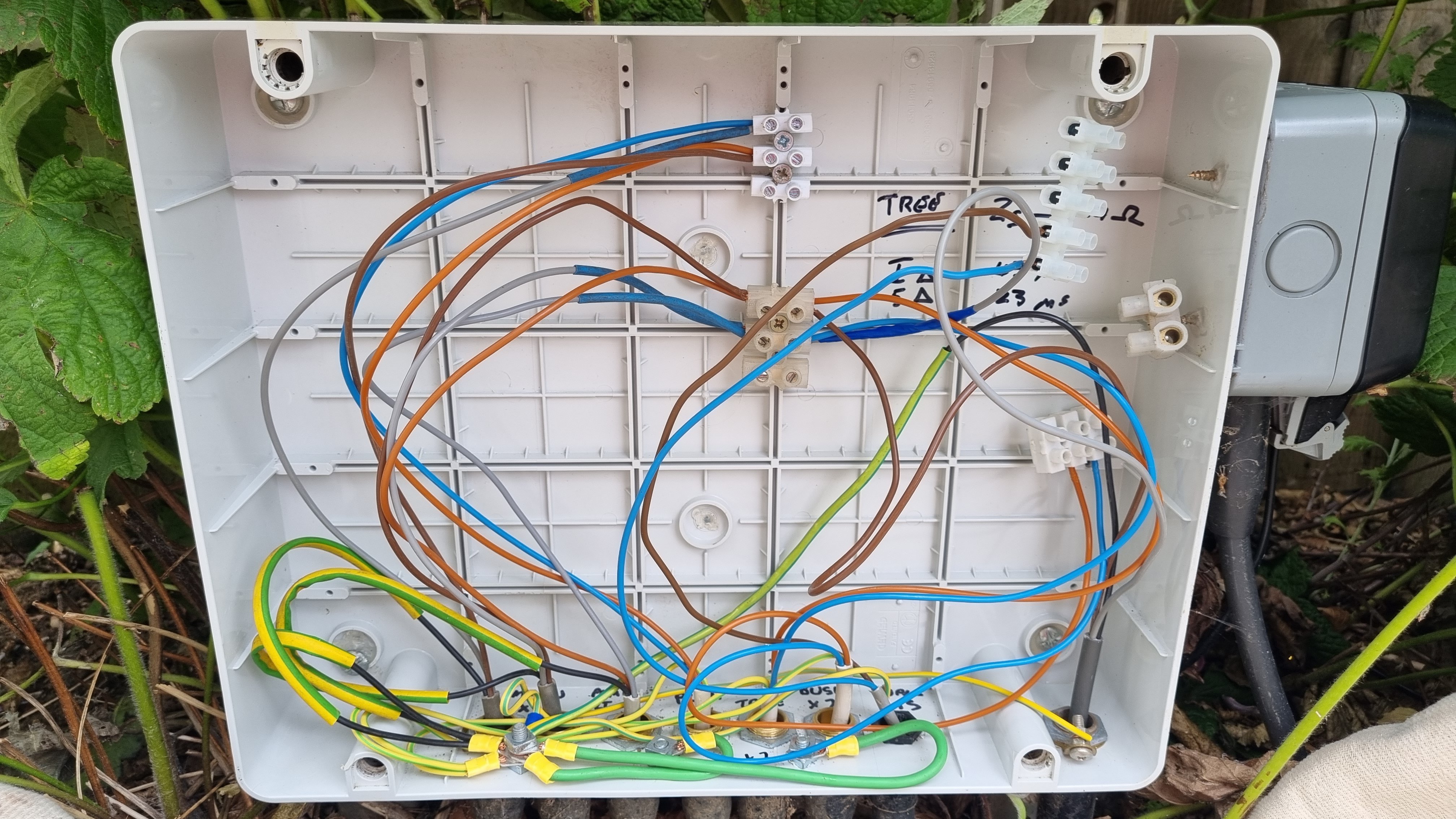
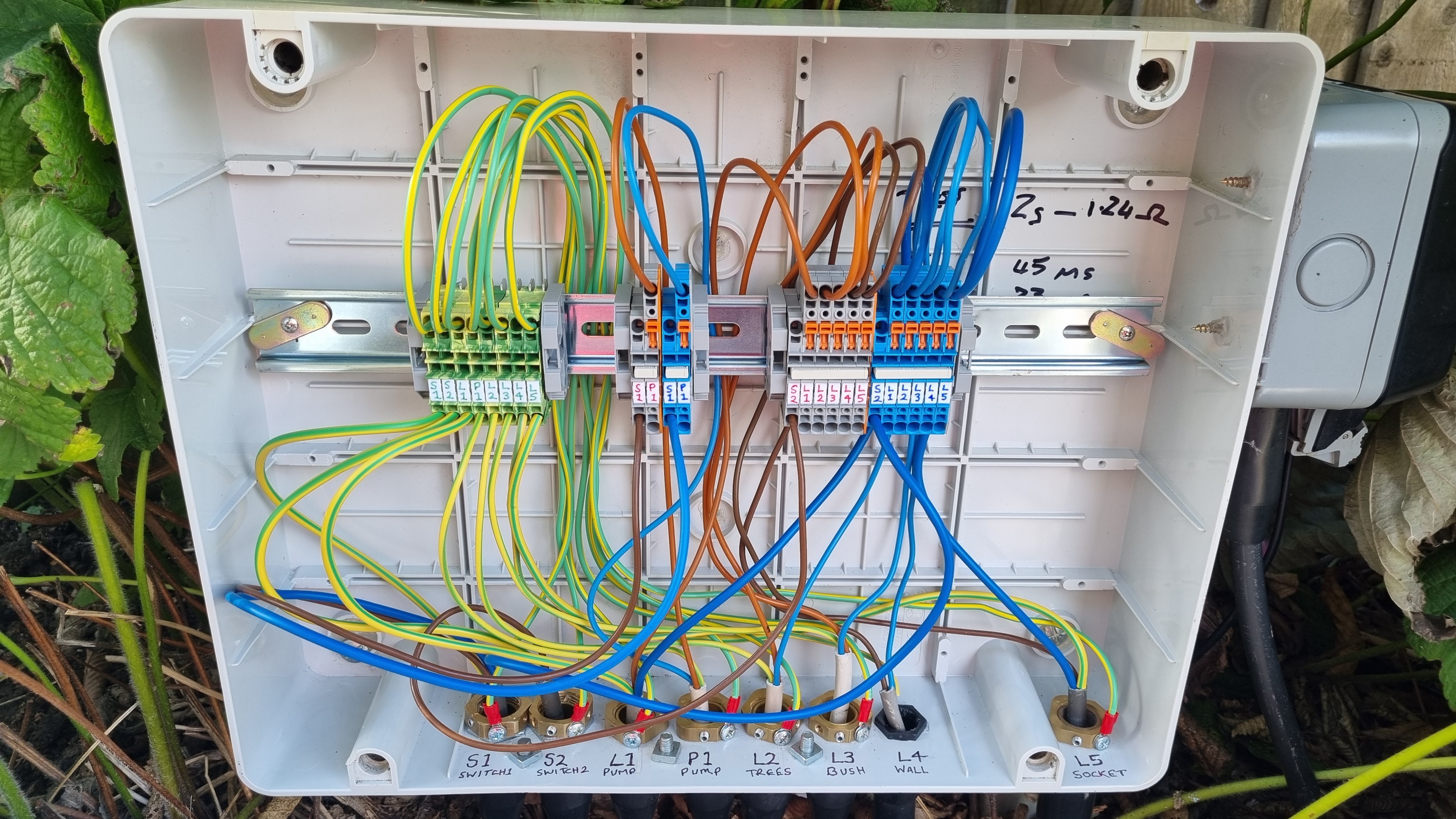
Around 9 years ago as part of a garden makeover, an electrician installed a number of SWA cables and light fittings and connected them up in a large plastic "junction" box in the garden. Here's a "clean" photo showing the full interior of the box, however, as this is a little old, it doesn't include the additional socket cable so I've added the 2nd photo to show this cable (at the far right):
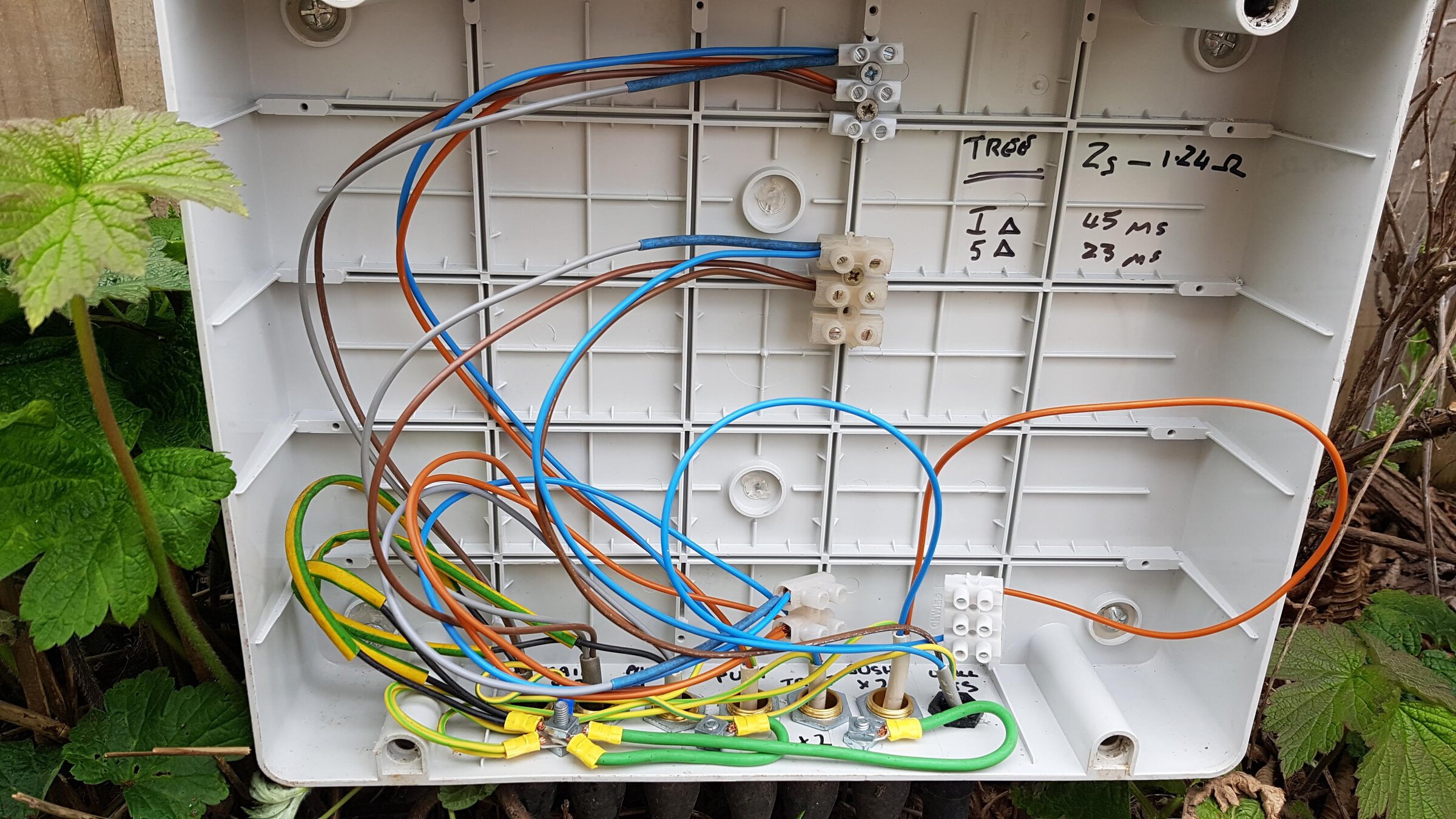
Please note: some of the wires are currently disconnected for testing so the photos are really to show the spaghetti state of the wiring.
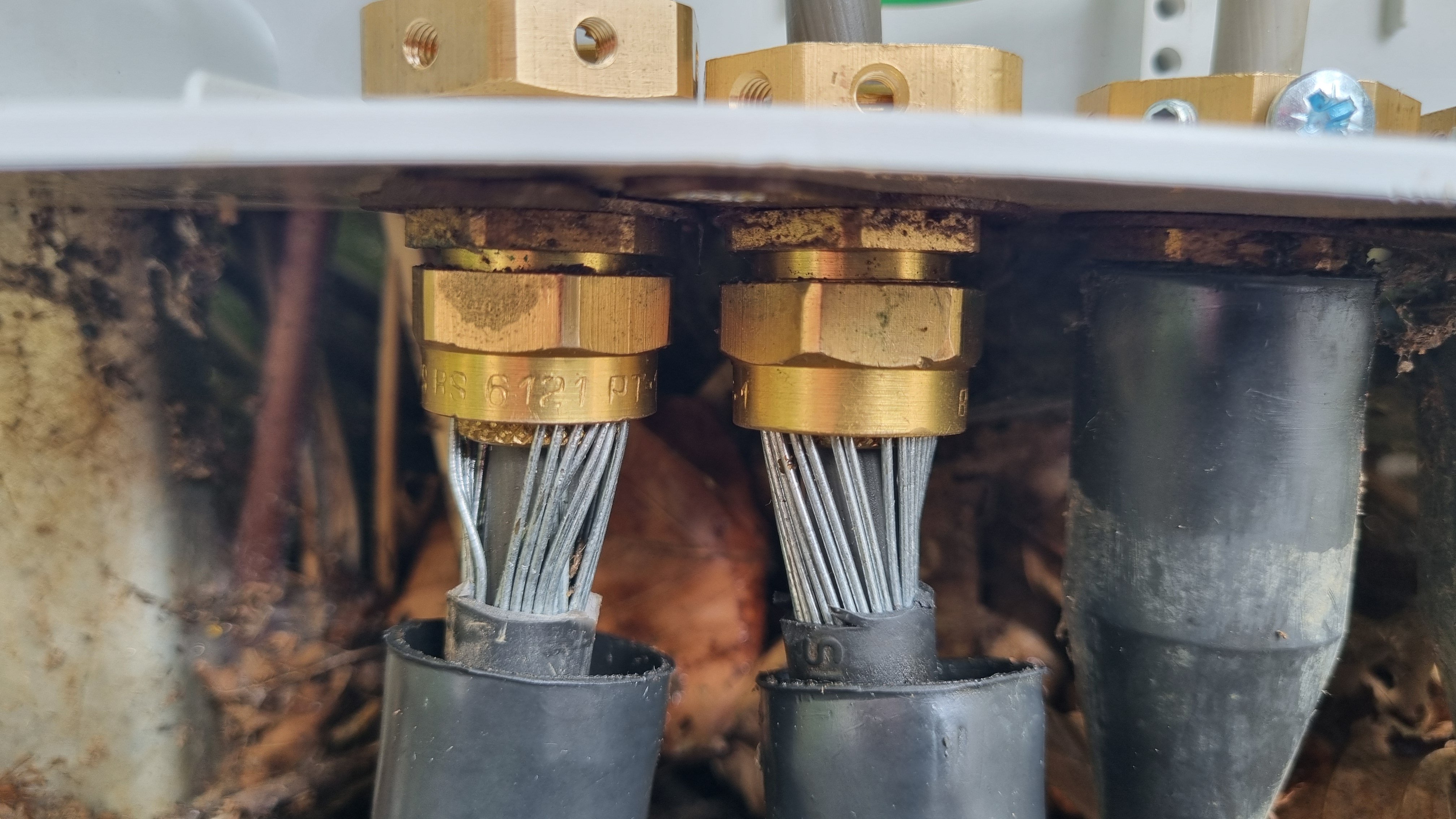
What may not be clear from the photo is that the banjo earth rings for each SWA (except the far right SWA) are all installed underneath the box i.e. outside it, and earthed to the inside using brass screws, fitted through holes drilled through the box.
I would like to tidy up this wiring and would appreciate your thoughts on how best to do this.
As you can see, currently, a couple of terminal blocks are used; one for the lights and the other for the water feature pump.
There are two SWA cables feeding power into the box (left most SWA cables), with each connected to a double pole switch in the house. One of these SWA cables is (normally) connected to 5 other cables in the box (4 SWA and 1 cable). The other SWA cable is connected to the water feature pump SWA. So, in terms of connections required:
Lights (switch 1):
Live 1 in and 5 out = 6 live wires on switch 1
Neutral 1 in and 5 out = 6 neutral wires on switch 1
Earth 2 in (earth and SWA metal) and 9 out (5 earth + 4 SWA metal) = 11 earth wires on switch 1
Water Feature Pump (switch 2):
Live 1 in and 1 out = 2 live wires on switch 2
Neutral 1 in and 1 out = 2 neutral wires on switch 2
Earth 2 in (earth and SWA metal) and 2 out (earth and SWA metal) = 4 earth wires on switch 2
I notice the existing wiring connects all the earth cables together, regardless of switch. Are there any advantages to separately the earths by switch?
My thoughts:
I could use wago connectors for the water feature pump but this doesn't really tidy up the cable, just replaces the terminal block with wagos. Using wagos for the lights is a little more difficult due to the 11 earth wires. Also, the standard wago connectors don't have any method of fixing them to the plastic box.
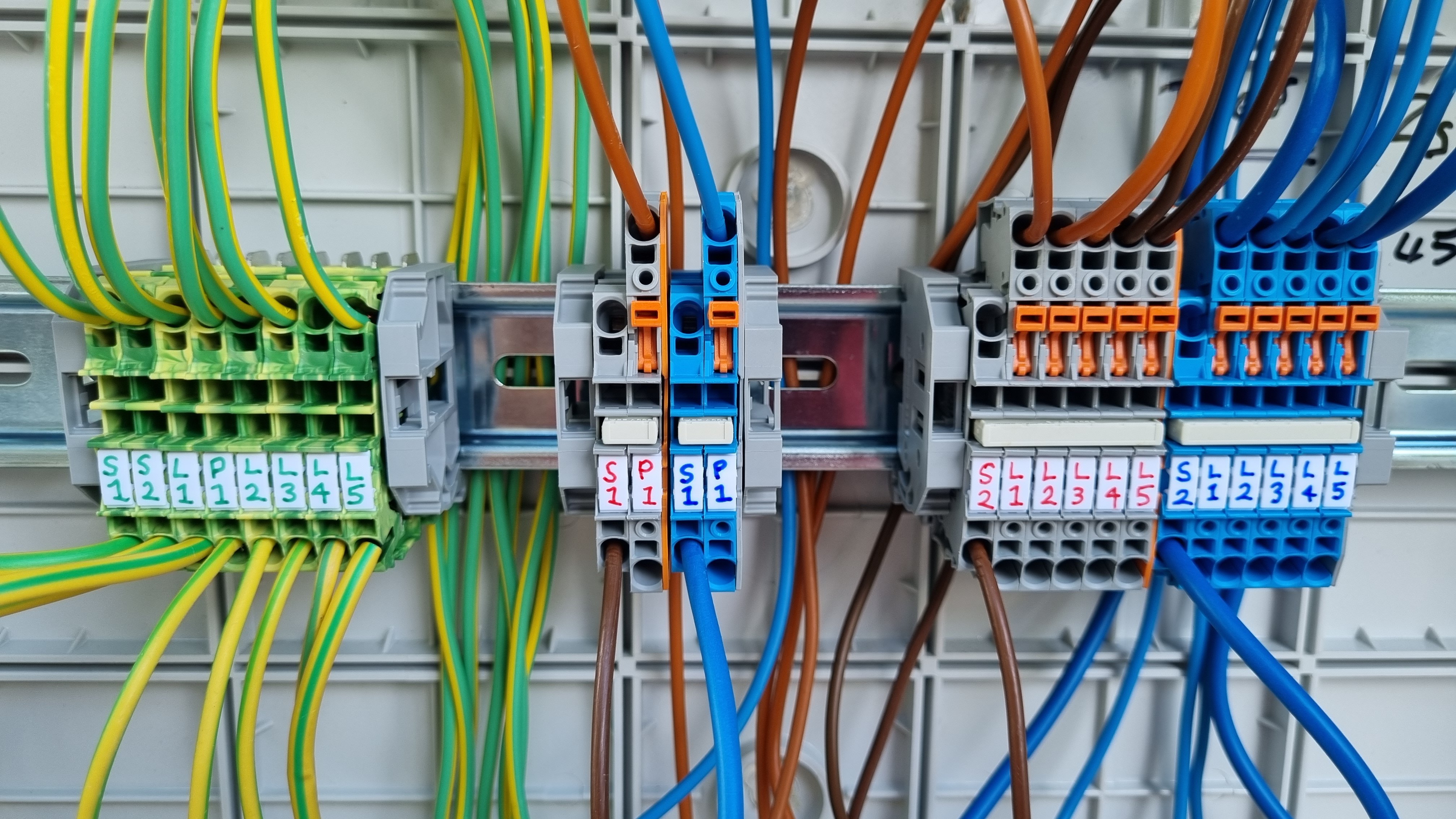
I was wondering if a DIN rail could be used to tidy up the wiring and appropriate connectors purchased. I see that wago make a TOPJOB S series product, but there are so many types of connectors etc. I'm not exactly sure how these work other than the required connectors are added to the rail and jumper bars used to combine these connectors into groups of connected wires e.g. switch 1 live, switch 1 neutral etc.
I could als replace the banjo earth rings with piranha earth nuts to bring all the earth connections inside the box. The screw holes would then need to be filled (electrical putty?). This doesn't really help tidy up the wiring, but in my opinion is a better way to connect the SWA protection to earth.
I would appreciate your thoughts/ideas.
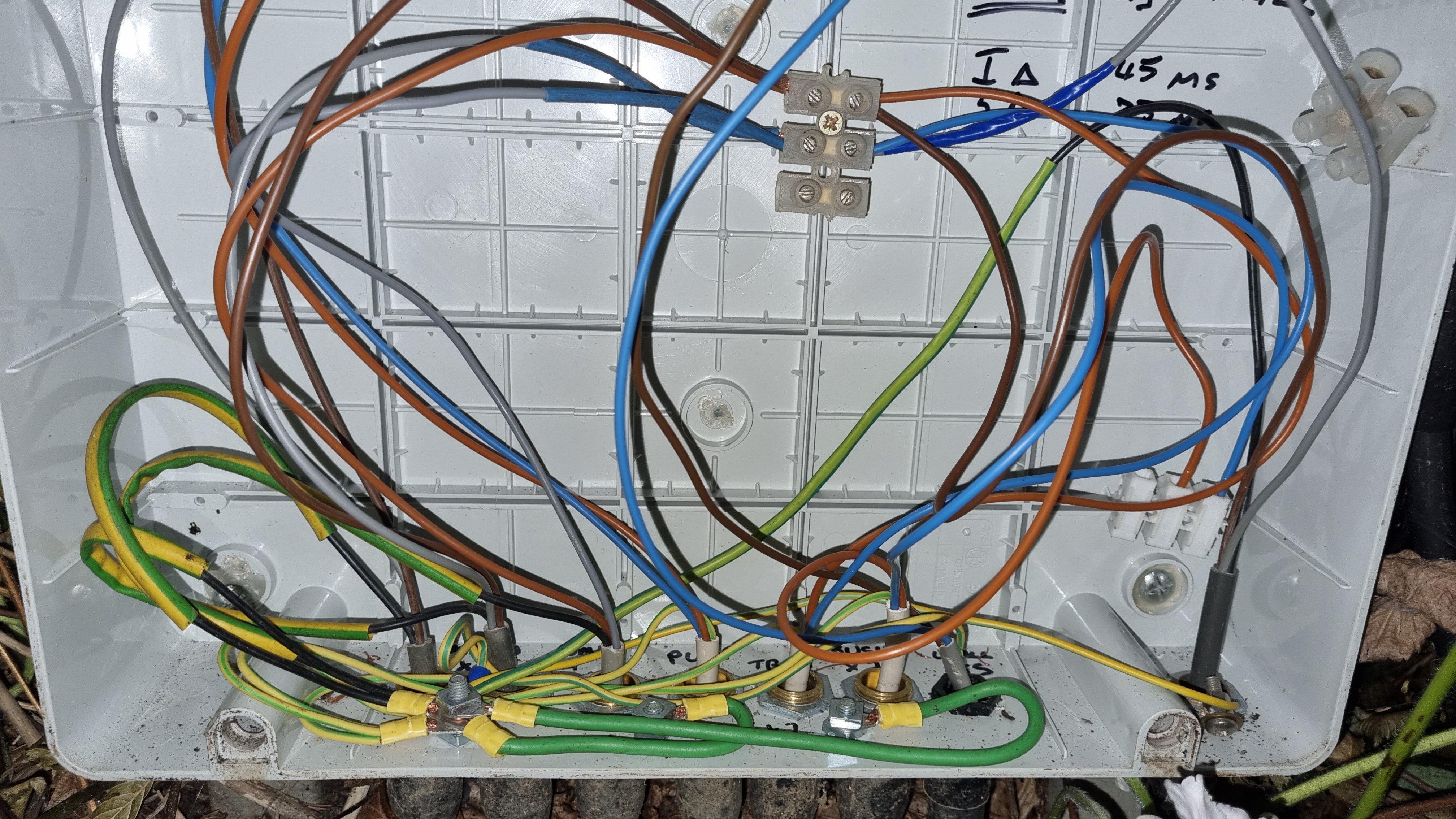
Please note: some of the wires are currently disconnected for testing so the photos are really to show the spaghetti state of the wiring.
What may not be clear from the photo is that the banjo earth rings for each SWA (except the far right SWA) are all installed underneath the box i.e. outside it, and earthed to the inside using brass screws, fitted through holes drilled through the box.
I would like to tidy up this wiring and would appreciate your thoughts on how best to do this.
As you can see, currently, a couple of terminal blocks are used; one for the lights and the other for the water feature pump.
There are two SWA cables feeding power into the box (left most SWA cables), with each connected to a double pole switch in the house. One of these SWA cables is (normally) connected to 5 other cables in the box (4 SWA and 1 cable). The other SWA cable is connected to the water feature pump SWA. So, in terms of connections required:
Lights (switch 1):
Live 1 in and 5 out = 6 live wires on switch 1
Neutral 1 in and 5 out = 6 neutral wires on switch 1
Earth 2 in (earth and SWA metal) and 9 out (5 earth + 4 SWA metal) = 11 earth wires on switch 1
Water Feature Pump (switch 2):
Live 1 in and 1 out = 2 live wires on switch 2
Neutral 1 in and 1 out = 2 neutral wires on switch 2
Earth 2 in (earth and SWA metal) and 2 out (earth and SWA metal) = 4 earth wires on switch 2
I notice the existing wiring connects all the earth cables together, regardless of switch. Are there any advantages to separately the earths by switch?
My thoughts:
I could use wago connectors for the water feature pump but this doesn't really tidy up the cable, just replaces the terminal block with wagos. Using wagos for the lights is a little more difficult due to the 11 earth wires. Also, the standard wago connectors don't have any method of fixing them to the plastic box.
I was wondering if a DIN rail could be used to tidy up the wiring and appropriate connectors purchased. I see that wago make a TOPJOB S series product, but there are so many types of connectors etc. I'm not exactly sure how these work other than the required connectors are added to the rail and jumper bars used to combine these connectors into groups of connected wires e.g. switch 1 live, switch 1 neutral etc.
I could als replace the banjo earth rings with piranha earth nuts to bring all the earth connections inside the box. The screw holes would then need to be filled (electrical putty?). This doesn't really help tidy up the wiring, but in my opinion is a better way to connect the SWA protection to earth.
I would appreciate your thoughts/ideas.