Totally confused heating control

I really do appreciate the advice/ input ...but to me it's getting a bit to technical..let me say though please.....the Radiator in the hallway works fine and gets very hot when required and we cannot get a bigger one or even fit another radiator as there is actually no place to put one as no spare Space/wall is actually wide enough could not even fit a tall radiator as the walls between several doors in hallway are not wide enough.
I would have said the same for my living room. But a new thermostat in the living room cured my problems. It was simply down to the boiler not running long enough.
my Hallway is always cold and the thermostat is in this hallway
That makes me think not the thermostat at fault, however nearly every room in my house would get warm with a 1 kW electric fan heater, so the radiator needs to be very small not to heat the hall.

Old house radiator like this
1765989060245.png
output 3 kW, looked to see physical size but could not find details, there are conversion units to try and make a standard radiator into fan assisted, how well they work I don't know. It depends on how worried you are on how it looks, but an easy method is to paint it mat black. I looked at these
1765989498786.png
and thought OK, I will just put an upright fan next to the radiator
1765989592587.png
it was a failure, far too strong of a fan, likely a USB computer desk fan
1765989696716.png
would be a better size. I used something like this
1765989785901.png
the Inkbird ITC 308 which is normally used to brew my beer with, to turn the fan on/off, with a sensor on the return pipe. But because the fan was too big, it would start, then stop again as the radiator cooled down, there are also top mounted fans,
1765990273220.png
as to how good, not so sure.
 
Because, generally, they work perfectly well.
Do they? I have looked at many homes where mechanical TRV's are fitted, and the owner has just turned them up to max, as no idea how they work.

After removing the mechanical type, I played with them, I could not believe the span, from first starting to close to being fully closed.

I started looking at central heating in general when my dad's was not working very well, mine (open-plan house) worked reasonable well, so never really looked at it, why should I, if it works don't fiddle. Only problem was when we went from tungsten bulbs to CFL we found the living room too cool in the evening, so moved to a programmable thermostat.

Dad had a new fangled condensing boiler, which could modulate, some rooms freezing and others stinking hot, the main problem was a bay window which caught the morning sun, and I was getting readings of 32°C in some parts of the room, with the radiator still hot. But like I am sure many others I looked at the lock shield valve, and TRV and thought which one needs altering.

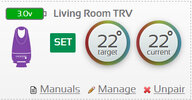
I tried to set by turning off the lock shield valve, then slowly ¼ turn at a time, back on, until one pipe got warm, then moved to the next, it worked better, but not A1, so I bought a pair of Energenie electronic TRV heads, as my son had told me they work with Nest, which was likely the next step. The computer showed me current and target, TRV_report.jpg now I had something I could work with, the setting was easy, if the current exceeded target unless sun through the bay window, then the lock shield valve needed closing a bit, took a bit of time, but once set it remained spot on. The boiler did not switch on/off all the time, and once room warm the radiators remained warm, not hot, or cold, just maintained the room temperature remaining warm.
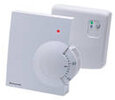
The wall thermostat had been turned full on while setting, and it was a completely inappropriate thermostat for the job, 84067_P.jpgit was designed to instigate a mark/space ratio, slowly decreasing the Mark time, so it did not over shoot, and cause a hysteresis, great idea for an on/off boiler, but for a modulating boiler, it stopped the boilers own controls working. Darn expensive thermostat, very clever, but not for a modulating boiler, each time it turned off, and back on again, the boiler had to start working out what output was required from scratch.
Also needed to add a TRV to the hall radiator, which had been missed, they said because the wall thermostat was in the hall, but when the front door was opened, and my mother who was in a wheelchair so not a fast thing, came in or out of the house, the hall was stone-cold. Set the lock-shield for fast recovery, and then the wall thermostat would turn off heating to the rest of the house prematurely. So with a TRV it allowed fast recovery outside temp to near temp required, then would close, so the last bit was slow, allowing the rest of the house to also get hot, only turning off the boiler on a warm day. This TRV was better being a mechanical type, as the large droop helped.

Until one wanted to reduce the house temperature overnight, since the wall thermostat was not programmable, the heating was simply turned off, 11 pm to 7 am, the re-heating at 7 am was a problem, the anti-hysteresis built into the TRV was OTT, so to get around this, at 7 am set to 22°C then at 8 am set to 20°C which worked well, but resulted in being unable to set up geo-fencing.

Armed with the knowledge gained from mother's house, I tried setting up this one. It did not work, boiler does not modulate, and the info given that Energenie works with Nest was false. And I found hall cooled slower than living room, so needed a thermostat in the living room as well, still needs one in hall, as open fire in living room, so two thermostats in parallel. Also, wife's bedroom turned out to be the coldest room in the house, so a linked TRV head used in that room, so have Nest Gen 3 and Wiser single channel working together.

It now works A1, but it did take some time to get it all working as we want it, well there is one slight problem, wife's radiator on the outside wall, so until heating has got a circulation of air running, the TRV can run the boiler a little prematurely, wasting a little energy, but not enough to really worry about.

Problem is we are the elderly, at 74 I feel the cold, also damaged hand does not help, I don't want rooms either under or overheated, and I want to be able to control the temperature with ease, so saying "hey google set living room to 22°C" it will set both TRV's and the wall thermostat with the one command. Without my leaving my seat.

I can see how young wippa snappers may find going around the room altering the setting on two TRV's and a wall thermostat no problem, but at my age I want the easy life, and turn heating up/down, lights on/off, or dimmed, or even change colour, I keep it simple, I tell Google Nest what I want, and it does it, how could one make it any simpler for the old?

Well, even my son does the same, although he uses Alexa. And he is really young, under 50.

 
Do they? I have looked at many homes where mechanical TRV's are fitted, and the owner has just turned them up to max, as no idea how they work.

They work extremely well, for such a simple idea, but the average home-owner, simply doesn't understand how they work, or how to use them - they limit, rather than set, the room temperature. If the room temperature, gets to the set temperature they close, and thus save over-heating and gas.

now I had something I could work with, the setting was easy, if the current exceeded target unless sun through the bay window,

My car and previous ones, have been fitted with a solar sensor. It nudges the set temperature, on the climate control down a little, be it heating, or cooling (a/c).
 
It can also be used without
Yes, but why would you, the whole reason in my case of getting Drayton Wiser was it could work with linked TRV heads, even if not linked, at least programmable, what is the point of a programmable wall thermostat if the TRV heads are not also programmable, even with the useless Nest Gen 3, I would set the thermostat down a degree an hour before I wanted a room to be heated, then up a degree when the room is being heated to ensure the boiler was running.

I see no point heating bedrooms during the day, or living rooms overnight, if unlikely to be used, why heat them?

I can see the likes of a school or office complex used 8 to 5 how the mechanical TRV heads are ample, as whole heating either on or off, but they are not appropriate for most homes. Bedsit, maybe.
 
Yes, but why would you
Because some people aren't arsed or not interested. I have explained this many a time to our customers (social housing) and unfortunately they don't seem to want to know. Perhaps they don't like or are afraid of change?
 
Yes, but why would you, the whole reason in my case of getting Drayton Wiser was it could work with linked TRV heads, even if not linked, at least programmable, what is the point of a programmable wall thermostat if the TRV heads are not also programmable, even with the useless Nest Gen 3, I would set the thermostat down a degree an hour before I wanted a room to be heated, then up a degree when the room is being heated to ensure the boiler was running.

Why, because I find it an unnecessary complication. We heat the entire house, round the clock, 18C during the day, 14C on setback. The heating almost never needs to trigger, during the 14C setback. We prefer the bedroom cool, bed warm, using an electric blanket - the TRV, takes care of that, limiting the temperature during the day.
 
Why, because I find it an unnecessary complication. We heat the entire house, round the clock, 18C during the day, 14C on setback. The heating almost never needs to trigger, during the 14C setback. We prefer the bedroom cool, bed warm, using an electric blanket - the TRV, takes care of that, limiting the temperature during the day.
I can see your point, in mother's house 4 rooms used regular, the two upstairs rooms only at night, and enough heat came from downstairs so could turn off heating at night, two rooms downstairs mother bedroom would be heated during the day as the programmer turned off heating at night, not ideal, as room could over cool, but never got around to doing anything about it. The living room was the main room during the day, and if there had not been a bay window which could catch the sun, a single thermostat in the living room would have likely worked.

The bay window was the reason why the central heating did not work A1 with mechanical TRV heads. The sun could heat the room fast, and I recorded 32°C due to winter morning sun. I tried to set the TRV and lock shield valve, but the mechanical valve was too slow to react, with the Energenie head, it acted far faster, and the display also helped set the lock shield.

The biggest problem however was the lack of TRV on the hall radiator. I was told not to fit a TRV on the radiator in the room with the wall thermostat, the problem was there was no one room suitable for the wall thermostat, it had been fitted in the hall, and the stairs came off the hall, so a curtain around the stairs was first idea, and it helped, keeping upstairs cooler, and downstairs warmer, but setting the lock shield on the hall radiator was impossible, either the hall too far too long to recover after front door opened, or the thermostat got too warm and turned off heating to rest of house.

Adding a TRV allowed fast recovery to around 17°C then slowed up so time for the rest of the house to warm up before it reached 19°C, and it turned off the whole boiler.

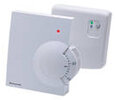
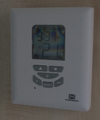
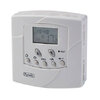
The main problem was the firm who fitted the central heating, who did very little else but fit central heating, was a bodge it and run firm, making money from government grants, and no thought had gone into the installation, So left trying to make a silk purse out of a sows' ear. There was no way that house should have had a single thermostat, two rooms with gas fires, so wall thermostat in those rooms only would have made the house cold when gas fires used, the thermostat originally was hard-wired, in the hall, between the two downstairs rooms, and it would have been reasonably easy to fit three thermostats in parallel one in hall and one in both the downstairs rooms, but the central heating fitters ripped out the wiring and used an expensive wireless thermostat. 84067_P.jpgcompletely inappropriate for a condensing boiler. I did no better, used this 1766067732978.png the cheapest programmable thermostat I could find, and it would lose the wireless link, and fail to turn the boiler off, my own house had a single hard-wired ae235.jpgwhich worked great, between the two down-stairs rooms in an open-plan house, but mother's house was a nightmare.

I think one of the problems was mother's house had internal doors, and she would say "cau'r drws" or shut the door, and would always keep the doors closed, had they been left open the heating would have worked better, but she had been brought up will coal fires, with the draft they caused.

Every home is different, this house 12 rooms, three floors, no way with a single thermostat work for whole house. My mother's house, only 6 rooms, so easier, and my last house open-plan, and my first house hot air central heating and only 4 rooms with vents in the doors to let the air return.

In mother's house the hall radiator was massive, it was it seems designed to allow most of the heat to go up the stairs, which did not work, and as said we fitted a curtain around the stairs, we, years ago never attempted to heat the hall, but the pantry and toilet had been converted into a wet room, and it had an extractor fan, which resulted in replacement air coming from the hall, so if hall was cold, so was the wet room, so hall needed to be warm.
 
The bay window was the reason why the central heating did not work A1 with mechanical TRV heads. The sun could heat the room fast, and I recorded 32°C due to winter morning sun. I tried to set the TRV and lock shield valve, but the mechanical valve was too slow to react, with the Energenie head, it acted far faster, and the display also helped set the lock shield.

The biggest problem however was the lack of TRV on the hall radiator. I was told not to fit a TRV on the radiator in the room with the wall thermostat, the problem was there was no one room suitable for the wall thermostat, it had been fitted in the hall, and the stairs came off the hall, so a curtain around the stairs was first idea, and it helped, keeping upstairs cooler, and downstairs warmer, but setting the lock shield on the hall radiator was impossible, either the hall too far too long to recover after front door opened, or the thermostat got too warm and turned off heating to rest of house.

The living room, the warmest room in the house, was where our original, mechanical thermostat, was originally fitted - a south-west facing window, where the sun had a very noticeable effect. I simply drilled through the wall, to the hall, to fit it there. Even not, it remains the best place for the wireless one, but set a little lower than the wanted living room temperature.
 
Going back to the original question about how you could move the wall thermostat from the Hall.
If your existing themostat has a neutral supply (which nearly all older wall mounted thermostats have) then you can do this by getting a 2-unit thermostat which has a receiver unit replacing the original wall thermostat, and a portable thermostat unit which triggers the receiver unit via bluetooth. Then you can move your thermostat around to anywhere in the house and experiment with the effect of this.
Salus make one of these and, although some people on this forum are a bit sniffy about Salus, I've found they work pretty well.
 

If you need to find a tradesperson to get your job done, please try our local search below, or if you are doing it yourself you can find suppliers local to you.

Select the supplier or trade you require, enter your location to begin your search.


Are you a trade or supplier? You can create your listing free at DIYnot Local

 
Back
Top